

Key Takeaways
- No-till gardening avoids digging to preserve soil structure, beneficial organisms, and moisture retention.
- It reduces annual labor but typically requires consistent mulching and top-dressing with compost.
- Weeds and compacted or clay-heavy soils can make the transition to no-till more challenging.
- No-till works best in established beds; new plots may need one-time preparation before switching.
- Understanding your soil type and weed pressure will help you decide if no-till is the right fit.
Preserves beneficial soil structure and organisms
Tilling physically destroys fungal networks and disrupts the layers where different soil organisms live and work. Leaving soil undisturbed allows these communities to build over time, improving nutrient cycling and plant root health.
Reduces moisture loss through the soil surface
A surface layer of organic mulch dramatically slows evaporation, meaning you may need to water less frequently. This is especially useful during dry summers or in regions with water restrictions.
Lowers annual labor once the system is established
After the initial setup, no-till beds require adding compost or mulch rather than deep digging each spring. Many gardeners find this physically easier and less time-consuming season over season.
Reduces carbon loss from the soil
Turning soil exposes organic matter to air, accelerating its decomposition and releasing stored carbon. No-till helps keep carbon in the ground, which also contributes to long-term soil fertility.
Can suppress certain annual weed seeds
Buried weed seeds often need light to germinate. Leaving the soil undisturbed keeps many of them in the dark, and a thick mulch layer adds an additional barrier - reducing (though not eliminating) weed pressure.
Challenging transition with compacted or clay soils
Soils that are already severely compacted don't loosen themselves quickly once tilling stops. Without some initial intervention, plant roots can struggle to penetrate the soil in early seasons.
Perennial weeds can be difficult to manage
Annual weeds are easier to suppress with mulch, but deep-rooted perennial weeds like bindweed or Canada thistle aren't stopped by surface coverings alone. These may require manual removal or targeted smothering before no-till becomes effective.
Requires a consistent, reliable supply of mulch
No-till beds depend on regular top-dressing with compost, wood chips, or other organic matter to function well. Sourcing enough material each season can be a logistical and financial challenge for some gardeners.
Slower visible results in the first season or two
Soil biology takes time to rebuild. Gardeners accustomed to the quick, uniform results of freshly tilled beds may find the early stages of no-till frustrating or inconsistent.
Some pests may overwinter more successfully
Tilling disrupts and exposes overwintering pests and their eggs, providing some natural pest control. No-till removes that disruption, which can allow certain insects or slugs to persist in larger numbers.
Our Verdict
No-till gardening delivers real, research-supported benefits for soil health, moisture conservation, and long-term labor reduction. However, it demands patience during the transition period and an ongoing commitment to mulching. It is not a zero-effort system - it simply shifts the work from digging to layering.
No-till is best suited to gardeners with established beds, reasonable weed control, and a steady supply of organic matter like compost or wood chips.
What No-Till Gardening Actually Means
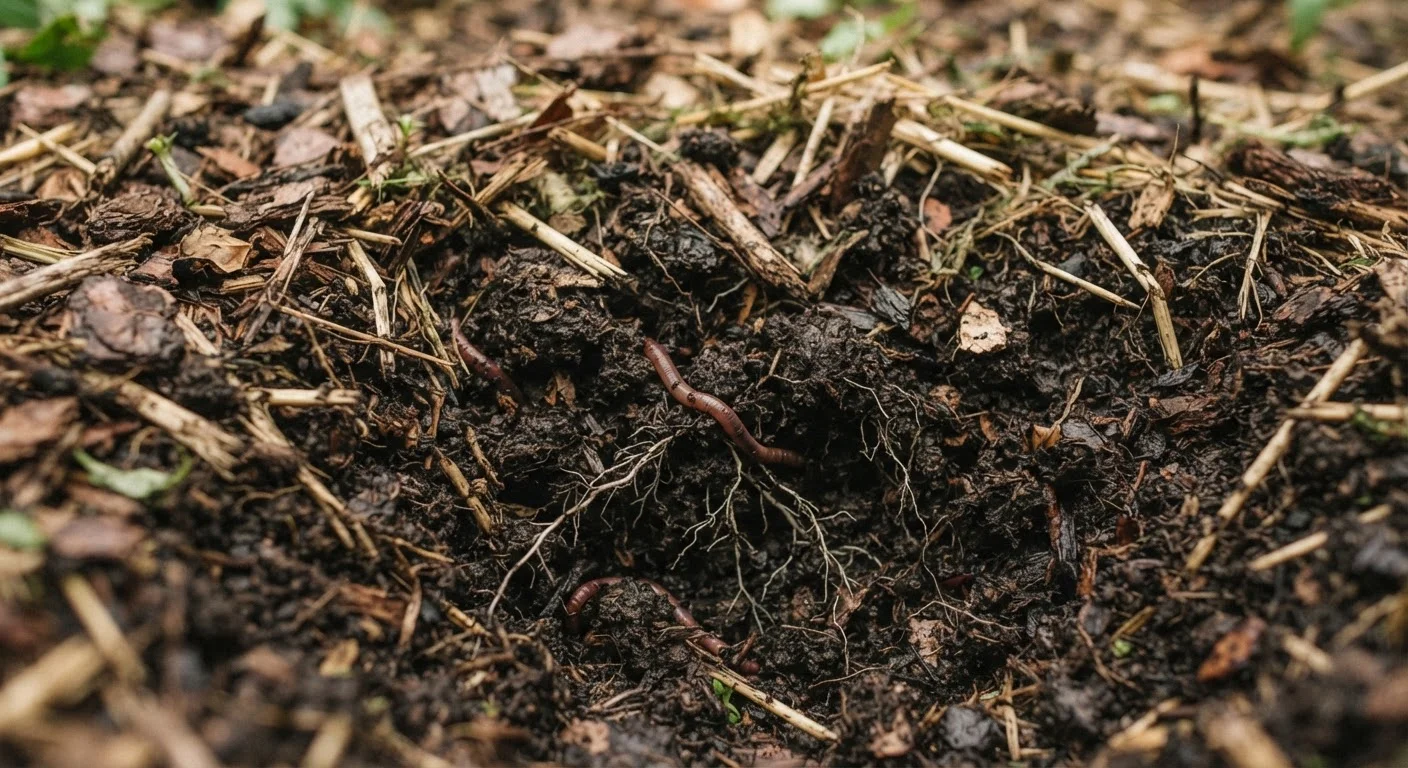
Traditional gardening often starts with a rototiller or a spade, breaking up and turning the soil before every growing season. No-till gardening takes the opposite approach: you leave the soil largely undisturbed and instead build fertility by layering organic materials on the surface - compost, straw, wood chips, or shredded leaves - and letting natural processes carry nutrients downward over time.
The method draws on how ecosystems actually work. Forests and prairies build rich topsoil without anyone tilling them. Fungi, bacteria, earthworms, and other organisms create structure and nutrient cycling that mechanical digging disrupts. No-till tries to replicate those conditions in a managed garden setting.
If you're setting up a garden for the first time, see our guide to starting a vegetable garden from scratch for foundational steps that apply whether you till or not.
Preserves beneficial soil structure and organisms
Tilling physically destroys fungal networks and disrupts the layers where different soil organisms live and work. Leaving soil undisturbed allows these communities to build over time, improving nutrient cycling and plant root health.
Reduces moisture loss through the soil surface
A surface layer of organic mulch dramatically slows evaporation, meaning you may need to water less frequently. This is especially useful during dry summers or in regions with water restrictions.
Lowers annual labor once the system is established
After the initial setup, no-till beds require adding compost or mulch rather than deep digging each spring. Many gardeners find this physically easier and less time-consuming season over season.
Reduces carbon loss from the soil
Turning soil exposes organic matter to air, accelerating its decomposition and releasing stored carbon. No-till helps keep carbon in the ground, which also contributes to long-term soil fertility.
Can suppress certain annual weed seeds
Buried weed seeds often need light to germinate. Leaving the soil undisturbed keeps many of them in the dark, and a thick mulch layer adds an additional barrier - reducing (though not eliminating) weed pressure.
The Downsides You Should Know Before You Start
No-till isn't a magic fix, and it comes with genuine trade-offs that depend heavily on your specific yard and soil conditions.
Challenging transition with compacted or clay soils
Soils that are already severely compacted don't loosen themselves quickly once tilling stops. Without some initial intervention, plant roots can struggle to penetrate the soil in early seasons.
Perennial weeds can be difficult to manage
Annual weeds are easier to suppress with mulch, but deep-rooted perennial weeds like bindweed or Canada thistle aren't stopped by surface coverings alone. These may require manual removal or targeted smothering before no-till becomes effective.
Requires a consistent, reliable supply of mulch
No-till beds depend on regular top-dressing with compost, wood chips, or other organic matter to function well. Sourcing enough material each season can be a logistical and financial challenge for some gardeners.
Slower visible results in the first season or two
Soil biology takes time to rebuild. Gardeners accustomed to the quick, uniform results of freshly tilled beds may find the early stages of no-till frustrating or inconsistent.
Some pests may overwinter more successfully
Tilling disrupts and exposes overwintering pests and their eggs, providing some natural pest control. No-till removes that disruption, which can allow certain insects or slugs to persist in larger numbers.
One-Time Prep Doesn't Disqualify You
Some gardeners worry that doing any initial digging means they've 'failed' at no-till. That's not how most experts frame it. A one-time soil preparation - especially to break up severe compaction or remove invasive weed roots - is often a practical starting point. The goal is to stop the cycle of routine tillage, not to never touch the soil again under any circumstance.
One of the biggest hurdles is the transition itself. If your current soil is heavily compacted, clay-rich, or riddled with perennial weeds like bindweed or quackgrass, jumping straight to no-till can feel like you're fighting a losing battle. In those cases, a single, thorough soil preparation - breaking up compaction, removing weed roots - before committing to no-till can save years of frustration. Once the soil is in workable shape, you can stop disturbing it going forward.
Mulch is non-negotiable in a no-till system. Without a consistent 2-4 inch layer of organic material on the surface, weeds will fill the gaps quickly and soil moisture will drop. That means sourcing enough compost or mulch each season, which has its own cost and labor implications. Our overview of organic vs. inorganic mulch can help you choose the right material for your beds.
Is No-Till Right for Your Garden?
The honest answer is: it depends. No-till tends to perform best in beds that have been gardened for at least one or two seasons, where soil structure already has some foundation. It pairs well with raised beds and in-ground plots that have good drainage. If you're weighing those two setups, our comparison of raised beds vs. in-ground planting breaks down the key differences.
~50%
Potential reduction in soil erosion
Research from the USDA Natural Resources Conservation Service indicates no-till and conservation tillage practices can significantly reduce soil erosion compared to conventional tillage, with some studies citing reductions of roughly 50% or more depending on slope and conditions.
3-5 years
Typical timeframe to see full soil benefits
Soil scientists generally note that meaningful improvements in microbial activity, organic matter content, and structure become measurable after several seasons of consistent no-till practice.
No-till also pairs naturally with practices like companion planting, where keeping plant roots and soil life undisturbed helps mutually beneficial relationships thrive. And because no-till relies heavily on top-dressing with compost rather than synthetic inputs, it's worth reading up on common fertilizer myths so you're feeding your soil effectively without overdoing it.
If space is limited and you're gardening in pots, no-till principles don't translate directly - but understanding soil health still matters. See our container gardening overview for approaches suited to small spaces.
Ultimately, no-till is a long-term investment. Year one may look messier than a freshly tilled plot. By year three, most gardeners who stick with it report noticeably better soil, fewer weeds, and less weekend labor overall.