

Key Takeaways
- Organic mulches break down over time, improving soil structure and feeding beneficial microorganisms.
- Inorganic mulches like gravel and landscape fabric require less frequent replacement but don't enrich soil.
- Vegetable gardens and flower beds generally benefit most from organic options like wood chips or straw.
- Pathways, rock gardens, and low-maintenance slopes are well-suited to inorganic mulch materials.
- Mulch depth matters: 2-4 inches is the effective range for most garden applications.
Our Verdict
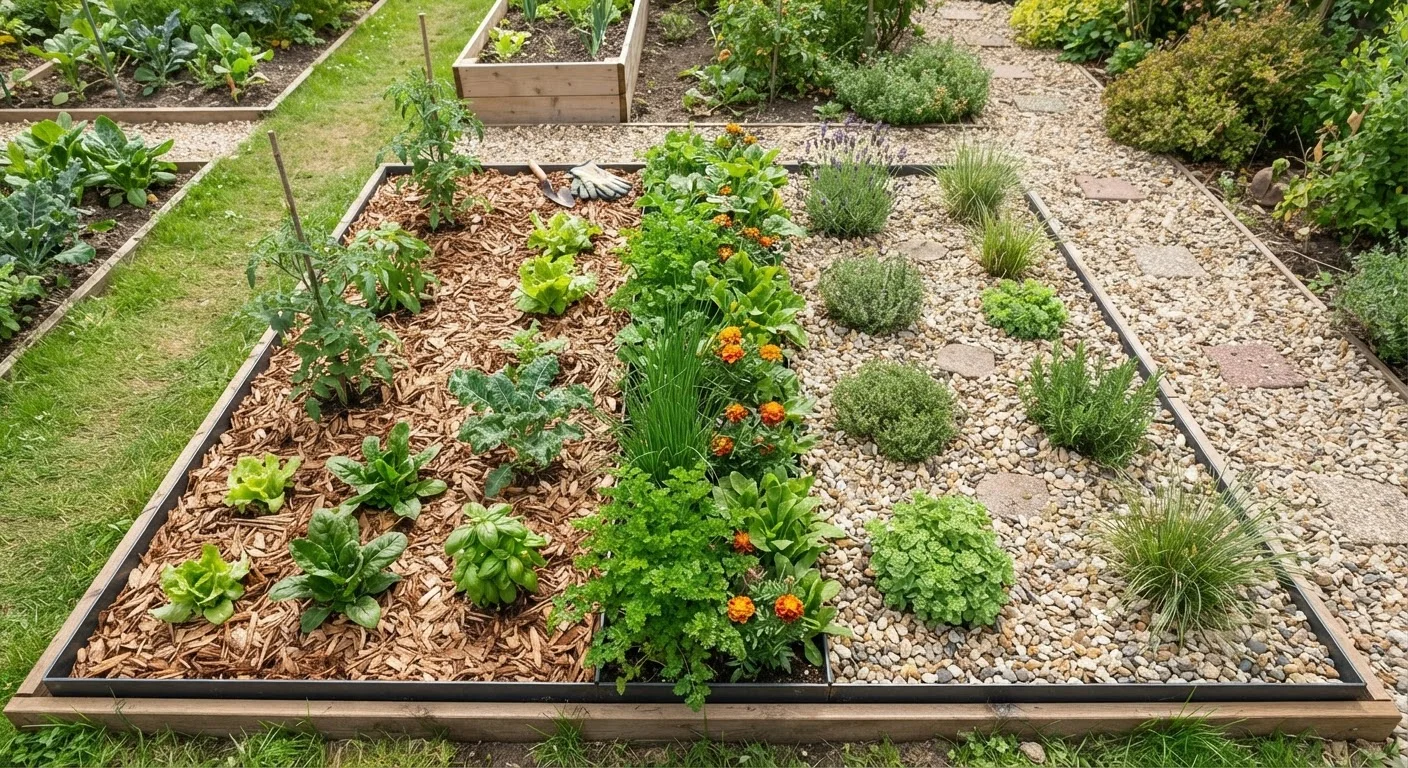
Organic mulches are the stronger choice for most planted garden beds because they improve soil health over time, not just suppress weeds. Inorganic mulches earn their place in permanent landscape features and high-traffic areas where longevity and low maintenance outweigh soil enrichment. Neither type is universally superior - the right answer depends on what you're growing, where, and how much ongoing upkeep you want.
| Best for | Recommended |
|---|---|
| Vegetable gardens and annual flower beds | Organic mulch (straw, compost, or wood chips) |
| Permanent shrub borders and pathways | Inorganic mulch (gravel or river rock) |
| Gardeners focused on building long-term soil health | Organic mulch |
| Low-maintenance landscaping in hot, dry climates | Inorganic mulch |
What Mulch Actually Does
Mulch is any material spread across the soil surface around plants. Its primary jobs are to retain moisture, regulate soil temperature, and suppress weed growth. A good mulch layer reduces how often you need to water, protects roots from temperature extremes, and cuts down on the time you spend pulling weeds.
Beyond those basics, the two broad categories - organic and inorganic - diverge significantly. Understanding that difference is the core of making a smart choice for your specific garden. For deeper context on what your soil is working with, see our guide to garden soil fundamentals.
| Organic Mulch | Inorganic Mulch | |
|---|---|---|
| Soil enrichment | Yes - adds organic matter as it breaks down | None - does not decompose |
| Longevity | Needs replenishing every 1-3 years | Essentially permanent; rarely needs replacing |
| Weed suppression | Good with proper depth (2-4 inches) | Good; gravel less effective than fabric |
| Moisture retention | Excellent; slows evaporation effectively | Moderate; stone can increase soil heat |
| Best applications | Veggie beds, flower borders, tree rings | Pathways, rock gardens, xeriscape beds |
| Cost over time | Ongoing replacement costs; often low-cost materials | Higher upfront; minimal ongoing cost |
| Environmental impact | Improves biology; can be made from yard waste | No soil benefit; some materials non-renewable |
Organic Mulch: What It Is and How It Works
Organic mulches are made from materials that were once living: wood chips, shredded bark, straw, grass clippings, pine needles, and leaf mold are among the most common. As they break down - a process driven by soil bacteria and fungi - they add organic matter to the soil, which improves drainage in clay soils and water retention in sandy ones.
This decomposition also feeds earthworms and beneficial microbes, creating a more biologically active root zone. That biological activity is one of the clearest advantages organic mulches hold. The tradeoff is that you'll need to replenish the layer annually or every couple of years as it breaks down.
Common organic options and their traits:
- Wood chips and shredded bark: Long-lasting, widely available, good for trees and shrubs. Fresh wood chips temporarily tie up nitrogen as they decompose - apply around established plants, not seedlings.
- Straw: Lightweight, affordable, and ideal for vegetable gardens. Breaks down within a season, so it needs replenishing but adds organic matter quickly.
- Compost: Doubles as a soil amendment and mulch. Apply a 1-2 inch layer to feed plants while suppressing light weed pressure. Pairs naturally with home composting practices.
- Pine needles: Slow to decompose, slightly acidic, excellent for blueberries, azaleas, and other acid-loving plants.
Avoid Piling Mulch Against Plant Stems
Whether you're using wood chips or gravel, keep mulch a few inches away from the base of stems, trunks, and crowns. Mulch pressed against plant tissue traps moisture and creates conditions where rot and fungal disease can take hold. A small gap - sometimes called a "mulch-free collar" - is one of the easiest ways to protect your plants.
Inorganic Mulch: Where It Shines
Inorganic mulches include gravel, crushed stone, river rock, lava rock, and landscape fabric (sometimes used beneath other materials). Their defining characteristic is that they do not break down and therefore do not need frequent replacement - a genuine advantage in the right setting.
These materials excel at suppressing weeds in areas where you aren't actively planting and amending soil: stone pathways, rock gardens, cactus and succulent beds, or around the foundation of a house. They also drain extremely quickly, which benefits plants prone to root rot in consistently wet conditions.
The critical limitation is that inorganic mulches offer no soil benefit. Landscape fabric in particular can compact soil, impede water infiltration over time, and make it difficult to add plants later. Gravel and stone can also absorb and radiate heat, which stresses shallow-rooted plants in hot climates.
Inorganic mulch tends to make more sense in permanent landscape features than in garden beds you plan to renovate or replant. If you're experimenting with raised beds versus in-ground planting, note that inorganic mulch is rarely the right fit inside a raised bed where soil improvement is the whole point.
Choosing the Right Mulch for Each Area
Most home gardens benefit from using both mulch types - just in different places. Here's a practical framework:
- Vegetable and annual beds: Use organic mulch. Straw or compost are ideal. These beds get turned over regularly, and organic matter incorporation is directly beneficial.
- Perennial and shrub borders: Wood chips or shredded bark work well and reduce yearly maintenance. Replenish every one to two years.
- Tree rings: Organic mulch applied 2-4 inches deep in a ring - never piled against the trunk - protects roots and feeds soil. Avoid the "mulch volcano" (a mound against the trunk base), which promotes rot and pests.
- Pathways and utility areas: Gravel or crushed stone is practical, durable, and low-maintenance.
- Drought-tolerant or xeriscape beds: Gravel or decomposed granite suits these plantings and reduces irrigation needs without introducing unwanted organic matter.
Soil health is a long-term project. Organic mulch is one of the simplest tools for building it without synthetic inputs - a complement to practices like no-till gardening, which also aims to preserve soil structure over time.