

Key Takeaways
- Most vegetables need at least six hours of direct sunlight daily to produce well.
- Healthy, well-amended soil is the single biggest factor in garden success.
- Starting small - even a 4×8-foot bed - reduces overwhelm and builds confidence.
- Consistent watering at the root zone matters far more than frequent light sprinkles.
- Early pest detection and physical barriers prevent most common problems without chemicals.
- Regular harvesting encourages plants to keep producing throughout the season.
Start here
Choosing the Right Spot
Next
Preparing Your Soil
Then
Deciding What to Grow
Core skills
Planting and Watering Basics
Problem-solving
Managing Pests and Problems
Finish strong
Harvesting and Keeping the Momentum
Choosing the Right Spot
The single most important decision you'll make is where to put your garden. Vegetables are sun-hungry plants - most need at least six full hours of direct sunlight each day to produce well. Walk your yard at different times and note where sunlight falls for the longest stretch. Southern and western exposures typically get the most light.
Beyond sun, look for:
- Level ground - or a gentle slope that drains well without washing soil away
- Proximity to water - the closer to an outdoor spigot, the more likely you'll actually water consistently
- Distance from large trees - mature tree roots compete aggressively for moisture and nutrients
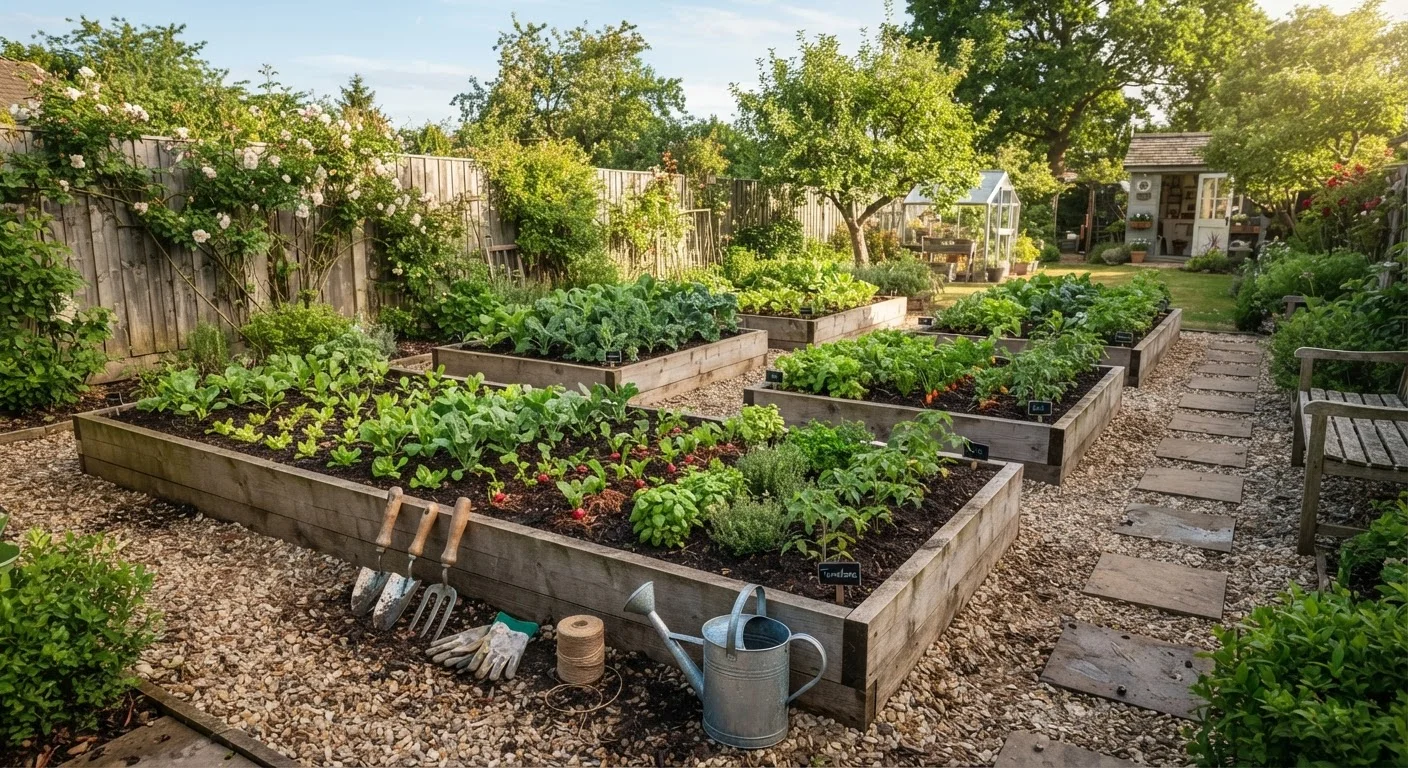
If your yard lacks a good in-ground spot, raised beds let you create ideal conditions almost anywhere - on compacted soil, gravel, or even concrete pads.
Preparing Your Soil
Good soil is the foundation everything else depends on. Vegetable roots need soil that holds moisture without becoming waterlogged, drains excess water, and contains enough organic matter to support steady growth.
pH
A scale from 0 to 14 that measures how acidic or alkaline your soil is. A reading of 7.0 is neutral; below 7.0 is acidic, above 7.0 is alkaline.
Compost
Decomposed organic matter - food scraps, leaves, grass clippings - that improves soil structure and feeds plants naturally when worked into the ground.
Direct-sow
Planting seeds directly into outdoor garden soil rather than starting them indoors in pots first.
Days to maturity
The number of days a vegetable typically needs from planting (or transplanting) to produce a harvest-ready crop, as listed on seed packets.
Row cover
A lightweight fabric draped over plants to protect them from insects, frost, or harsh weather while still allowing light and water to pass through.
Hardiness zone
A geographic area classification defined by the USDA based on average annual minimum winter temperatures, used to guide planting decisions.
Before planting, test your soil's pH if possible - most vegetables thrive between 6.0 and 7.0 on the pH scale. Inexpensive test kits are available at garden centers, and many cooperative extension offices offer low-cost soil testing. Results will tell you whether to add lime (to raise pH) or sulfur (to lower it).
Regardless of pH, working in 2-4 inches of compost improves almost every soil type. It loosens clay soils, adds water retention to sandy ones, and feeds the microbial life that makes nutrients available to plants. If you'd like to produce your own compost, our guide on composting at home explains how to get started with kitchen scraps and yard waste.
Deciding What to Grow
Resist the urge to plant everything at once. Your first garden is a learning season - choose five to eight crops you genuinely want to eat, and focus on growing those well.
Beginner-friendly vegetables include:
- Lettuce and salad greens (fast-growing, heat-sensitive - great for spring)
- Radishes (ready to harvest in as few as 25 days)
- Bush green beans (low-maintenance, reliable producers)
- Zucchini (famously productive from a small footprint)
- Cherry tomatoes (more forgiving than larger varieties)
Pay attention to your seed packets or plant tags - they list days to maturity, spacing requirements, and whether to start seeds indoors or direct-sow outdoors. Also think about which plants grow well near each other: our article on companion planting covers plant combinations that can improve yields and reduce pest pressure naturally.
Before you buy seeds, review our spring garden prep checklist to align your planting schedule with your local last-frost date.
Planting and Watering Basics
Follow spacing guidelines on seed packets - crowding plants is one of the most common beginner mistakes. Tight spacing restricts airflow, encourages fungal disease, and forces plants to compete for the same nutrients.
When transplanting seedlings from nursery pots, plant them at the same depth they were growing, firm the soil gently around the roots, and water immediately. For direct-seeded crops, plant at the depth specified on the packet - typically two to three times the seed's diameter.
Mulch saves time and water
Spreading 2-3 inches of straw, wood chips, or shredded leaves around your plants after planting reduces moisture evaporation, suppresses weeds, and moderates soil temperature. It's one of the highest-return tasks in a vegetable garden, saving you both watering time and weeding effort through the season.
Watering technique matters as much as frequency. Aim water at the base of plants rather than overhead - wet foliage invites fungal problems. Deep, infrequent watering (soaking the soil to six inches) builds stronger root systems than daily light sprinkles. For a complete breakdown of timing, frequency, and method, see our watering guide for home gardens.
Managing Pests and Problems
Check your plants regularly - ideally every two or three days. Early detection is the most effective pest-management tool available to a home gardener. Look under leaves for eggs and larvae, and watch for signs of damage like ragged edges or stippled discoloration.
Physical controls handle a surprising number of problems: row covers exclude flying insects, hand-picking removes caterpillars and beetles, and copper tape deters slugs. Encouraging beneficial insects - ladybugs, lacewings, parasitic wasps - by planting nearby flowering herbs creates natural pest control. For a full toolkit of non-chemical approaches, our guide on keeping garden pests in check offers practical strategies organized by pest type.
Rotate what you plant in each bed from year to year. Moving crops to different locations annually interrupts the life cycles of soil-borne diseases and pests that overwinter in the same spot.
Harvesting and Keeping the Momentum
Harvest frequently and on time - this is especially important for crops like zucchini, beans, and cucumbers. Leaving vegetables on the plant past their peak signals the plant to slow production. A zucchini left to grow oversized, for example, can nearly stop the plant from setting new fruit.
Most leafy greens can be harvested using the cut-and-come-again method: snip outer leaves while leaving the center to keep growing. With tomatoes and peppers, harvest as soon as fruit reaches full color and gives slightly to gentle pressure.
After each season, add spent plant material (from disease-free plants) back to your compost pile, clear any crop debris that could harbor pests over winter, and note what worked. A simple garden journal - even a few notes on your phone - helps you make smarter decisions next year. Each season you build on what you learned before, and the garden becomes more productive with time.