

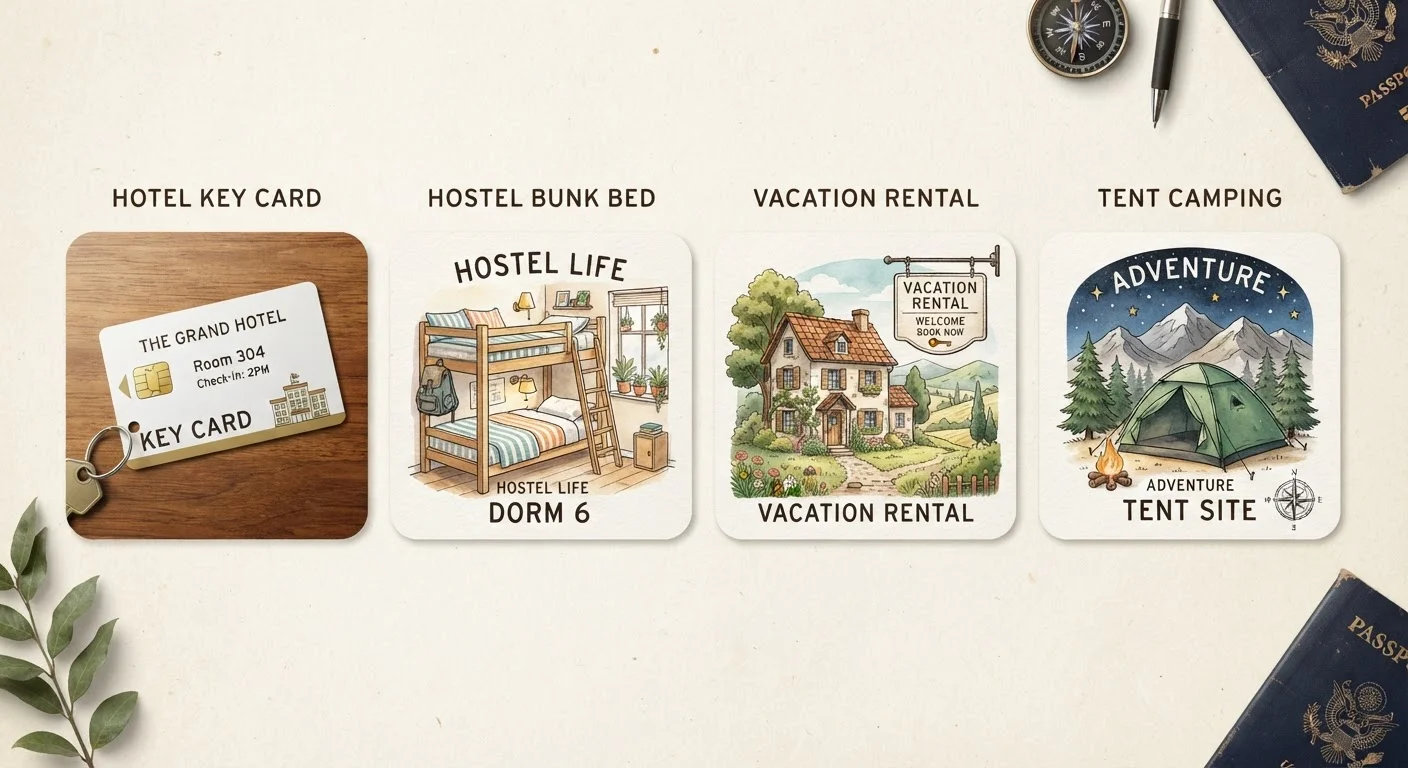
Why Accommodation Type Matters Before You Book
Picking where you sleep isn't just about price - it shapes your daily rhythm, privacy level, social exposure, and even how tired you feel by day three. The good news: there's no universally right answer. The better question is which option fits your trip. Understanding the basic categories makes that call a lot easier.
Think about your travel style before anything else. Are you craving a hassle-free experience where someone hands you a key and handles the rest? Or would you rather cook your own meals and settle into a neighborhood like a temporary local? Your answer steers you toward a whole different set of options. See what type of traveler you are for a deeper look at matching your personality to your lodging choices.
The Main Accommodation Categories, Defined
Hotels
Hotels are the baseline most travelers picture first. You get a private room with a private bathroom, daily housekeeping (typically), and an on-site front desk. Amenities range widely - budget hotels offer a clean bed and little else, while upscale properties add pools, restaurants, and concierge services. Hotels work especially well for business travel, short city stays, and travelers who prioritize consistency and low-friction logistics.
Hostels
Hostels offer dormitory-style rooms - sometimes 4 beds, sometimes 20 - with shared bathrooms and communal lounges. Private rooms are often available too, at a lower rate than comparable hotels. The social atmosphere is the draw for many: you'll meet fellow travelers easily. Hostels suit solo travelers, backpackers, and anyone comfortable with a bit of noise in exchange for savings and connection.
Vacation Rentals
Vacation rentals - entire homes, apartments, or condos rented short-term through various platforms - give travelers a kitchen, multiple rooms, and a residential feel. They're often cost-effective for groups or families who'd otherwise book multiple hotel rooms. The trade-off: less on-site support, variable cleanliness standards, and cleaning fees that can affect your total cost significantly. Worth comparing closely before assuming it's cheaper than a hotel.
Bed & Breakfasts (B&Bs)
A B&B is typically a private home or small inn where the owner lives on-site, serves breakfast, and knows the local area well. Rooms are private, atmosphere is intimate, and you often get genuine local insight that no hotel concierge can match. Great for slower trips, anniversary getaways, or anyone who enjoys a more personal lodging experience.
Boutique Hotels and Inns
These sit between a standard hotel and a B&B - independently owned, distinctive décor, usually fewer than 100 rooms. They tend to reflect their location's character more than chain hotels do, which appeals to travelers who want personality without sacrificing hotel-level amenities.
Camping and Glamping
Tent camping puts you directly in nature at the lowest cost per night. Glamping (glamorous camping) layers on comforts - furnished tents, yurts, or cabins - for travelers who want the outdoors without sleeping on the ground. Both require planning around seasons and availability, particularly at popular national parks.
Matching Accommodation to Your Trip Context
No single category dominates every situation. Here's a practical lens:
- Solo budget travel: Hostel dorms or private hostel rooms offer savings and social energy.
- Family of four or more: A vacation rental with a kitchen often undercuts multiple hotel rooms while giving kids space to spread out.
- Romantic getaway: A B&B or boutique hotel typically delivers more atmosphere than a chain property.
- Business trip: Hotels win on consistency, loyalty points, and reliable Wi-Fi - negotiate nothing.
- Long-term slow travel: Monthly vacation rental rates or extended-stay hotels reduce per-night costs meaningfully.
If your group has mixed preferences - one person craving a hotel pool, another wanting a kitchen - that's worth resolving early. Planning for different comfort levels offers practical strategies for groups that aren't aligned on the same style.
Also worth noting: some trips benefit from mixing types. A two-week vacation might start in a hotel near the airport, shift to a vacation rental in a slower coastal town, and end with a night or two at a local inn. This kind of flexibility pairs naturally with flexible versus structured itinerary planning.
For travelers curious about all-inclusive resorts - a hybrid category that bundles meals, drinks, and activities - the trade-offs are real and worth understanding before you commit. The honest trade-offs of all-inclusive resorts covers what you gain and what you give up.
Accommodation details, pricing, and availability vary widely by destination and season. Always verify current policies, fees, and cancellation terms directly with the property or booking platform before finalizing any reservation.