

Key Takeaways
- Container gardening lets anyone grow plants on patios, balconies, or even windowsills without a yard.
- The right pot size and drainage holes are the two most critical factors for container success.
- Potting mix - not garden soil - is essential for healthy roots in confined spaces.
- Herbs, leafy greens, tomatoes, and peppers are among the easiest and most rewarding container crops.
- Containers dry out faster than in-ground beds, so consistent watering is non-negotiable.
- A balanced liquid fertilizer applied regularly compensates for nutrients lost to frequent watering.
Start here
Why Container Gardening Works
Next
Choosing the Right Containers
Then
Soil and Drainage Essentials
When you're ready
Best Plants for Containers
Keep it going
Watering, Feeding, and Maintenance
Why Container Gardening Works
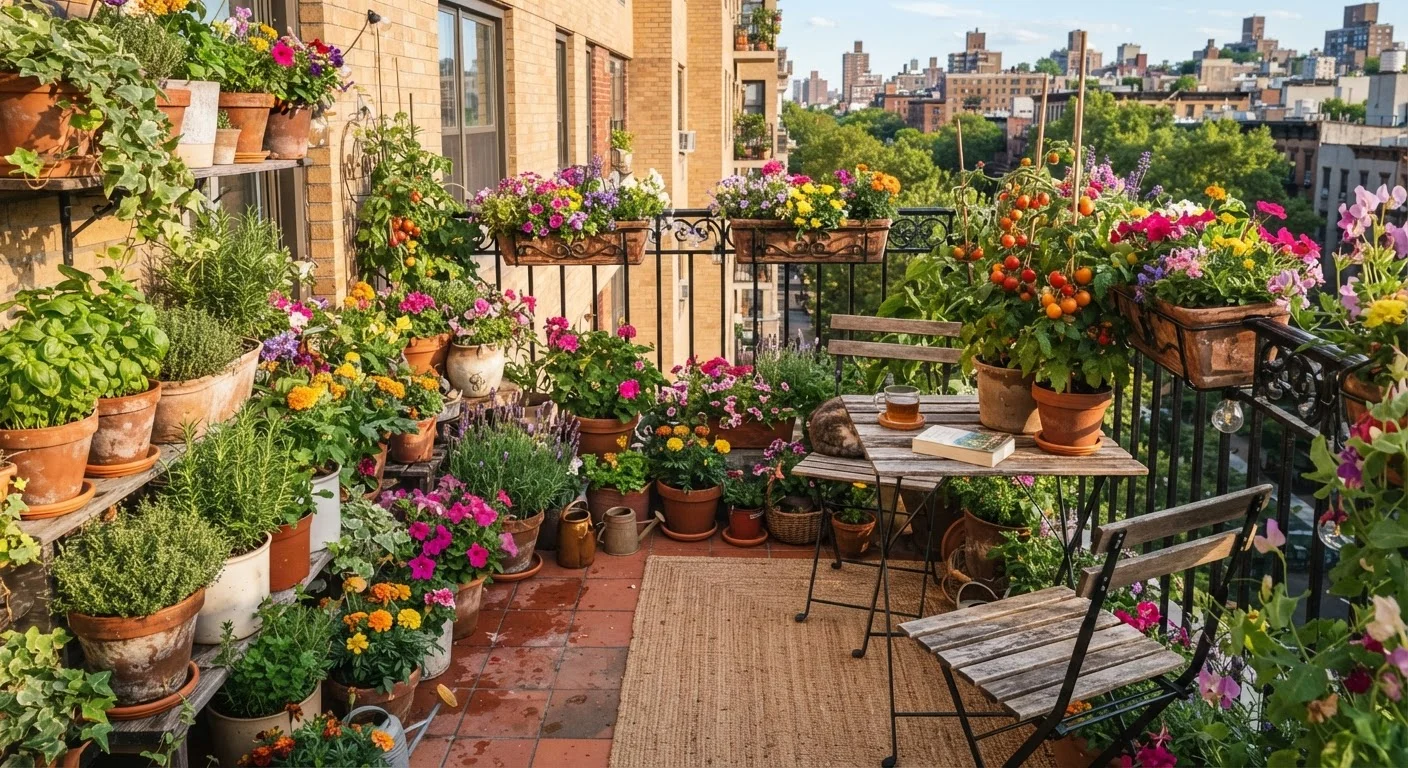
Not everyone has a backyard plot to dig up, but that doesn't mean growing your own food or flowers is out of reach. Container gardening - growing plants in pots, planters, window boxes, or any freestanding vessel - turns a balcony, driveway, stoop, or sunny corner into productive growing space.
The advantages go beyond saving space. Containers give you direct control over soil quality, sun exposure (you can move pots as seasons shift), and pest pressure. For renters, containers are also practical because they travel with you. For homeowners dealing with poor native soil or limited light, they're a way to sidestep problems rather than fight them.
If you're also curious about growing directly in the ground or in raised beds, our guide on raised beds vs. in-ground planting outlines how those approaches compare.
Start Small and Scale Up
If you're new to container gardening, begin with two or three pots of herbs before expanding to vegetables. Herbs are forgiving, produce quickly, and give you practical experience with watering and light requirements before you invest in larger planters.
Choosing the Right Containers
Container size matters more than most beginners expect. A pot that's too small restricts root development and dries out rapidly, stressing plants before they can establish. As a general guide:
- Herbs and lettuce: 6-8 inch pots or a window box
- Peppers and compact tomatoes: 5-gallon containers (roughly 12 inches deep)
- Full-size tomatoes: 10-15 gallons minimum
- Shrubs or dwarf fruit trees: 15-25 gallons
Material also matters. Terracotta pots are breathable and attractive but dry out quickly and can crack in freezing temperatures. Plastic and resin containers retain moisture better and weigh less - important if your balcony has weight limits. Fabric grow bags promote healthy root structure through a process called air pruning, which naturally stops roots from circling the container wall.
Whatever you choose, drainage holes are non-negotiable. Waterlogged roots die quickly in enclosed containers.
Check Balcony Weight Limits
Large containers filled with wet potting mix can be surprisingly heavy - a 15-gallon pot can weigh 80 pounds or more when watered. If you're gardening on an upper-floor balcony or deck, check your building's load specifications or consult a structural professional before placing multiple large containers.
Soil and Drainage Essentials
Never fill containers with soil dug straight from your yard. In-ground soil compacts under its own weight when confined in a pot, blocking the air and drainage that roots depend on. Instead, use a commercial potting mix - a blend typically containing peat moss or coconut coir, perlite, and composted material, formulated to stay loose and drain well.
For vegetables and herbs, look for potting mixes labeled for edibles or vegetables; some include added fertilizer to support early growth. For succulents or cacti, choose a fast-draining mix with extra grit.
To further improve drainage in large pots, you can mix in a handful of perlite (a lightweight volcanic mineral that creates air pockets). Avoid the old gardening myth of placing a layer of gravel at the bottom of pots - research has shown this actually raises the waterlogged zone rather than lowering it.
Enriching your potting mix with homemade compost is also effective. Our guide on composting at home explains how to turn kitchen scraps into a useful soil amendment.
Best Plants for Containers
Almost any plant can grow in a container given the right pot size and care, but some are genuinely better suited to confined roots and the fluctuating moisture levels that come with container life.
Herbs
Basil, parsley, cilantro, chives, mint, and thyme are low-maintenance and harvested frequently, making them ideal for kitchen windowsills or patio pots. Keep mint in its own container - it spreads aggressively if given the chance.
Vegetables
Lettuce, spinach, and radishes thrive in shallow containers and grow quickly. Cherry tomatoes, peppers, and bush beans perform well in 5-gallon or larger pots with full sun. Look for varieties labeled "compact," "patio," or "bush" - these are specifically bred for container culture. For more on planning a productive edible garden, see our vegetable garden beginner's guide.
Flowers
Petunias, marigolds, geraniums, and impatiens all adapt readily to containers and provide long-season color. Marigolds have the added benefit of deterring some common pests - a principle explored more in companion planting.
Potting mix
A commercially blended growing medium designed for containers - lightweight, well-draining, and distinct from garden or topsoil.
Perlite
Small white volcanic mineral granules mixed into soil to improve drainage and add air pockets around plant roots.
Air pruning
A process where roots that reach the edge of a fabric container are naturally stopped by air exposure, encouraging denser root branching instead of root circling.
Cachepot
A decorative outer container used to conceal a plain growing pot - the inner pot has drainage holes; the outer one doesn't.
Dwarf variety
A plant bred or selected to stay compact and smaller than standard varieties, making it better suited to pots and tight spaces.
Slow-release fertilizer
Fertilizer in granular form that breaks down gradually over weeks or months, feeding plants steadily rather than all at once.
Watering, Feeding, and Maintenance
Container plants depend entirely on you for water and nutrients. Unlike in-ground plants, they can't extend roots deeper to find moisture or pull nutrients from surrounding soil. This means more attentive care, but it also means you have full control.
Watering
Check soil moisture daily during warm months by pressing a finger an inch into the mix. Water thoroughly until it drains from the holes - shallow watering encourages weak, surface-level roots. Our practical watering guide covers timing and technique in detail.
Fertilizing
Frequent watering flushes nutrients from potting mix. Supplement with a balanced liquid fertilizer - one with roughly equal nitrogen, phosphorus, and potassium values - applied every two to three weeks during the growing season. Slow-release granular fertilizers are a lower-maintenance alternative; work them into the top inch of soil at planting.
Seasonal Care
As temperatures drop, tender plants like basil and tomatoes need to come indoors or be treated as annuals. Hardy perennials in containers may need winter insulation - wrapping pots with burlap or moving them to an unheated garage protects roots from freeze-thaw damage. Each spring, refresh potting mix rather than reusing the same depleted soil from the previous year.