

Key Takeaways
- Credit cards are revolving credit; personal loans are installment debt — each follows a fundamentally different repayment structure.
- Credit card interest compounds on unpaid balances, often at rates significantly higher than personal loans.
- Personal loans provide a fixed payoff timeline and predictable monthly payments, which can simplify budgeting.
- Credit utilization — a major credit score factor — applies to revolving credit but not to installment loans.
- The right choice depends on your borrowing purpose, repayment discipline, and overall financial picture.
Our Verdict
Credit cards and personal loans serve different financial purposes and carry different costs. Credit cards offer flexibility for ongoing or short-term spending, but revolving balances can become expensive quickly. Personal loans suit larger, one-time expenses where a defined payoff timeline matters. Neither is universally superior — the better fit depends on what you're financing, how reliably you can repay, and how each product interacts with your broader credit profile.
| Best for | Recommended |
|---|---|
| Short-term purchases you can pay off each billing cycle | Credit card |
| Consolidating high-interest revolving debt into a fixed schedule | Personal loan |
| Large, one-time expenses requiring predictable monthly payments | Personal loan |
| Flexible, ongoing access to a credit line for variable needs | Credit card |
Revolving vs. Installment: The Core Structural Difference
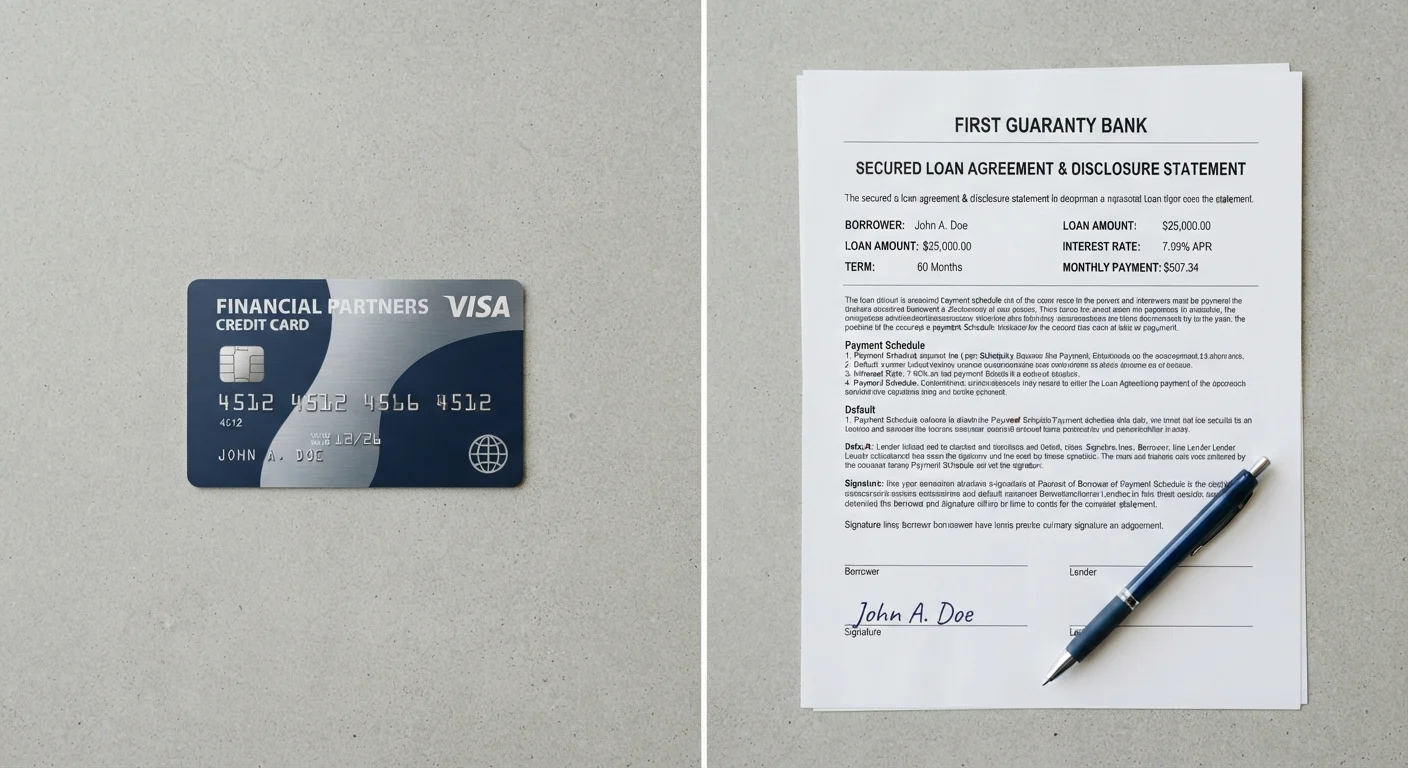
Credit cards and personal loans are built on different foundations. A credit card is revolving credit: you're given a credit limit, you borrow up to that limit, repay some or all of it, and the available credit replenishes. A personal loan is installment debt: you receive a lump sum, then repay it in fixed monthly installments over a set term — typically 12 to 84 months — until the balance reaches zero.
This structural difference has practical consequences at every stage of borrowing. With a credit card, minimum payments are often a small percentage of the balance, which means balances can linger for years if only minimums are paid. A personal loan eliminates that ambiguity: the amortization schedule is set at origination, so every payment moves you closer to a defined finish line.
Understanding this distinction matters before you decide how to finance anything — whether a home improvement, a medical bill, or a car. For more context on how the underlying collateral status of a loan can further shape your options, see secured vs. unsecured credit.
How Each Type Affects Your Credit Profile
The two products influence your credit score through different mechanisms.
Credit utilization — the percentage of your available revolving credit that you're using — is one of the most heavily weighted factors in major credit scoring models. Carrying a high balance on a credit card relative to its limit can meaningfully reduce your score, even if you make every payment on time. Paying down revolving balances can improve utilization quickly. Credit utilization shapes your score in ways many borrowers underestimate.
Personal loans, by contrast, appear on your credit report as installment accounts. They do not factor into utilization calculations. However, taking out a new loan generates a hard inquiry and reduces the average age of your accounts — both short-term score factors. Over time, consistently paying an installment loan can positively demonstrate credit management across account types.
Payment history is the single largest scoring factor for both products. A missed payment on either type can cause significant score damage, so on-time payment discipline is non-negotiable regardless of which you choose.
| Credit Card | Personal Loan | |
|---|---|---|
| Credit type | Revolving | Installment |
| Repayment structure | Flexible minimum payments | Fixed monthly payments |
| Interest rate type | Usually variable APR | Usually fixed APR |
| Typical APR range | Often 20%+ for carried balances | Varies; generally lower than cards |
| Affects credit utilization | Yes — directly impacts score | No — installment debt excluded |
| Payoff timeline | Open-ended | Defined term at origination |
| Best suited for | Short-term, flexible spending | Large, one-time expenses |
The Real Cost of Carrying a Balance
Interest rate differences between the two products are substantial. Credit card APRs (annual percentage rates) have historically been higher than personal loan rates, and interest on unpaid credit card balances typically compounds daily. A balance that isn't cleared each month grows faster than many borrowers anticipate.
Personal loans usually carry fixed interest rates set at origination. This means your cost of borrowing is known upfront and doesn't fluctuate with market conditions the way variable-rate credit products can. For a large expense you need time to repay, the predictability of a fixed-rate loan can be a meaningful financial advantage.
Using a Personal Loan to Consolidate Card Debt
Some borrowers use a personal loan to pay off multiple high-rate credit card balances, converting revolving debt into a single fixed installment. This can lower your overall interest rate and clear your credit utilization ratio — potentially improving your score. However, it only works if you avoid running the credit card balances back up after consolidating. Discipline in spending habits is essential for the strategy to deliver its intended benefit.
If you're weighing whether existing debt is working for or against your financial goals, understanding good debt vs. bad debt can help frame that assessment.
Choosing the Right Tool — and Repaying Strategically
The decision between a credit card and a personal loan shouldn't be driven by which is easier to access — it should reflect what you're financing and how you plan to repay it. Credit cards make sense for everyday spending you'll clear at month-end, or for purchases where rewards offset costs without carrying a balance. Personal loans make sense for defined, larger expenses where a structured repayment schedule supports your budget.
If you already carry balances across multiple products, the sequencing of repayment matters. The debt avalanche and debt snowball methods offer two evidence-based frameworks for prioritizing which balances to pay down first.
Before applying for either product, it's worth reviewing your credit standing. Checking your credit before a major financial decision can help you understand where you stand — and whether a new application is likely to be approved on favorable terms.
This article is for general informational and educational purposes only and does not constitute personalized financial or legal advice. Consult a qualified financial professional regarding decisions specific to your situation.