

Key Takeaways
- Credit utilization typically accounts for about 30% of a FICO score - making it one of the largest single factors.
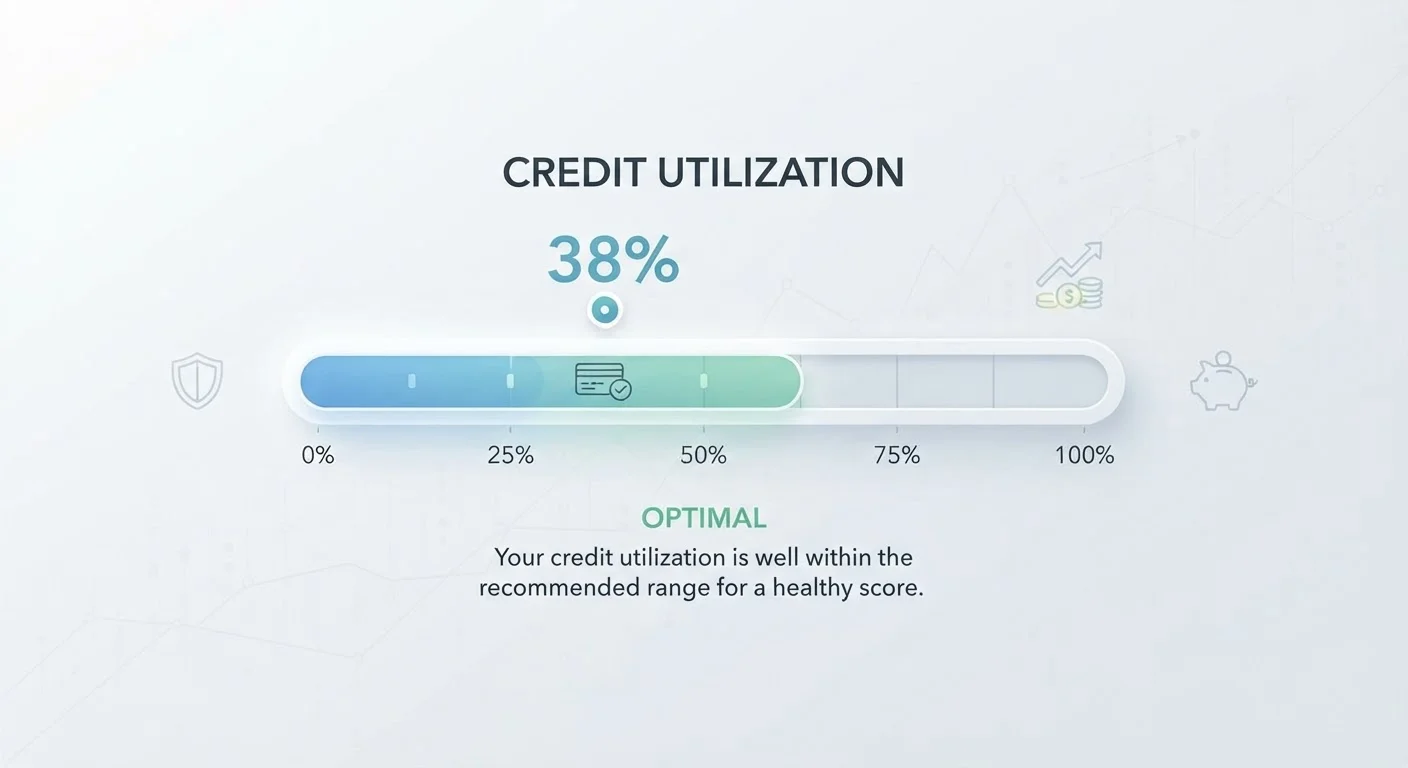
- Keeping utilization below 30% is a commonly cited guideline; lower is generally better.
- Utilization is calculated on revolving credit (credit cards, lines of credit) - not installment loans.
- Paying balances before your statement closing date can lower the utilization reported to bureaus.
- Requesting a credit limit increase can reduce your utilization ratio without paying down debt.
Credit Utilization
Credit utilization is the percentage of your available revolving credit that you're currently using. It's calculated by dividing your total credit card balances by your total credit limits across all accounts. For example, if you have $2,000 in balances and $10,000 in total credit limits, your utilization rate is 20%. Lenders and credit scoring models treat this ratio as a signal of how reliant you are on borrowed money.
Credit scoring models typically evaluate utilization both at the individual account level and in aggregate across all revolving accounts. A high ratio on a single card can hurt your score even if your overall utilization appears low.
Why Utilization Carries So Much Weight
Of all the factors that shape your credit score, credit utilization is one of the most immediately actionable - and one of the most frequently misunderstood. Under the FICO scoring model, which most major lenders rely on, payment history and amounts owed (which includes utilization) together account for roughly 65% of your score. Utilization alone typically represents around 30%.
The logic behind this weighting makes sense from a lender's perspective. A borrower who is consistently using a large fraction of their available credit may be stretched financially, making them a higher risk. Conversely, someone who keeps balances low relative to their limits signals that they're not dependent on credit to cover everyday expenses.
To understand how this fits into the broader picture of credit scoring, see our plain-language breakdown of every credit score factor.
~30%
Share of FICO score tied to amounts owed
According to FICO's published score factor weightings, 'amounts owed' - which includes utilization - represents approximately 30% of a standard FICO score.
<10%
Utilization common among high scorers
Data from FICO indicates that consumers with scores above 800 typically carry utilization rates in the single digits, well below the 30% guideline many advisers cite.
30%
Widely cited utilization guideline
Financial educators commonly recommend keeping your credit utilization below 30% across all revolving accounts, though lower is generally better for scoring purposes.
How the Ratio Is Actually Calculated
The math is straightforward. Add up all the balances on your revolving accounts, then divide that total by the sum of all your credit limits. Multiply by 100 to get a percentage. If you have three credit cards with balances of $500, $300, and $200 - and combined limits of $10,000 - your overall utilization is 10%.
But there's a subtlety many people miss: scoring models don't look only at your total utilization. They also assess each individual card. A single card carrying a $900 balance on a $1,000 limit is flagged as high utilization even if your other cards have zero balances and your overall ratio looks fine.
It's also worth noting that only revolving credit counts here. Installment loans - mortgages, auto loans, student loans - follow different rules. For a deeper look at how revolving and installment credit differ in their credit profile impact, see our article on how credit cards and personal loans affect your finances differently.
Time Your Payments Strategically
Find out when your card issuer reports balances to the credit bureaus - this is typically your statement closing date, not your payment due date. Paying down your balance before that date means a lower number gets reported, which can reduce your utilization ratio for that billing cycle. Many issuers will tell you the closing date if you ask, or you can find it on your statement.
Practical Ways to Manage Your Utilization
Because utilization is dynamic - recalculated each time your card issuer reports to the bureaus - it's one of the faster levers you can pull to influence your score.
- Pay before your statement closes. Your issuer typically reports your statement balance, not your current balance. Paying down the card before the billing cycle ends can mean a lower balance gets reported.
- Make mid-cycle payments. If you use your card heavily for everyday spending (and pay it off monthly), consider making a payment mid-cycle to reduce the balance before it's reported.
- Request a credit limit increase. If your issuer raises your limit and your spending stays the same, your utilization ratio falls automatically. Keep in mind that some limit-increase requests trigger a hard inquiry.
- Distribute spending across cards. Rather than concentrating charges on one card, spreading usage can prevent any single account from reaching a high utilization rate.
- Avoid closing unused cards. Removing a card's credit limit from your total available credit can raise your overall ratio, even if you never use the card.
If you've noticed a recent drop in your score and aren't sure why, this guide to common score drops covers utilization spikes alongside other frequent triggers.
Utilization and the Bigger Credit Picture
Managing utilization well is one part of a broader credit health strategy. A strong credit profile matters in more situations than most consumers initially expect - from renting an apartment to qualifying for a home loan. As our article on how credit scores shape your mortgage options explains, even a modest difference in your score can influence the loan programs available to you and the rates lenders may offer.
Before any major borrowing decision, it's worth reviewing your full credit report for accuracy - not just your score. Errors that inflate your reported balances can artificially raise your utilization ratio. Our field-by-field credit report guide can help you interpret what you're looking at, and disputing errors on your credit report explains what to do if you find a problem.
For a foundational understanding of how scores are constructed in the first place, credit scores explained is a useful starting point.
This article is for general informational purposes only and does not constitute financial or legal advice. Consult a qualified financial professional for guidance tailored to your individual situation.