

Key Takeaways
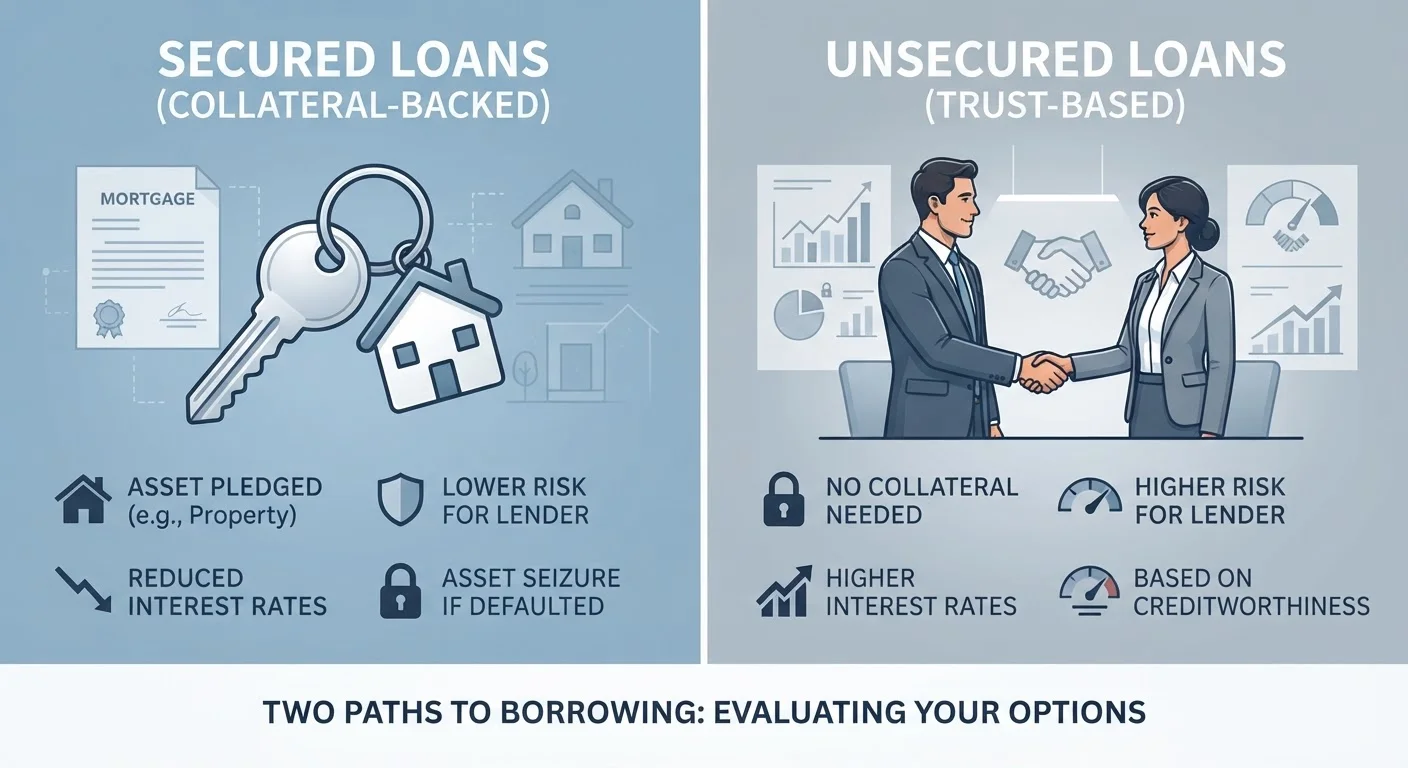
- Secured credit is backed by collateral; unsecured credit relies on your creditworthiness alone.
- Defaulting on secured debt can result in the lender seizing the pledged asset.
- Unsecured loans typically carry higher interest rates to compensate lenders for greater risk.
- Your credit score and income play a larger role in qualifying for unsecured credit.
- Both types appear on your credit report and affect your score when payments are missed.
Our Verdict
Neither secured nor unsecured credit is universally better - each serves a different purpose and carries a different risk profile. Secured credit generally offers lower rates but puts an asset on the line; unsecured credit preserves your property but costs more and demands stronger credit. The right choice depends on your financial situation, risk tolerance, and what you're borrowing for. Consulting a licensed financial adviser before taking on significant debt is always a prudent step.
| Best for | Recommended |
|---|---|
| Borrowers with an asset to pledge who want lower interest rates | Secured Credit |
| Borrowers who don't want to risk losing property and have solid credit | Unsecured Credit |
| Those building or rebuilding credit with limited history | Secured Credit (e.g., secured credit card) |
| Short-term borrowing for everyday expenses or emergencies | Unsecured Credit |
The Core Distinction: Collateral vs. Creditworthiness
When a lender extends credit, they're taking on risk - the possibility you won't repay. How they protect themselves against that risk defines whether a loan is secured or unsecured.
Secured credit is backed by a specific asset you pledge as collateral. If you stop making payments, the lender has a legal right to seize that asset to recover their money. Common examples include mortgages (secured by your home) and auto loans (secured by the vehicle). Unsecured credit carries no such claim on your property. The lender relies entirely on your promise to repay - supported by your credit history, income, and debt obligations. Credit cards, personal loans, and student loans are typically unsecured.
This structural difference shapes nearly everything about how each type of credit works: the rates offered, the qualification criteria, and the consequences if repayment breaks down.
How Interest Rates and Terms Differ
Because secured lenders have a fallback - they can reclaim the asset - they take on less risk. That reduced risk typically translates into lower interest rates and longer repayment terms for borrowers. A mortgage, for example, may carry a rate significantly below what a personal loan would offer for a similar borrower profile.
Unsecured lenders have no such safety net, so they price that risk into the rate. Credit card APRs and personal loan rates are generally higher than their secured counterparts, all else being equal. Borrowers with stronger credit profiles will see better unsecured rates, but the structural premium remains.
| Secured Credit | Unsecured Credit | |
|---|---|---|
| Collateral required | Yes - asset pledged to lender | No - based on creditworthiness |
| Typical interest rates | Generally lower | Generally higher |
| Default consequence | Asset repossession or foreclosure | Collections, lawsuits, wage garnishment |
| Approval with poor credit | More accessible | Harder to qualify; higher rates |
| Common examples | Mortgage, auto loan, secured card | Credit card, personal loan, student loan |
| Credit report impact | Yes, reported on both types | Yes, reported on both types |
That rate difference compounds meaningfully over time. Borrowing $20,000 unsecured at a notably higher rate versus secured at a lower rate can result in thousands of dollars in additional interest paid over the loan's life - a real cost worth calculating before you borrow. See how revolving credit and installment loans compare across other dimensions as well.
What Happens When You Default
The consequences of non-payment diverge sharply between the two types.
With secured debt, default can trigger repossession or foreclosure. Miss enough auto loan payments and the lender can repossess the car. Stop paying your mortgage and you may face foreclosure - the loss of your home. Even after losing the asset, you can still owe a deficiency balance if the sale doesn't cover what's owed.
With unsecured debt, the lender cannot directly seize property for non-payment. However, that doesn't mean consequences are mild. Delinquencies damage your credit score, the account may be sent to collections, and lenders can sue for repayment. A court judgment could ultimately lead to wage garnishment or bank account levies, depending on state law.
Don't Underestimate Unsecured Default Risk
Because unsecured lenders can't immediately take your property, borrowers sometimes treat these debts as lower stakes. That's a costly misconception. Unpaid unsecured debts can lead to lawsuits, court judgments, and legal collection actions that vary by state but can be severe. Treat all debt obligations with equal seriousness regardless of whether collateral is involved.
Both types of default are reported to credit bureaus and can remain on your credit report for up to seven years, affecting future borrowing access and costs. Review your credit before any major financial decision to understand where you stand before taking on new debt.
Qualifying for Each Type of Credit
Secured credit can be more accessible to borrowers with limited or damaged credit histories - precisely because the lender holds collateral. A secured credit card, for example, requires a cash deposit that acts as your credit limit. This makes it a common tool for building credit strategically.
Unsecured credit approval leans heavily on your credit score, income, and existing debt load. Lenders use these to estimate the likelihood you'll repay without any asset backstop. A strong credit profile - consistent payment history, low credit utilization ratio, and manageable existing debt - improves access and lowers rates. Those with thinner credit files or past delinquencies may find unsecured credit harder to obtain, or available only at higher rates.
For larger secured loans like mortgages, your credit score significantly shapes the terms and loan programs available to you - even within the secured category.
This article is for general informational and educational purposes only and does not constitute personalized financial, legal, or investment advice. Consult a qualified financial professional before making borrowing decisions based on your individual circumstances.