

Key Takeaways
- Most garden plants need about one inch of water per week from rain or irrigation combined.
- Watering deeply and infrequently encourages stronger, deeper root systems.
- Early morning is the best time to water-less evaporation, lower disease risk.
- Soil type affects how quickly water drains and how often you need to irrigate.
- Overwatering is just as harmful as underwatering and is a very common beginner mistake.
- Mulch helps retain soil moisture and can significantly reduce how often you need to water.
What you will need
Understanding What Your Garden Actually Needs
Watering sounds simple, but it's one of the areas where new gardeners most often go wrong-usually by watering too often rather than too little. Before you pick up the hose, it helps to understand a few fundamentals about how plants use water and how soil holds it.
Most established garden plants prefer consistent, deep moisture rather than frequent shallow sprinkles. Shallow watering keeps moisture near the surface, which is where it evaporates fastest. It also encourages roots to stay near the top of the soil, where they're more vulnerable to heat and drought stress. Deep watering-soaking the soil 6 to 8 inches down-draws roots downward and builds a more resilient plant.
Your soil type plays a major role here. Sandy soils drain quickly and may need more frequent watering. Clay soils hold water longer but can become waterlogged. Loamy soil (a balanced mix) is generally the easiest to manage. If you're unsure which type you have, the Spring Garden Prep Checklist covers soil testing as part of your seasonal setup.
The garden setup itself matters too. Raised beds drain faster than in-ground plots and often need more frequent watering, especially in summer heat. Keep that in mind when building your watering routine.
The Finger Test Is Your Best Tool
No app or schedule replaces checking the soil directly. Push your finger 2 to 3 inches into the soil-if it's moist, skip watering for the day. This habit alone prevents the majority of overwatering problems. Make it part of your daily garden walk.
How Much and How Often to Water
A widely used general guideline is that most vegetable and flower gardens need about one inch of water per week, including rainfall. That translates to roughly 0.6 gallons per square foot of garden bed. A simple rain gauge placed in your garden helps you track what nature provides so you can make up the difference.
That said, one-inch-per-week is a starting point, not a fixed rule. Factors that increase water needs include:
- High heat and wind - both accelerate evaporation from soil and leaves
- Sandy or fast-draining soil - water moves through quickly
- Young transplants and seedlings - their shallow root systems need more consistent moisture
- Container plants - pots dry out much faster than garden beds
Factors that reduce water needs include established perennials with deep roots, mulched beds, and cooler or cloudy weather. If you're growing vegetables from seed, check out why seeds fail to germinate - inconsistent moisture during germination is one of the most common culprits.
Overwatering Can Kill Plants Too
Waterlogged soil deprives roots of oxygen, causing wilting that looks identical to drought stress-leading some gardeners to water even more. If your plants are yellowing, dropping leaves, or wilting despite regular watering, check the soil before adding more water. If the soil is soggy, hold off and allow it to dry out partially before resuming your routine.
When and How to Water Effectively
Early morning is the best time to water your garden. Temperatures are cooler, so less water is lost to evaporation before it reaches the roots. Watering in the morning also allows any moisture on leaves to dry off during the day, which reduces the risk of fungal diseases like powdery mildew.
Avoid watering in the heat of midday-you'll lose a significant portion to evaporation before it penetrates the soil. Evening watering is acceptable if morning isn't possible, but wet foliage overnight can encourage fungal issues, especially in humid climates.
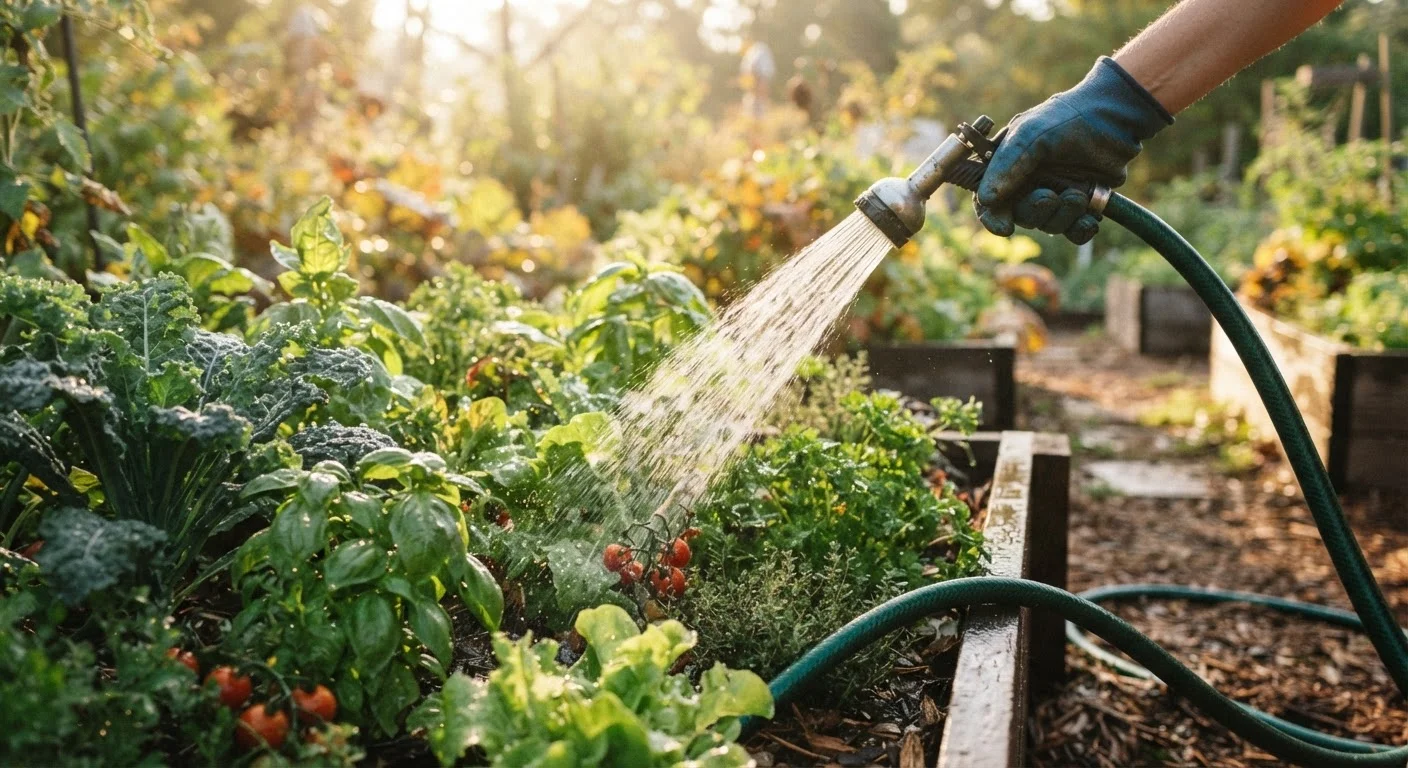
For delivery method, aim water at the base of plants rather than overhead when possible. Soaker hoses and drip irrigation systems are excellent options because they deliver water directly to the root zone with minimal waste. A watering wand with a gentle rose head also works well for hand watering without disturbing the soil surface.
Applying a 2- to 3-inch layer of organic mulch-such as straw, shredded leaves, or wood chips-around your plants can reduce soil moisture loss by up to 50%, meaning you water less frequently while keeping plants more consistently hydrated.
For a broader look at caring for your outdoor spaces alongside your home's other maintenance needs, the Starting a Vegetable Garden from Scratch guide pairs well with these watering basics.