

Key Takeaways
- Physical barriers like row covers and copper tape stop many pests before they reach plants.
- Beneficial insects such as ladybugs and lacewings naturally suppress aphid and mite populations.
- Crop rotation breaks pest life cycles and reduces soil-borne disease pressure year over year.
- Healthy, well-fed soil grows stronger plants that are more naturally resistant to pest damage.
- Consistent monitoring lets you catch small infestations before they become overwhelming problems.
Why Try Non-Chemical Methods First?
Chemical pesticides can be effective, but they often come with trade-offs: they may harm beneficial insects, contaminate soil or water, and create pest populations that develop resistance over time. Non-chemical approaches - sometimes called integrated pest management (IPM) - prioritize prevention and biological controls first, reserving stronger interventions only when truly necessary.
IPM isn't about letting pests run wild. It's about stacking smart, low-risk strategies so your garden stays healthy without disrupting the ecosystem that supports it. If you're just getting started, our beginner's guide to starting a vegetable garden covers the foundational steps that make pest prevention much easier from the start.
Best Practices for Chemical-Free Pest Control
The following practices form the core of a non-chemical pest management toolkit. Used together, they create multiple overlapping layers of protection.
Install physical barriers before pests arrive.
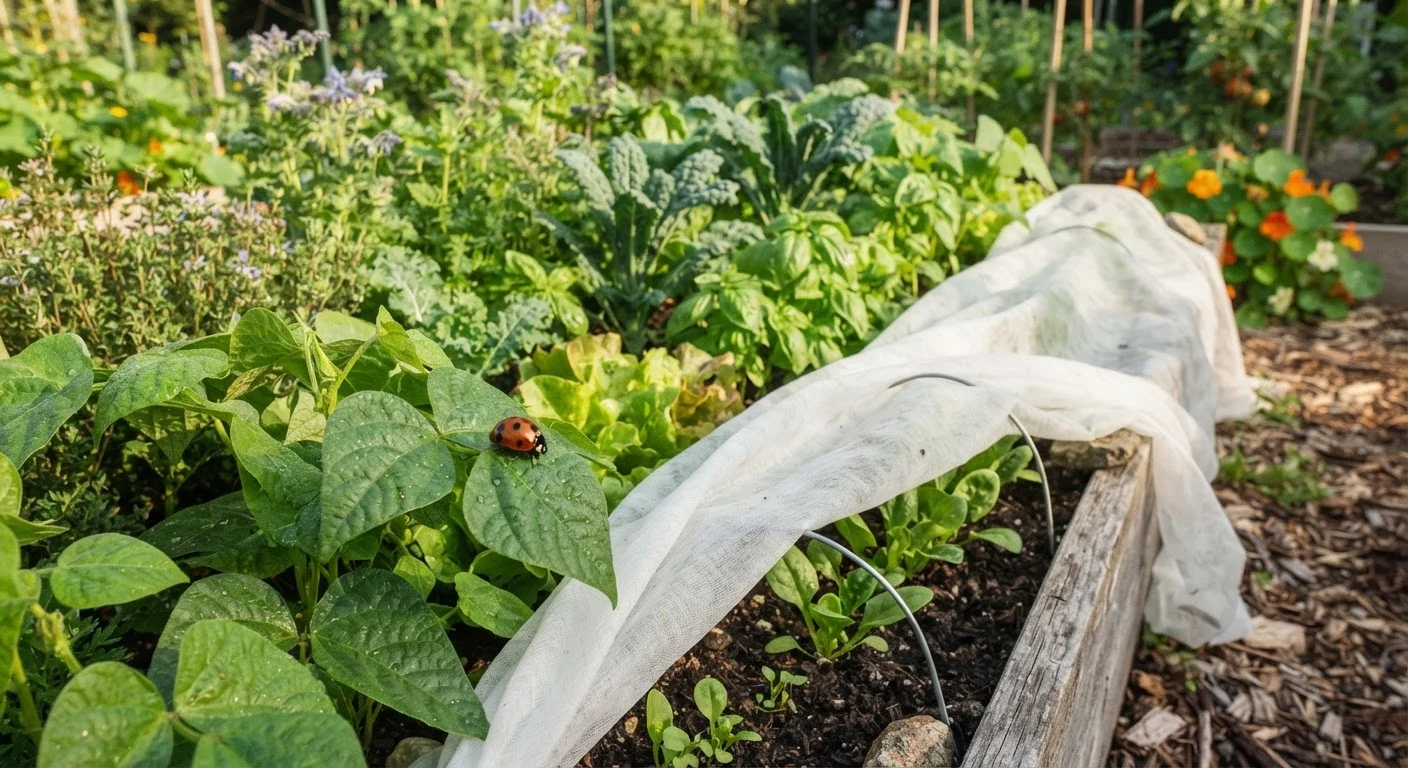
Row covers, copper tape, and fine mesh netting physically exclude insects, slugs, and flying pests from reaching plants. Prevention is far easier than elimination once a population is established. These barriers are reusable season after season, making them cost-effective over time.
Attract and protect beneficial insects.
Predatory insects like ladybugs, lacewings, parasitic wasps, and ground beetles naturally suppress populations of aphids, whiteflies, caterpillar eggs, and other common pests. Planting nectar-rich flowers nearby gives these allies a reason to stay. Avoiding broad-spectrum sprays preserves the beneficial insect population you've worked to build.
Rotate crops each season.
Many pests and soil-borne diseases are plant-family-specific. Moving crops to a different bed each year disrupts the life cycle of pests that overwinter in the soil near their preferred host. A simple three- or four-year rotation reduces recurring infestations without any additional products.
Prioritize soil health as a foundation.
Plants grown in nutrient-balanced, well-structured soil develop stronger cell walls, more robust immune responses, and better root systems - all of which make them less attractive to opportunistic pests and more capable of surviving minor damage. Over-fertilized plants, especially those with excess nitrogen, actually attract certain insects like aphids. Our article on fertilizer myths explains common mistakes that inadvertently invite pest problems.
Hand-pick and physically remove pests on sight.
For many garden pests - especially caterpillars, beetles, and egg masses - manual removal is surprisingly effective when caught early. It requires no products, creates no resistance, and gives you immediate feedback about pest pressure levels. Consistency is the key; a quick daily scan prevents small problems from escalating.
Use companion planting to confuse or deter pests.
Certain plant pairings can mask the scent of host plants, attract predatory insects, or act as trap crops that draw pests away from more valuable plants. While companion planting effects vary and research is still evolving in this area, many gardeners find it a useful complementary layer in a broader IPM strategy.
Quick Actions You Can Take Today
You don't need to overhaul your entire garden to start reducing pest pressure. A few targeted actions this week can make a measurable difference by next season.
Start With the Least Disruptive Option
When you spot a pest problem, ask yourself: can I remove this by hand, or cover this plant, before trying anything else? Even organically approved sprays - like neem oil or insecticidal soap - can harm beneficial insects if applied broadly. Match your response to the scale of the problem, and escalate only when necessary.
Strong soil health is one of the best long-term investments you can make. Compost improves soil structure, feeds beneficial microbes, and helps plants grow more resilient root systems. See our guide on composting kitchen scraps at home to get started with a simple pile.
Monitoring: The Habit That Ties It All Together
Every practice in this article works better when paired with regular observation. Walk your garden two or three times a week and look at leaf undersides, stems, and the soil surface near plant bases - common hiding spots for aphids, caterpillar eggs, and slugs.
~30%
Crop loss attributed to insects and pests globally
The Food and Agriculture Organization of the United Nations estimates that insects and plant diseases account for roughly 20-40% of global crop losses annually, underscoring the value of early intervention.
1,500+
Species of beneficial insects in North American gardens
Research from entomology programs at several U.S. land-grant universities documents over 1,500 naturally occurring predatory and parasitic insect species that help suppress pest populations without human intervention.
Keep a simple notebook or phone note logging what you find and when. Patterns emerge quickly: you'll notice that squash vine borers appear around the same time each summer, or that aphids spike after a rainy stretch. That knowledge helps you time interventions more precisely and avoid spraying anything - chemical or otherwise - unnecessarily.
Before spring planting, use our Spring Garden Prep Checklist to reset beds and build in pest-prevention steps from the very first day of the season.
Container Gardeners Face Similar Challenges
Pests don't skip container gardens - aphids, fungus gnats, and spider mites are just as common on balcony plants as in ground beds. The same IPM principles apply: inspect regularly, use physical barriers where possible, and encourage air circulation. Our guide to container gardening in small spaces includes additional tips specific to pots and planters.