

Key Takeaways
- Defensive driving is a proactive mindset, not just a set of rules to memorize.
- The three-second following distance rule is one of the simplest and most effective habits you can adopt.
- Scanning ahead 10-15 seconds gives your brain time to process hazards before they become emergencies.
- Distraction and aggression are two of the most common reasons defensive habits break down.
- Defensive driving benefits drivers of all ages and experience levels, including teen and senior drivers.
Defensive Driving
Defensive driving is a set of skills and mental habits that help you anticipate hazards and respond to the mistakes of other drivers before those mistakes cause a crash. Rather than simply reacting to what happens, a defensive driver actively scans the road, maintains safe following distances, and plans escape routes. The goal is to reduce risk - not just follow traffic laws.
The National Safety Council defines defensive driving as driving to save lives, time, and money, despite the conditions around you and the actions of others.
What Defensive Driving Actually Means
Most drivers consider themselves safe - yet the U.S. sees millions of police-reported crashes every year. The gap between self-perception and reality points to a foundational issue: many drivers are reactive rather than anticipatory. Defensive driving closes that gap.
At its core, defensive driving is a mental posture. It means assuming that other drivers, pedestrians, cyclists, and road conditions will not always behave predictably - and building that uncertainty into every decision you make behind the wheel. You are not just following traffic laws; you are actively managing risk on behalf of yourself and everyone around you.
This mindset differs meaningfully from aggressive or inattentive driving. Aggressive driving treats speed and convenience as top priorities. Defensive driving treats safety as the non-negotiable, accepting a slower pace or a slightly longer route when the alternative adds risk.
94%
Crashes attributable to human error
According to the National Highway Traffic Safety Administration (NHTSA), human choice or error is a critical reason in approximately 94% of serious crashes.
3 sec
Minimum recommended following distance
Safety educators widely recommend a minimum three-second gap between vehicles, extending to four or more seconds in adverse conditions.
~43,000
U.S. traffic fatalities in a recent year
NHTSA data has consistently recorded roughly 35,000-43,000 annual traffic deaths in the U.S. over recent reporting periods, underscoring the ongoing scale of road safety risk.
The Core Habits That Make It Work
Defensive driving translates into a handful of specific, repeatable habits. None of them require advanced skill - they require attention and consistency.
Scan Far Ahead
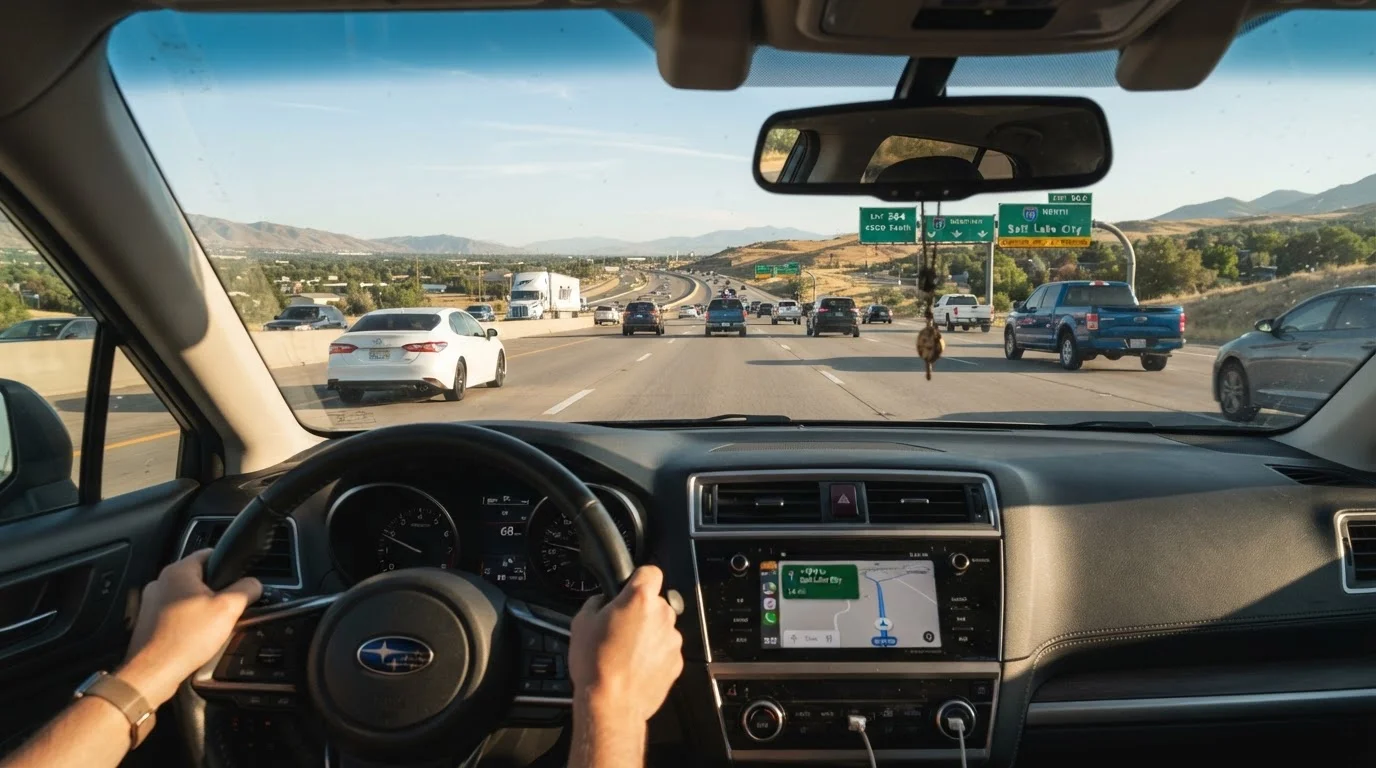
Most drivers focus on the car immediately in front of them. Defensive drivers look 10 to 15 seconds ahead - roughly a city block at urban speeds, or a quarter mile on a highway. This extended scanning window gives your brain time to register a slowdown, a merging truck, or a pedestrian about to step off the curb before it becomes an emergency.
Maintain a Safe Following Distance
The three-second rule is one of the most reliable tools in any driver's toolkit. It works at any speed and is easy to verify in real time. In rain, fog, or snow, that cushion should expand - conditions that call for adapted driving habits across every aspect of your technique.
Manage Your Space Cushion
Beyond following distance, defensive drivers think about all four sides of their vehicle. Avoid lingering in a truck's blind spot. Leave room to maneuver to the right if someone suddenly merges into your lane. Staying out of clustered traffic packs - sometimes called highway convoys - dramatically reduces your exposure to chain-reaction crashes.
Minimize Distractions
Phones get most of the headlines, but distraction takes many forms. Eating, adjusting the radio, or simply daydreaming pulls your attention off the road just long enough for a hazard to develop without warning. Defensive drivers treat the cab of their vehicle as a focused workspace, not a multitasking zone.
Apply the SIPDE Method
Many driver education programs teach the SIPDE process: Scan, Identify, Predict, Decide, Execute. Rather than just reacting, you continuously scan ahead, identify potential hazards, predict how they might develop, decide on your response, and execute it smoothly. Running through this loop becomes automatic with practice and is one of the most effective frameworks for sustained defensive awareness.
Why This Mindset Matters for Every Driver
Defensive driving is sometimes framed as a beginner's subject - something covered in driver's ed and then set aside. That framing undersells it. Experienced drivers face their own version of the problem: familiarity breeds complacency. The more automatic driving feels, the easier it is to stop actually thinking about it.
For new teen drivers, defensive habits established early become second nature over time. For experienced motorists, revisiting those habits - perhaps through a formal refresher course - can surface blind spots that have quietly developed over years of routine commuting.
Vehicle condition also plays a role. A car with worn tires, dim headlights, or failing brakes limits the margin you have to respond, even when your mindset is exactly right. A quick pre-trip walk-around and consistent vehicle maintenance ensure your equipment supports your intentions.
“The goal of defensive driving is simple: expect the unexpected. Every time you get behind the wheel, you share the road with people who are distracted, impaired, or simply making mistakes. Your job is to give yourself enough time and space to respond to whatever they do.”
— National Safety Council, U.S. nonprofit organization focused on eliminating preventable deaths
Ultimately, defensive driving is not about assuming the worst in others - it is about taking responsibility for the part of the road you control. That shift in ownership is what separates drivers who consistently avoid trouble from those who consistently find it.
This article is for general informational purposes only. Always follow applicable traffic laws and consult a qualified driving instructor for personalized guidance.