

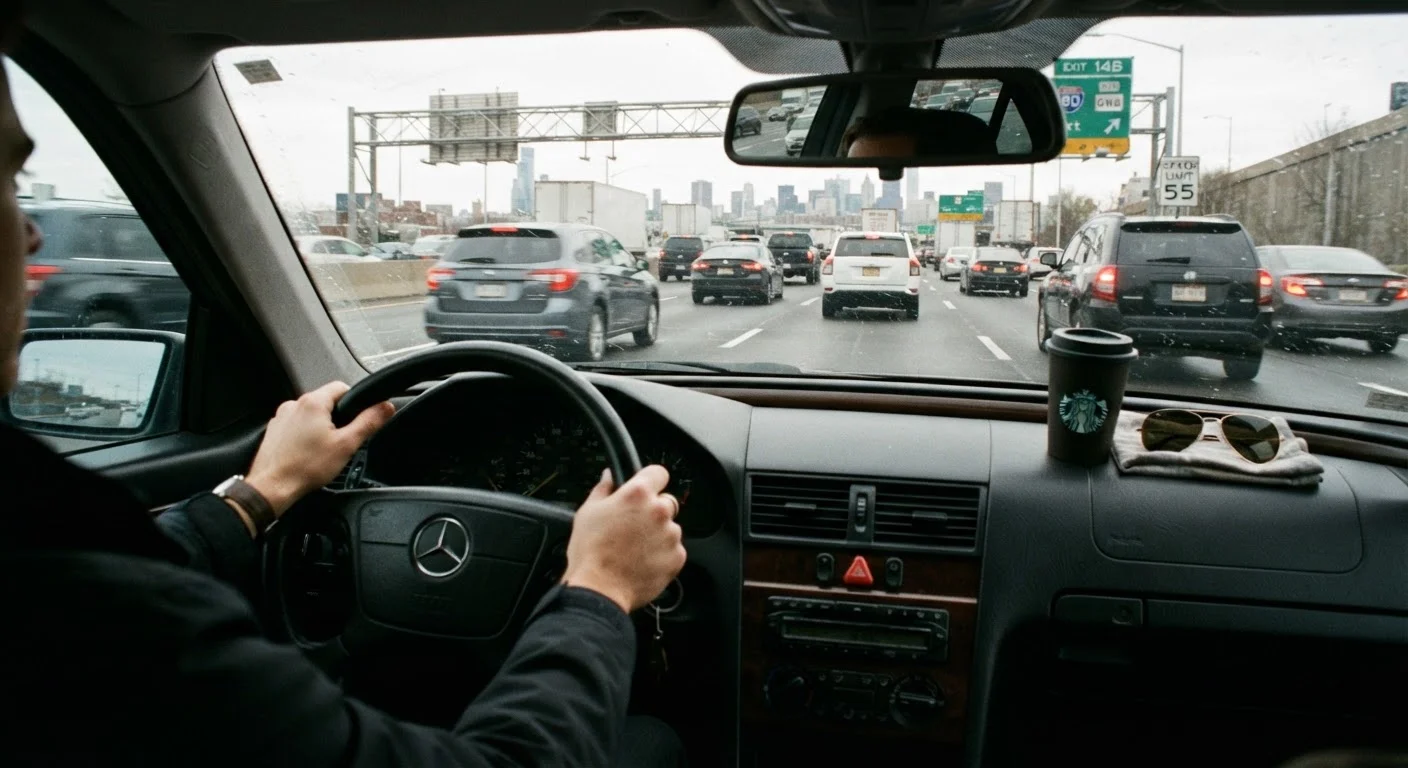
Key Takeaways
- Phone use gets the most attention, but eating, navigation, and mind-wandering are equally dangerous distractions.
- Cognitive distraction - where your mind drifts even while eyes stay on the road - is widely underestimated by drivers.
- Many in-vehicle technology systems, including built-in navigation, demand meaningful visual and mental attention.
- Passengers, strong emotions, and even music choices can impair driving focus in measurable ways.
- Simple pre-trip habits and intentional routines can significantly reduce your distraction exposure before you move.
Why Distraction Is Bigger Than the Headline Villain
Smartphone use while driving is a legitimate safety crisis - laws have tightened, campaigns have multiplied, and most drivers know it's dangerous. Yet research from the AAA Foundation for Traffic Safety and the National Highway Traffic Safety Administration consistently shows that distraction-related crashes involve far more than handheld devices. Eating a sandwich, arguing with a passenger, or simply losing yourself in thought can pull your attention away from the road just as effectively as scrolling a feed.
Distraction falls into three categories: visual (eyes off the road), manual (hands off the wheel), and cognitive (mind off the task of driving). The most dangerous distractions hit all three simultaneously - but even purely cognitive distraction, with eyes forward and hands in place, meaningfully degrades hazard detection. Understanding the full range of attention thieves is the first step toward managing them. The list below covers the ones most drivers underestimate. For a broader framework on staying sharp behind the wheel, see our guide to defensive driving.
Set Up Before You Set Off
Treat the two minutes before you leave as your distraction-prevention window. Adjust mirrors, confirm your route, secure loose items, and put your phone in do-not-disturb mode. Addressing these details while parked eliminates the temptation to handle them on the move.
The Overlooked Attention Thieves
Eating and Drinking While Driving
Grabbing a drive-through meal to eat on the road feels like a time-saver, but it combines manual and visual distraction in a way that's hard to fully appreciate until something goes wrong. Unwrapping food, managing spills, and handling containers all pull at least one hand off the wheel and draw your eyes downward repeatedly. Studies cited by NHTSA have identified eating and drinking as a contributor to a notable share of distraction-involved crashes. The fix is straightforward: pull into a parking lot, take ten minutes, and arrive focused.
Unwrapping food and managing spills pulls hands off the wheel and eyes off the road repeatedly.
In-Vehicle Navigation and Infotainment Systems
Built-in screens and GPS units are marketed as driver-friendly, but that doesn't mean they're attention-neutral. AAA research has found that some factory-installed infotainment systems demand more than 40 seconds of visual and cognitive attention to complete tasks like entering a destination. At highway speed, 40 seconds of divided attention covers significant distance. Voice commands help but don't eliminate the problem entirely. The practical rule: set your route fully before you drive, and resist reconfiguring it while moving.
Some factory infotainment systems can demand over 40 seconds of divided attention to complete a single task.
Daydreaming and Cognitive Wandering
Mind-wandering may be the most underestimated distraction of all. A driver's eyes can be scanning the road while the brain is rehearsing a conversation, replaying an argument, or planning tomorrow's schedule. This is purely cognitive distraction, and it's both common and difficult to self-monitor. Research has linked mind-wandering to slower hazard response times and reduced awareness of unexpected events. On familiar routes - the daily commute, for instance - the brain tends to go on autopilot more readily, making routine drives paradoxically riskier in this respect.
Eyes forward doesn't mean mind engaged - cognitive wandering slows hazard response even when vision is directed at the road.
Passengers and In-Car Conversations
Passengers can both help and hurt driver focus. A calm adult passenger may actually improve alertness by offering a second set of eyes and keeping the driver from drifting mentally. But heated conversations, emotional discussions, and managing young children or pets in the back seat create genuine cognitive and manual load. Research on teen drivers has repeatedly shown that crash risk rises with each additional young passenger in the vehicle - a key reason graduated licensing laws in most U.S. states restrict passengers for new drivers. Recognize when a conversation needs to pause so you can handle a complex merge or an unexpected situation.
Managing emotional conversations or children in the back seat creates real cognitive load that degrades driving performance.
Grooming and Personal Tasks
Applying makeup, shaving, adjusting clothing, or checking appearance in the rearview mirror are manual and visual distractions that take both hands and eyes away from driving. These tasks tend to cluster around commuter traffic, when the temptation to multitask is highest and traffic density is also highest. The rearview mirror is a safety tool, not a vanity mirror - redirecting its use even momentarily for personal grooming removes a critical monitoring function at exactly the wrong time.
Redirecting the rearview mirror for grooming removes a critical safety monitoring function at high-traffic moments.
Roadside Events and External Visual Distractions
Rubbernecking - slowing and staring at an accident, flashing lights, or an unusual roadside sight - is so common it has a name, yet drivers rarely count it as distracted driving. This behavior is a visual distraction that ripples through traffic, frequently causing secondary crashes near incident scenes. Similarly, billboards, construction activity, and dramatic weather can pull sustained attention. The discipline is the same in each case: consciously return focus to your lane, your following distance, and what the vehicles around you are doing.
Rubbernecking near accident scenes is a leading cause of secondary crashes - refocus on your lane deliberately.
Strong Emotions Behind the Wheel
Driving while emotionally activated - angry, anxious, grieving, or even intensely excited - is a form of cognitive distraction that impairs judgment and reaction time in ways similar to mild intoxication. Emotional arousal narrows attention, increases impulsive decision-making, and makes it harder to process unexpected events. If you've just had a difficult phone call, a stressful meeting, or upsetting news, taking a few minutes to settle before starting the engine is a concrete safety measure, not just good advice.
Driving while emotionally activated narrows attention and impairs judgment in ways that mirror mild impairment.
All Three Distraction Types Matter
Federal traffic safety agencies define distraction as visual (eyes off road), manual (hands off wheel), or cognitive (mind off driving). Many everyday activities combine two or three types at once, multiplying their impact. A task that seems minor in isolation can become genuinely hazardous under real driving conditions, especially in dense traffic or at highway speeds.
Building Better Habits Before You Move
Many of these distractions are preventable with a few minutes of preparation. Program navigation before leaving the driveway. Finish your coffee at home. Set a playlist or podcast that doesn't demand constant fiddling. If you're traveling with children or pets, establish expectations for the ride before you pull out. These steps take less than five minutes and pay dividends across every mile.
Parents of new drivers have a particular opportunity here - modeling distraction-free habits is one of the most powerful things an experienced driver can do. Teen drivers absorb behavior they observe, which makes your in-car routine a teaching tool. Learn more about creating good foundations in our article on safe driving with new teen drivers. On longer routes, fatigue and monotony add extra layers of cognitive drift - our safe driving habits for long road trips covers strategies for staying alert over the haul.