

Key Takeaways
- Gutters protect your foundation, siding, fascia board, and landscaping - not just your roof edge.
- Clogged gutters are one of the most common causes of preventable water damage in homes.
- Cleaning gutters twice a year - spring and fall - is the minimum for most homes.
- Signs of gutter failure include sagging sections, paint peeling on siding, and water stains near the foundation.
- Even minor gutter neglect can compound into thousands of dollars in structural repairs over time.
Gutter System
A gutter system is the network of channels, downspouts, and fasteners mounted along a roof's edge to collect rainwater and direct it safely away from a home's foundation. Without functioning gutters, water pools against the structure, creating conditions for rot, erosion, and moisture intrusion. Gutters are one of the most cost-effective defenses a home has against water damage.
A standard residential gutter is sized by cross-sectional area - typically 5-inch K-style channels for most homes - and should be pitched at roughly 1/16 inch of drop per foot of run toward downspouts to maintain adequate flow.
What Gutters Actually Do
Most homeowners think of gutters as a roof accessory - something that keeps rain from dripping on your head at the front door. In reality, a gutter system is your home's primary water management tool, working every time it rains to route runoff safely away from the structure.
During a one-inch rainfall event, a 1,000-square-foot roof sheds roughly 600 gallons of water. Without functioning gutters, that water cascades off the roofline and saturates the soil directly against your foundation, seeps behind siding, erodes landscaping, and collects in window wells. The ripple effects from that single storm can start quietly and grow into expensive structural problems over months or years. As this breakdown of deferred maintenance costs illustrates, small neglect has a way of compounding.
~600 gal
Runoff from 1 inch of rain on a 1,000 sq ft roof
This figure is derived from standard rainfall-runoff calculations used in residential stormwater planning.
4-6 ft
Minimum downspout extension from foundation
Home extension guidelines commonly recommend this distance to prevent soil saturation near foundation walls.
2×/year
Recommended minimum gutter cleaning frequency
Most roofing and home maintenance authorities recommend spring and fall cleanings as a baseline for average homes.
The Real Damage a Clogged Gutter Causes
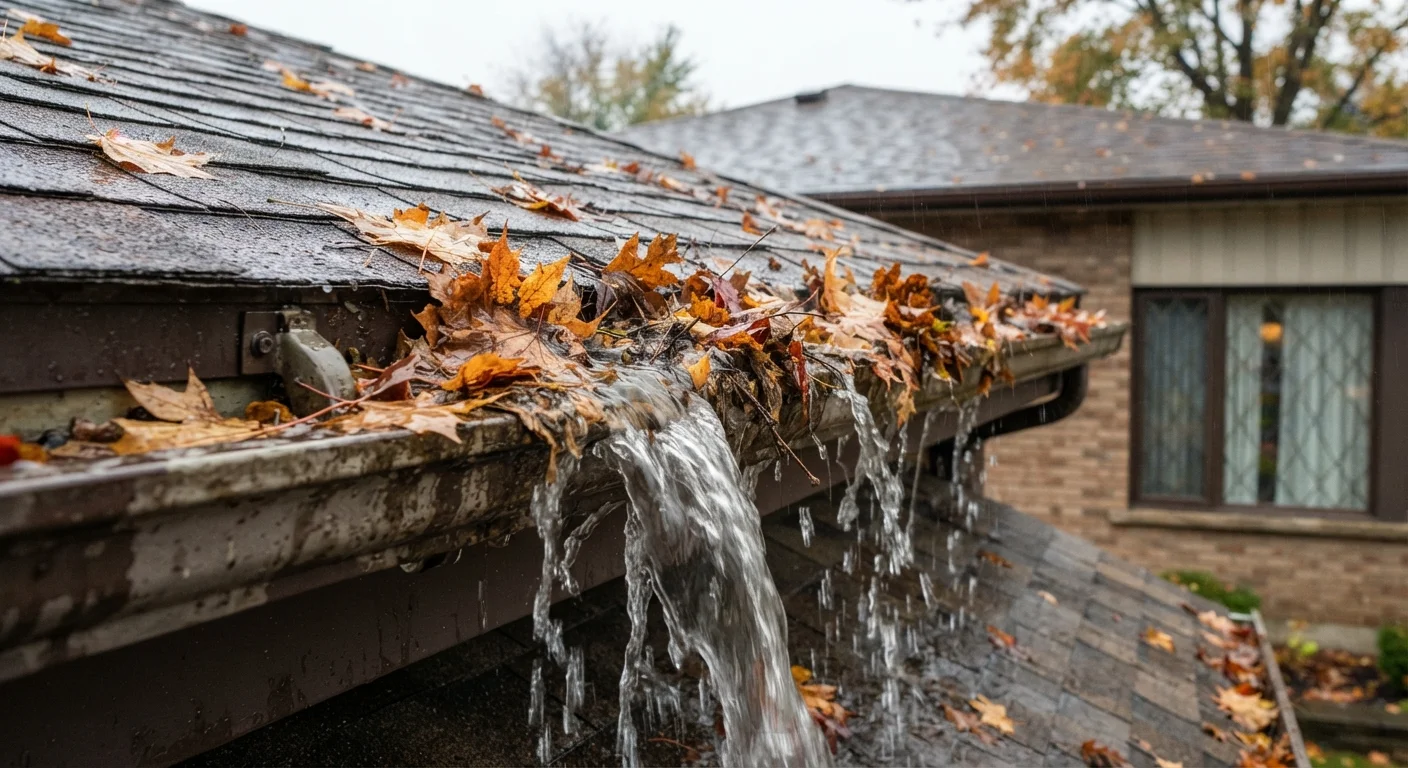
When debris blocks a gutter, water has nowhere to go but over the edge - right next to your home. Here's where that leads:
- Foundation damage: Saturated soil expands and contracts with temperature changes, placing lateral pressure on foundation walls. Cracks and settling are common long-term results.
- Fascia and soffit rot: The fascia board is the flat board the gutter mounts to. Standing water or persistent overflow soaks this wood, causing rot that can spread into the soffit and the roof deck behind it.
- Siding deterioration: Water spilling down your siding can work behind clapboards or fiber cement panels, encouraging mold growth and causing paint to peel.
- Basement and crawl space moisture: Water pooling near the foundation eventually finds its way inside through cracks, block mortar joints, or window wells.
- Ice dams in winter: In cold climates, clogged gutters trap snowmelt, which refreezes at the roof's edge and forces ice underneath shingles - a leading cause of interior water staining.
For a deeper look at roof-related warning signs, see how to read the messages your roof is sending before small problems escalate.
A homeowner notices paint peeling on the siding directly below the back gutter after a rainy season, but assumes it's just old paint.
After two wet winters, a homeowner discovers horizontal cracks forming low on the basement wall and damp spots on the floor.
An ice dam forms each February along the front roofline, eventually causing a ceiling stain in the bedroom below.
A Practical Maintenance Schedule
Consistent upkeep prevents the majority of gutter-related damage. Follow a simple seasonal rhythm:
- Late spring: Clear out seed pods, pollen buildup, and debris from spring storms. Check that downspouts are flowing freely and confirm all hangers are tight after winter's freeze-thaw cycles.
- Late fall: Wait until trees in your area have dropped most of their leaves, then do a thorough clean. Flush gutters with a garden hose to confirm water flows to downspouts without backing up.
- After major storms: Do a visual inspection from the ground. Look for sagging sections, gutters pulling away from the fascia, or noticeable debris blockages.
- Annual inspection: Check caulking at corners and end caps, look for rust spots or small holes, and confirm downspout extensions are directing water at least 4-6 feet from the foundation.
Extend Your Downspouts the Right Way
Downspout water should discharge at least 4-6 feet from your home's foundation, sloping away from the structure. Flexible downspout extenders are inexpensive and easy to add. Make sure the discharge point doesn't pool against a neighbor's property or create its own erosion problem.
Spring is also an excellent time to do a broader home check - our spring home inspection walkthrough covers what to look for from roof to foundation.
When to Call a Professional
Ladder work is the most common source of DIY injury around the home, so know your limits. Hire a professional when gutters are higher than one story, when your roof pitch is steep, or when you notice structural issues like significant wood rot or gutters that have pulled away from the framing itself.
Gutter repair - sealing a joint, replacing a short section, or re-pitching a sagging run - is generally affordable when caught early. Waiting until rot has spread into the fascia, soffit, or roof deck turns a modest repair into a major project. The pattern of water damage causing cascading costs is well-documented; common water damage myths can help you separate fact from fiction before deciding whether to wait or act.
This article provides general home maintenance guidance for informational purposes. Costs, local building codes, and specific structural conditions vary. Always consult a qualified contractor when in doubt about the safety or scope of a repair.