

| Typical asphalt shingle lifespan | 20-30 years (General industry guidance; varies by product type and climate) |
| Recommended inspection frequency | Twice per year (spring & fall) |
| Most common leak entry points | Flashing around chimneys, vents, and valleys |
| Granule loss indicates | UV protection degrading; shingles nearing end of life |
| Sagging roof deck cause | Prolonged moisture absorption in decking material |
How to Read Your Roof's Warning Signs
Your roof doesn't fail overnight. Long before a leak soaks your ceiling or a shingle blows into the yard, your roof sends quieter signals - granule buildup in gutters, subtle sagging along a ridge line, staining around a chimney. Learning to recognize these cues early can be the difference between a modest repair and a full replacement.
Most roofing professionals suggest doing a visual inspection twice a year: once in the fall before winter weather arrives, and again in the spring. You don't need to climb up to the roof to begin - binoculars from the ground, a look through the attic, and a scan of your gutters can reveal a great deal. See our spring home inspection walkthrough for a full seasonal checklist.
| Typical asphalt shingle lifespan | 20-30 years (General industry guidance; varies by product type and climate) |
| Recommended inspection frequency | Twice per year (spring & fall) |
| Most common leak entry points | Flashing around chimneys, vents, and valleys |
| Granule loss indicates | UV protection degrading; shingles nearing end of life |
| Sagging roof deck cause | Prolonged moisture absorption in decking material |
Key Warning Signs Explained
Granule Loss
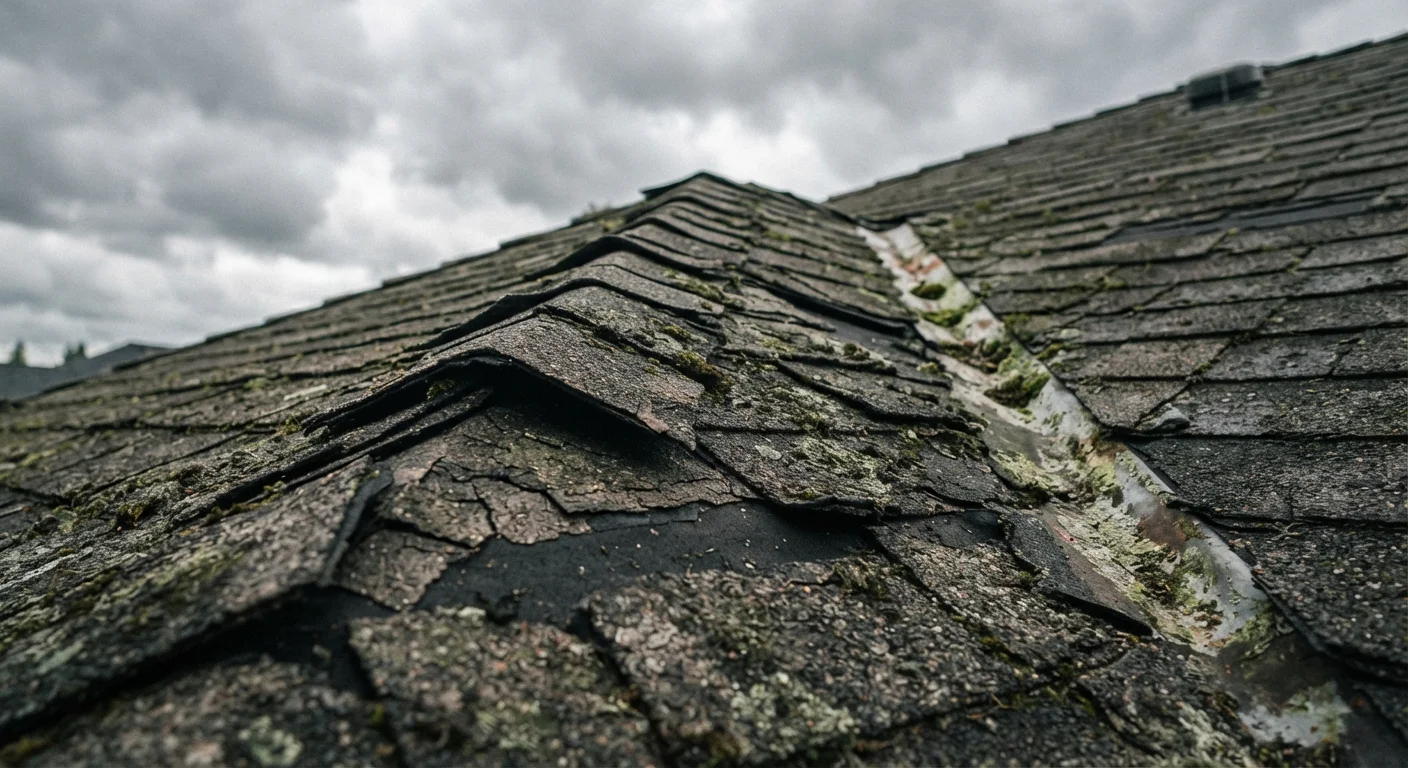
Asphalt shingles are coated with granules - small, sand-like particles that protect the underlying material from UV rays and moisture. Over time, these granules loosen and wash into your gutters. A modest amount is normal on newer roofs, but if you're seeing heavy deposits in the downspout or bare patches on shingles visible from the ground, the shingles may be nearing the end of their useful life.
Curling or Buckling Shingles
Shingles that curl upward at the edges (cupping) or buckle in the middle (clawing) are responding to moisture imbalance or age-related brittleness. Both conditions compromise the shingle's ability to shed water and can accelerate wind damage. Poor attic ventilation is a common contributor - when heat and humidity build up beneath the roof deck, shingles distort from below. Understanding your attic's ventilation needs is an important companion step.
Dark Stains on Interior Ceilings
Brown or yellowish rings on a ceiling often mean water has been pooling - possibly for a while. The stain itself may be old and dry, but if the area feels soft or spongy to the touch, active moisture intrusion is likely. Check the attic directly above the stain for wet insulation, mold, or daylight showing through the decking.
Sagging Roof Deck
A roofline that dips or waves instead of running straight is a structural signal that deserves prompt professional evaluation. Sagging typically indicates that the decking - the plywood or OSB layer beneath the shingles - has absorbed moisture and begun to deteriorate. This is a scenario where ignoring it compounds costs quickly. Our article on deferred maintenance costs explains why delay is rarely the less expensive option.
Flashing Failures
Flashing is the thin metal material installed around chimneys, skylights, vents, and valleys to prevent water from seeping into joints. Rust, gaps, or lifted sections are among the most common entry points for water. Because flashing sits at the intersection of two surfaces, it experiences more movement and stress than flat shingles.
Flashing
Thin strips of metal (usually aluminum or galvanized steel) installed at roof joints and penetrations - such as around chimneys, skylights, and vents - to prevent water infiltration at these vulnerable intersections.
Roof Deck
The structural layer of plywood or oriented strand board (OSB) fastened to the rafters. Shingles and underlayment are installed on top of it. When the deck deteriorates, the entire roof structure is at risk.
Granules
Mineral particles embedded in the surface of asphalt shingles that protect against UV rays, add fire resistance, and give shingles their color. Significant granule loss is a sign of advanced shingle wear.
Cupping
A type of shingle distortion in which the edges curl upward, creating a concave shape. It is often caused by moisture imbalance between the top and bottom surfaces of the shingle.
Fascia
The horizontal board that runs along the lower edge of the roof, to which gutters are typically attached. Rotting or sagging fascia can signal water damage at the roof's edge.
When to Call a Professional
Ground-level observation and attic checks are appropriate for homeowners. Climbing onto a roof, however, carries real fall risk and should be approached with caution - or left to a licensed roofing contractor. Any time you see sagging, widespread shingle damage, active leaking, or signs of structural compromise, schedule a professional inspection rather than attempting a DIY assessment from the roof surface.
Also consider that clogged or damaged gutters can mask or worsen roof-edge problems. Gutters play a larger role in roof health than many homeowners realize - water that can't drain properly backs up under shingles and fascia. And if you do discover moisture damage, reviewing common water damage misconceptions can help you navigate next steps with realistic expectations.
This article provides general home maintenance information for educational purposes only. Always consult a licensed roofing professional before undertaking repairs or evaluating structural concerns.