

Key Takeaways
- Bathroom exhaust fans prevent moisture buildup that leads to mold and structural damage.
- Most fans need cleaning every six months and replacement every ten years.
- Venting a fan into an attic instead of outdoors is a common and costly installation error.
- A fan that runs but moves little air may be failing and should be tested regularly.
- Neglecting exhaust fan upkeep can quietly contribute to expensive repairs down the line.
The Fan Nobody Thinks About
Bathroom exhaust fans rank among the most neglected components in American homes. They're small, ceiling-mounted, and largely invisible in daily life - yet they perform a critical job: removing humid air before it can settle into walls, ceilings, and flooring. When they're ignored or improperly maintained, the consequences compound quietly. Peeling paint and musty odors are early warnings; rot, structural damage, and widespread mold growth are where things end up if the problem isn't addressed.
As routine upkeep guides for new homeowners often point out, it's the small, unsexy systems that tend to cause the biggest headaches when overlooked. The exhaust fan fits that description perfectly. Understanding the most common mistakes homeowners make - and how to sidestep them - is the first step toward keeping your bathroom healthy and dry.
Common Mistakes That Let Moisture Win
Most exhaust fan problems aren't the result of bad luck. They stem from predictable, avoidable errors that accumulate over months and years. The mistakes below are among the most frequently seen - and most consequential.
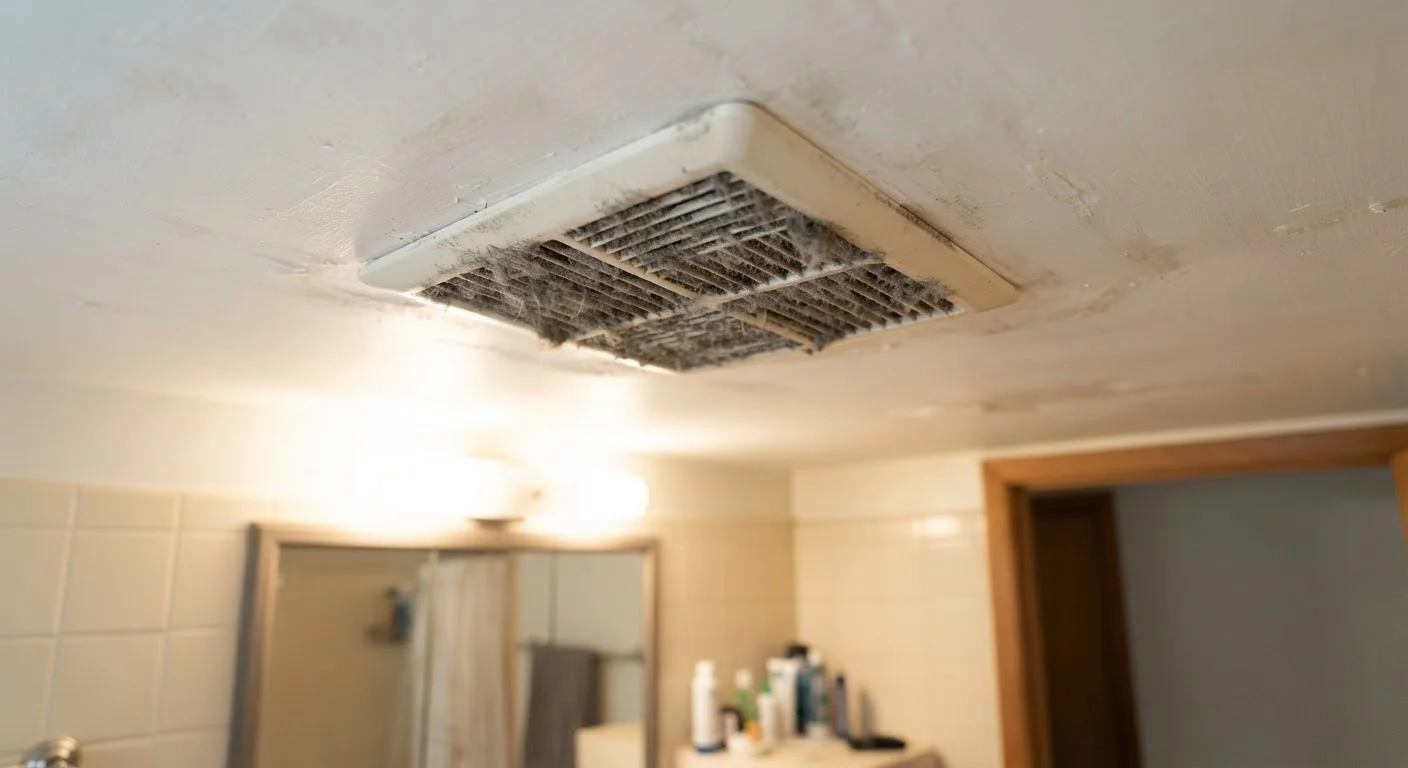
Skipping regular cleaning of the fan grille and housing.
Why it happens: The fan is mounted on the ceiling and out of sight, so most people simply forget it exists until something goes noticeably wrong.
Installing or accepting a fan that vents into the attic rather than outdoors.
Why it happens: This is often a builder shortcut or an oversight during a DIY installation - it's easier to terminate ductwork inside the attic than to run it all the way to an exterior wall or roof cap.
Using a fan that is too small for the bathroom's square footage.
Why it happens: Homeowners often replace a fan with whatever size is easiest to find without checking the room's ventilation requirements first.
Leaving the fan running only during - not after - bathing.
Why it happens: People assume that once they leave the bathroom, the humidity problem is solved. In reality, most moisture lingers in the air and on surfaces after the shower ends.
Ignoring a fan that runs but produces little airflow.
Why it happens: As long as the fan makes noise, most homeowners assume it is working. Motor wear, detached ductwork, or a blocked exterior vent can all reduce airflow dramatically without silencing the unit.
Mold Can Grow Faster Than You Think
In a consistently moist bathroom, mold can begin colonizing surfaces within 24 to 48 hours of water exposure. A malfunctioning or absent exhaust fan makes that environment almost permanent. If you notice discoloration on ceiling drywall or grout, address both the visible mold and the underlying moisture source - simply cleaning the surface is rarely sufficient.
It's worth noting that bathroom moisture damage shares something in common with many other forms of deferred maintenance: the damage is happening even when you can't see it. The hidden costs of skipping small repairs are rarely apparent until a repair bill arrives. An exhaust fan that quietly fails to vent your bathroom properly is a prime example of that pattern.
Keeping Your Fan in Working Order
Never Vent Your Fan Into the Attic
Exhausting warm, humid bathroom air into an attic - rather than outside - is one of the most damaging exhaust fan mistakes. Over time, that moisture condenses on roof sheathing and framing, promoting rot and mold growth that can compromise the structure. Always confirm the duct terminates at an exterior vent cap, not inside any enclosed space.
90%
Of mold cases linked to excess indoor moisture
The EPA notes that controlling indoor moisture is the most effective way to prevent mold growth in homes.
10 years
Typical exhaust fan service life
Most manufacturers and home inspection guidelines suggest evaluating bathroom exhaust fans for replacement around the ten-year mark.
Staying ahead of exhaust fan problems doesn't require special skills or tools. A biannual cleaning, a periodic airflow test, and a quick check of the exterior vent cap each season covers most of what a homeowner needs to do. If your fan is more than a decade old, noisy beyond a low hum, or visibly ineffective, it's worth evaluating a replacement - ideally one sized correctly for your bathroom's CFM needs.
Timer switches are an inexpensive upgrade that ensures the fan runs long enough after each shower without relying on anyone to remember. Humidity-sensing models go further, switching on automatically when moisture levels rise and off when conditions normalize. Neither requires significant electrical work in most cases, though any wiring changes should be handled by a licensed electrician if you're not confident in your skills.
Just as gutters quietly protect your home's structure when they're maintained, a functioning exhaust fan quietly protects your bathroom - and the rooms around it - every single day. The difference between a healthy bathroom and a costly moisture problem often comes down to whether that fan is actually doing its job.