

Key Takeaways
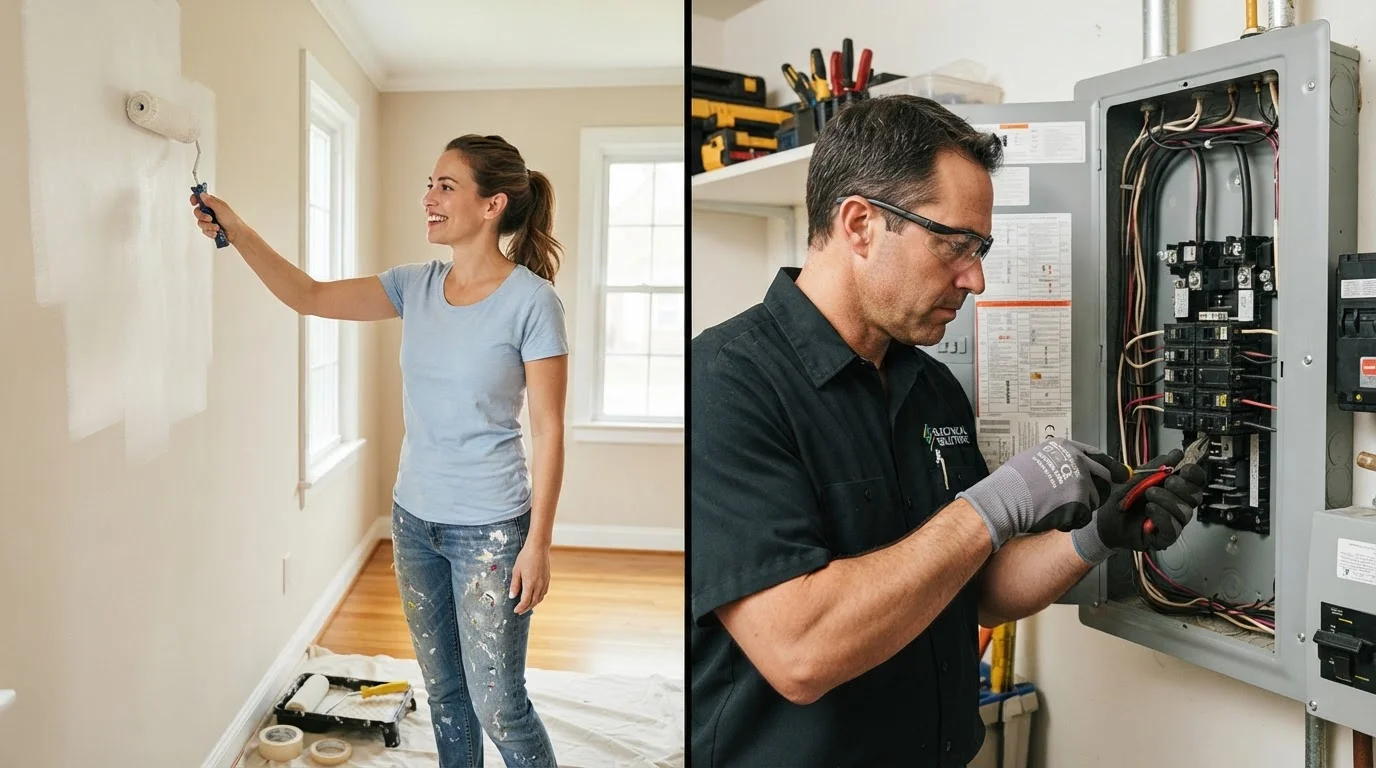
- DIY is well-suited for low-risk tasks like painting, caulking, minor landscaping, and fixture swaps.
- Electrical, structural, gas, and major plumbing work should almost always involve a licensed professional.
- Many jurisdictions require permits and licensed contractors for specific types of home work - skipping this step can cause problems at resale.
- Honest self-assessment of your skill level and available tools is the most important first step before any project.
- A botched DIY repair can cost more to fix than hiring a professional would have cost originally.
Saves money on straightforward, low-risk tasks
Labor is often the largest cost in a home repair estimate. For simple jobs like painting, caulking, or fixture replacement, DIY can eliminate that cost entirely with minimal risk.
Builds practical knowledge of your home's systems
Doing maintenance yourself familiarizes you with how your home works, making it easier to spot problems early and communicate accurately with professionals when you do hire them.
Flexible scheduling on your timeline
DIY projects happen when you have time, not when a contractor's schedule opens up - which matters for urgent but manageable tasks like weatherproofing before winter.
Immediate satisfaction and skill development
Successfully completing a home project builds confidence and transferable skills that reduce reliance on outside help over time.
Mistakes on complex jobs can be costly to fix
An improperly sealed shower, a misaligned door frame, or a bad tile installation may require a professional to correct the work completely - often at greater expense than hiring one upfront.
Safety hazards in regulated trade work
Electrical, gas, and structural work carries genuine injury and fire risk. These aren't areas where on-the-job learning is appropriate - errors can have irreversible consequences.
Unpermitted work can cause problems at resale
Work done without required permits may need to be disclosed, inspected, or even removed when you sell. Buyers and their inspectors look for unpermitted additions and modifications.
Underestimating time and tool requirements
Many projects that appear simple on a tutorial require specialty tools, physical access, or accumulated experience that make the job far more involved than anticipated.
Our Verdict
DIY is a legitimate, cost-effective approach for a wide range of routine home maintenance and cosmetic improvements. But when safety systems, structural integrity, or regulated work are involved, professional expertise isn't a luxury - it's a safeguard. The smartest homeowners know how to recognize the difference.
Best for homeowners who want a practical framework to confidently take on manageable projects themselves while knowing exactly when to call in a qualified pro.
The Core Question: Risk vs. Reward
Every home repair decision comes down to two factors: the consequences of getting it wrong, and your genuine ability to get it right. These aren't the same as confidence or enthusiasm - plenty of well-meaning DIYers have turned a minor fix into a major expense by underestimating a job's complexity.
A useful mental framework is to ask three questions before picking up a tool:
- What's the worst realistic outcome if this goes wrong? A crooked shelf is a cosmetic problem. A gas line leak is a life-safety emergency.
- Do I have the knowledge, tools, and physical ability to do this correctly? Watching a tutorial isn't the same as hands-on experience with a skill.
- Does this work require a permit or a licensed contractor in my area? Many jurisdictions have clear rules about what licensed professionals must perform. See which projects legally require permits for a detailed breakdown.
Answering these honestly will guide most decisions more reliably than any list of specific projects.
Projects That Are Generally Safe to DIY
A broad category of home maintenance tasks involves low voltage, no structural implications, and reversible mistakes. These are reasonable candidates for a capable homeowner:
- Painting and wall prep - interior and exterior painting, patching small drywall holes, and caulking windows or trim
- Landscaping and garden work - planting, mulching, basic grading away from the foundation, pruning shrubs
- Minor plumbing fixes - replacing a faucet, toilet flapper, or showerhead (work that doesn't involve opening supply lines inside walls)
- Fixture swaps - swapping out light fixtures, ceiling fans, or outlet covers on existing, properly wired circuits
- Seasonal maintenance - cleaning gutters, replacing HVAC filters, sealing drafts with weatherstripping
If you're just getting started with home ownership, routine upkeep fundamentals is a solid starting point for building good habits.
Saves money on straightforward, low-risk tasks
Labor is often the largest cost in a home repair estimate. For simple jobs like painting, caulking, or fixture replacement, DIY can eliminate that cost entirely with minimal risk.
Builds practical knowledge of your home's systems
Doing maintenance yourself familiarizes you with how your home works, making it easier to spot problems early and communicate accurately with professionals when you do hire them.
Flexible scheduling on your timeline
DIY projects happen when you have time, not when a contractor's schedule opens up - which matters for urgent but manageable tasks like weatherproofing before winter.
Immediate satisfaction and skill development
Successfully completing a home project builds confidence and transferable skills that reduce reliance on outside help over time.
Work That Warrants a Licensed Professional
Certain categories of home work carry risks that extend well beyond a bad result - they can injure you, damage your home's systems, or create hidden liability that surfaces during a future home inspection or sale.
When Permits Are Required, They're Not Optional
Many homeowners skip permits to save time or money, but unpermitted work on electrical, structural, or plumbing systems creates real liability. If your home is sold, refinanced, or damaged, unpermitted work can complicate insurance claims and appraisals. Always verify local requirements with your municipal building department before starting any significant project.
- Electrical panel work, new circuits, and rewiring - mistakes here create fire and electrocution hazards; most jurisdictions require a licensed electrician and inspection
- Gas lines - any work on gas appliances, lines, or connections should be handled by a licensed plumber or gas technician, full stop
- Structural modifications - removing or altering load-bearing walls, beams, or foundations requires an engineer's assessment and often a permit
- Roofing - beyond replacing a few shingles, roof work involves fall risk and waterproofing complexity that warrants professional installation
- Major plumbing - re-routing supply lines, moving drain stacks, or working inside walls carries leak risk and typically requires permits
A home inspection will often surface unpermitted or improperly done work. See what home inspectors evaluate to understand what gets flagged.
Mistakes on complex jobs can be costly to fix
An improperly sealed shower, a misaligned door frame, or a bad tile installation may require a professional to correct the work completely - often at greater expense than hiring one upfront.
Safety hazards in regulated trade work
Electrical, gas, and structural work carries genuine injury and fire risk. These aren't areas where on-the-job learning is appropriate - errors can have irreversible consequences.
Unpermitted work can cause problems at resale
Work done without required permits may need to be disclosed, inspected, or even removed when you sell. Buyers and their inspectors look for unpermitted additions and modifications.
Underestimating time and tool requirements
Many projects that appear simple on a tutorial require specialty tools, physical access, or accumulated experience that make the job far more involved than anticipated.
The Hidden Costs of Getting It Wrong
The financial case for DIY rests on saving labor costs - but that math breaks down when a job has to be redone. Water damage from an improperly installed dishwasher line, a failed electrical connection behind a finished wall, or a cracked tile job that needs full removal are all examples of DIY attempts that ended up costing significantly more than a professional would have charged.
~35%
DIY projects that require professional correction
Industry estimates suggest roughly one in three significant DIY home repairs requires some level of professional remediation afterward, according to home warranty industry research.
$1,000-$3,000+
Typical cost to repair unpermitted electrical work
Bringing unpermitted electrical work up to code - often required before a sale - can range from several hundred to several thousand dollars depending on scope and local labor rates.
Documentation matters too. Keeping records of who did the work, when, and under what permit helps protect your home's value and simplifies insurance claims. Maintaining organized home records is a habit worth building from the start.
If you're weighing a larger renovation - one that might involve multiple trades - understanding the tradeoffs between a general contractor and self-managing subcontractors is worth your time. The real costs of each approach offers an honest comparison.