

Key Takeaways
- Checking five key fluids regularly prevents most common mechanical breakdowns.
- Tire pressure and tread depth affect both safety and fuel economy more than most drivers realize.
- Your owner's manual sets the actual maintenance schedule your car was engineered for.
- Warning lights ignored for weeks can turn minor issues into expensive repairs.
- Many basic checks take under ten minutes and require no special tools.
Start here
Why Routine Maintenance Matters
Next
The Fluids Every Driver Should Know
Build on it
Tires, Brakes, and Filters: The Big Three
Stay alert
Reading Warning Lights and Unusual Sounds
Put it together
Building a Simple Maintenance Routine
Why Routine Maintenance Matters
A car is one of the most expensive things most Americans own, yet maintenance is frequently the last thing on a driver's mind until something goes wrong. The connection between small, regular checks and long-term reliability is direct: components wear gradually, fluids degrade, and minor problems compound into costly failures when left unaddressed.
Routine upkeep also carries real safety implications. Worn brake pads, underinflated tires, and low coolant don't announce themselves dramatically - they erode performance quietly until the moment they don't. Understanding the basics puts you in a position to catch those issues early.
You don't need to be a mechanic. The goal is simple awareness: knowing which checks matter, how often to perform them, and when to hand a job to a professional. If you've recently purchased a vehicle, the car buying hub is a useful complement to what follows here.
Dipstick
A long metal rod inserted into the engine oil reservoir that lets you check the oil level and condition by pulling it out and reading the markings on its tip.
PSI
Pounds per square inch - the unit used to measure tire pressure. Your vehicle's correct PSI is specified by the manufacturer, not by the tire itself.
Tread depth
The measurement of the grooves in your tire surface. Adequate depth channels water away and maintains grip; worn tread significantly increases stopping distance on wet roads.
CV joint
Constant velocity joint - a flexible coupling that transfers engine power to the front wheels while allowing them to turn and move up and down with the suspension.
Firewall
The metal barrier separating the engine compartment from the passenger cabin. Several fluid reservoirs are mounted near or on it.
OBD-II
On-Board Diagnostics, second generation - a standardized system built into all cars sold in the U.S. after 1996 that records fault codes when a system malfunctions, readable with a diagnostic scanner.
The Fluids Every Driver Should Know
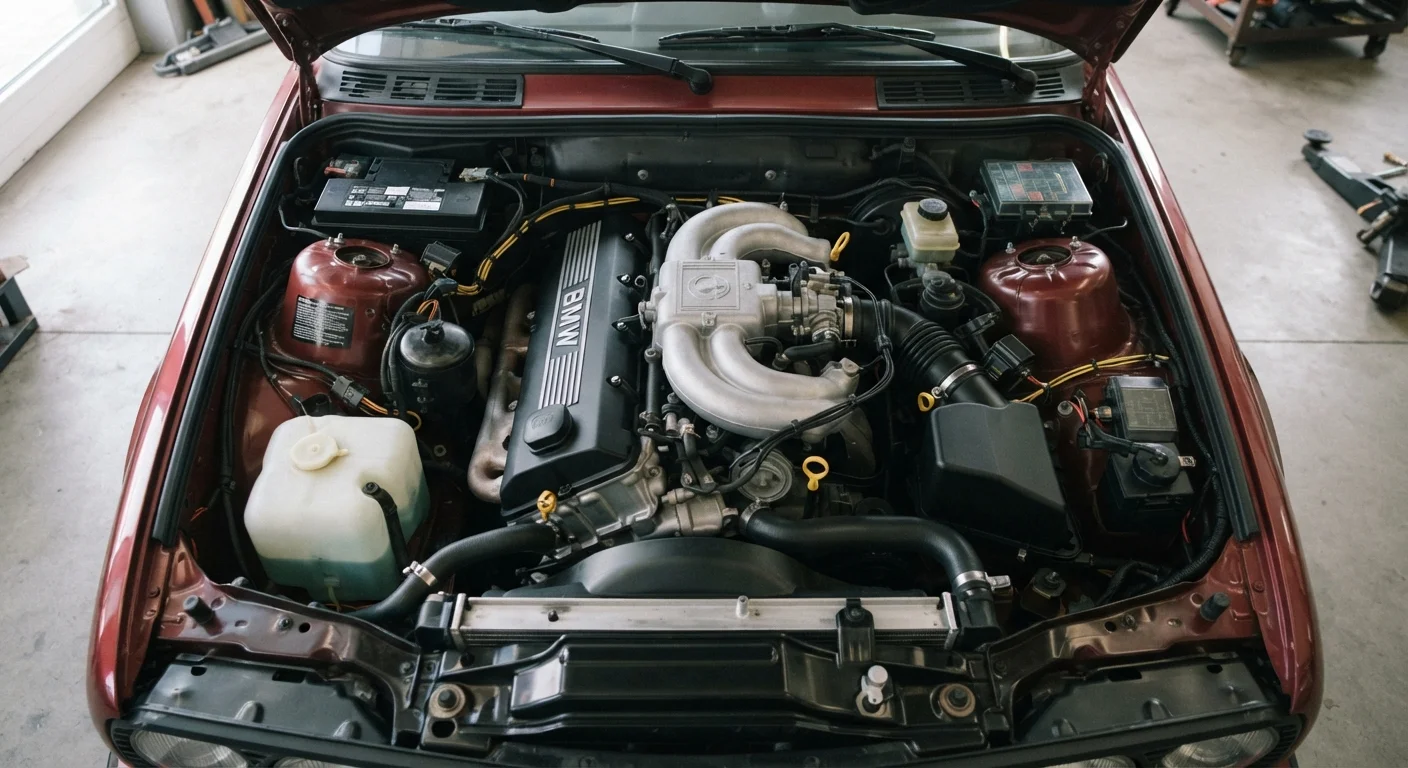
Five fluids keep your vehicle running safely, and all five can be checked without tools in about five minutes:
- Engine oil - Lubricates moving metal parts and prevents heat buildup. Check with the dipstick: the oil should sit between the MIN and MAX marks and appear amber to dark brown (not milky or gritty).
- Coolant (antifreeze) - Regulates engine temperature. Check the overflow reservoir when the engine is cold; never open the radiator cap on a hot engine.
- Brake fluid - Transfers the force of your foot to the brakes. It lives in a small reservoir near the firewall; levels below MIN warrant prompt attention.
- Power steering fluid - Makes steering effort manageable. Many newer vehicles use electric power steering and have no fluid reservoir at all - check your manual.
- Windshield washer fluid - The only fluid on this list that won't strand you if it runs out, but visibility matters. Refill with a rated washer solution, not plain water in cold climates.
The owner's manual identifies every reservoir location and the correct fluid specification for your vehicle. Using the wrong fluid - particularly the wrong coolant type - can cause damage.
Tires, Brakes, and Filters: The Big Three
Tires are your vehicle's only contact with the road, making their condition foundational to both safety and efficiency. Check pressure monthly using an inexpensive gauge - correct PSI is listed on a sticker inside the driver's door jamb, not on the tire sidewall. Rotate tires every 5,000 to 7,500 miles to promote even wear, and inspect tread depth with the penny test described in the FAQ below.
Brakes wear slowly but predictably. Squealing when you apply the brakes is the friction material's built-in wear indicator doing its job - it's telling you an inspection is overdue. Grinding or vibration during braking suggests more advanced wear. Brake work falls firmly in the category of tasks best handled by a qualified mechanic; if you hear unusual sounds, our guide on what car noises mean can help you interpret what you're hearing before your appointment.
Filters - primarily the engine air filter and cabin air filter - are among the easiest components to inspect and replace. A clogged engine air filter restricts airflow to the engine and can reduce fuel efficiency. The cabin air filter affects the air quality inside the vehicle and the performance of your HVAC system. Both are typically accessible without tools and are visible components with clear replacement indicators.
Make It a Habit at Every Fill-Up
The gas station is a natural checkpoint for a quick visual: walk around the car and glance at each tire while you fill up. Once a month, add two minutes to check tire pressure before you start pumping. These small habits catch problems before they become roadside emergencies.
Reading Warning Lights and Unusual Sounds
Modern vehicles monitor dozens of systems and surface problems through dashboard warning lights. Not all lights signal emergencies, but none should be ignored indefinitely. A few fundamentals:
- Red lights generally indicate conditions requiring immediate attention - stop safely and investigate or call for assistance.
- Yellow or amber lights usually signal a system fault that doesn't require stopping immediately but needs professional diagnosis soon.
- Blue and green lights are typically informational (high beams active, turn signals engaged).
Sounds carry diagnostic information too. A rhythmic thumping from a tire could mean a flat or a broken belt. A high-pitched squeal during braking is almost always the brake wear indicator. A grinding noise when turning can point to worn CV joints - the components that transfer power to the front wheels while allowing them to steer. Paying attention to when a sound appears (only on cold starts? Only when turning? Only at highway speed?) gives a mechanic useful context and can save diagnostic time.
Building a Simple Maintenance Routine
Maintenance becomes manageable when it's structured around a few natural checkpoints rather than remembered item by item. A practical framework:
- Monthly (takes under 10 minutes)
- Check tire pressure, visually inspect tires for damage or uneven wear, check engine oil level and color, top off windshield washer fluid.
- Every oil change interval
- Rotate tires, inspect brake pads, check all five fluids, inspect wiper blades for streaking or cracking.
- Annually or per manufacturer schedule
- Replace engine and cabin air filters as needed, inspect belts and hoses for cracking, have brakes professionally inspected, check battery terminals for corrosion.
Your manufacturer's maintenance schedule - found in the owner's manual - adds vehicle-specific milestones like transmission fluid service, spark plug replacement, and timing belt or chain inspection. For vehicles with significant mileage, the maintenance habits for high-mileage vehicles covers the additional attention older cars benefit from.
When deciding which tasks to tackle yourself and which to delegate, our companion piece on DIY versus professional maintenance offers an honest framework for making that call.