

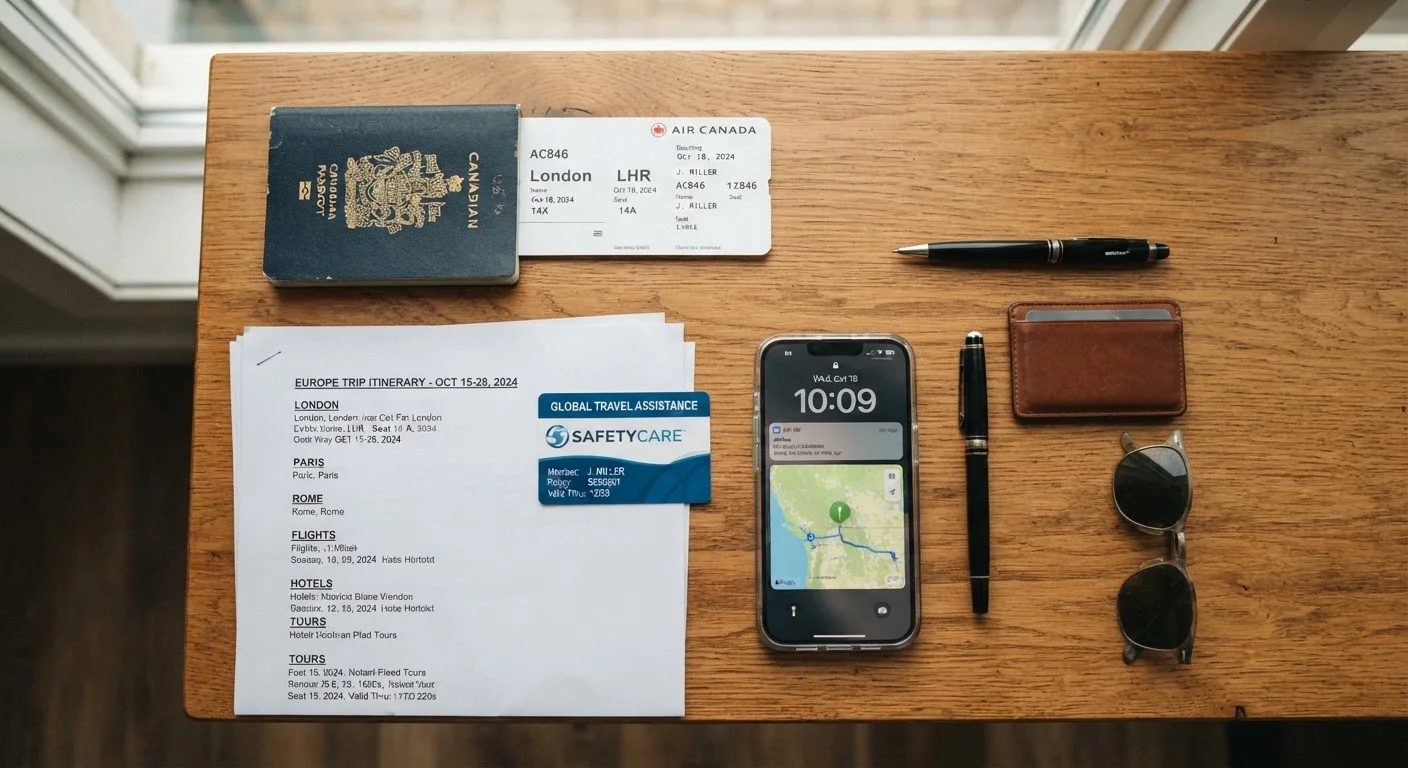
Key Takeaways
- Copies of your passport, visa, and ID are critical if originals are lost or stolen abroad.
- Store copies in at least two formats: one physical copy and one secure digital version.
- Booking confirmations, insurance details, and emergency contacts should always travel with you.
- Leave a set of document copies with a trusted person at home as a backup.
- Verify entry requirements and official document rules before every international trip.
Summary
18 items · 30-60 minutes
Why Document Copies Matter More Than You Think
Losing a passport in a foreign country is not just stressful - it can strand you for days while you work through your home country's embassy or consulate. Having accessible copies of your key documents won't replace the originals, but they can dramatically speed up the recovery process, help you access emergency funds, and prove your identity to authorities in a pinch.
This checklist is built for everyday American travelers heading anywhere from a Caribbean cruise to a multi-week European trip. Work through it before you pack - ideally a few days out so you have time to track down anything missing. For a broader pre-departure sweep, see the Pre-Departure Checklist for International Travel, which covers health prep, money, and communication alongside documents.
Identity & Entry Documents
Bookings & Itinerary
Health & Insurance
Financial & Emergency Contacts
Where and How to Store Your Copies
Having copies is only useful if you can actually access them when things go sideways. A physical photocopy locked in the same bag as your passport defeats the purpose. Use at least two of these storage methods for every critical document.
Don't Store All Copies in One Place
Keeping your passport copy in the same bag as your actual passport means a single theft or loss wipes out both. Distribute physical copies across different bags and make sure at least one digital copy is accessible from the cloud - not only from your phone, which can also be lost or stolen.
- Physical copies: Print one set and keep it in a separate bag from your originals - a day bag or money belt works well. Keep a second set at home with a trusted contact.
- Encrypted cloud storage: A password-protected folder in a cloud service you can access from any device gives you a reliable digital backup. Avoid emailing documents to yourself unencrypted.
- Secure travel apps: Some travelers use dedicated travel wallet apps that store document scans behind biometric locks. Evaluate these carefully - choose only well-established options with clear privacy policies.
- Hotel safe backup: At your first accommodation, consider leaving a copy set in the in-room safe so you're not carrying everything at once.
Managing financial documents on the road pairs naturally with document security - the guide on keeping money safe while traveling has practical habits worth combining with this checklist.
Passport Copies Don't Replace the Real Thing
A photocopy of your passport is a recovery aid, not a valid travel document. Airlines, border agents, and most authorities require original documents for boarding and entry. Keep originals secure at all times - a copy simply helps prove your identity and speeds up the replacement process if the worst happens. Always verify what your destination's entry rules require by checking official government sources before you travel.
Before You Head to the Airport
This checklist is most effective when paired with a full pre-trip planning pass. If you're heading internationally, the pre-trip planning checklist covers visas, vaccines, and travel advisories that affect which documents you'll need in the first place. And if you're uncertain about what passport validity rules or visa-on-arrival assumptions apply to your destination, common myths about passport and visa requirements is worth a read before you finalize anything.
Once your documents are organized, fold them into your carry-on strategy. The carry-on packing list has a dedicated documents section that fits naturally alongside this checklist.
Password-protected cloud storage (e.g., any major provider)
Stores encrypted digital copies of documents accessible from any internet-connected device worldwide.
Printer or copy shop
Creates physical backup copies of passports, confirmations, and insurance documents to carry separately from originals.
Secure travel wallet app
Keeps biometrically locked digital scans of travel documents in one place on your smartphone.
Money belt or hidden travel pouch
Provides a secure, separate location to store physical document copies away from your main bag.