

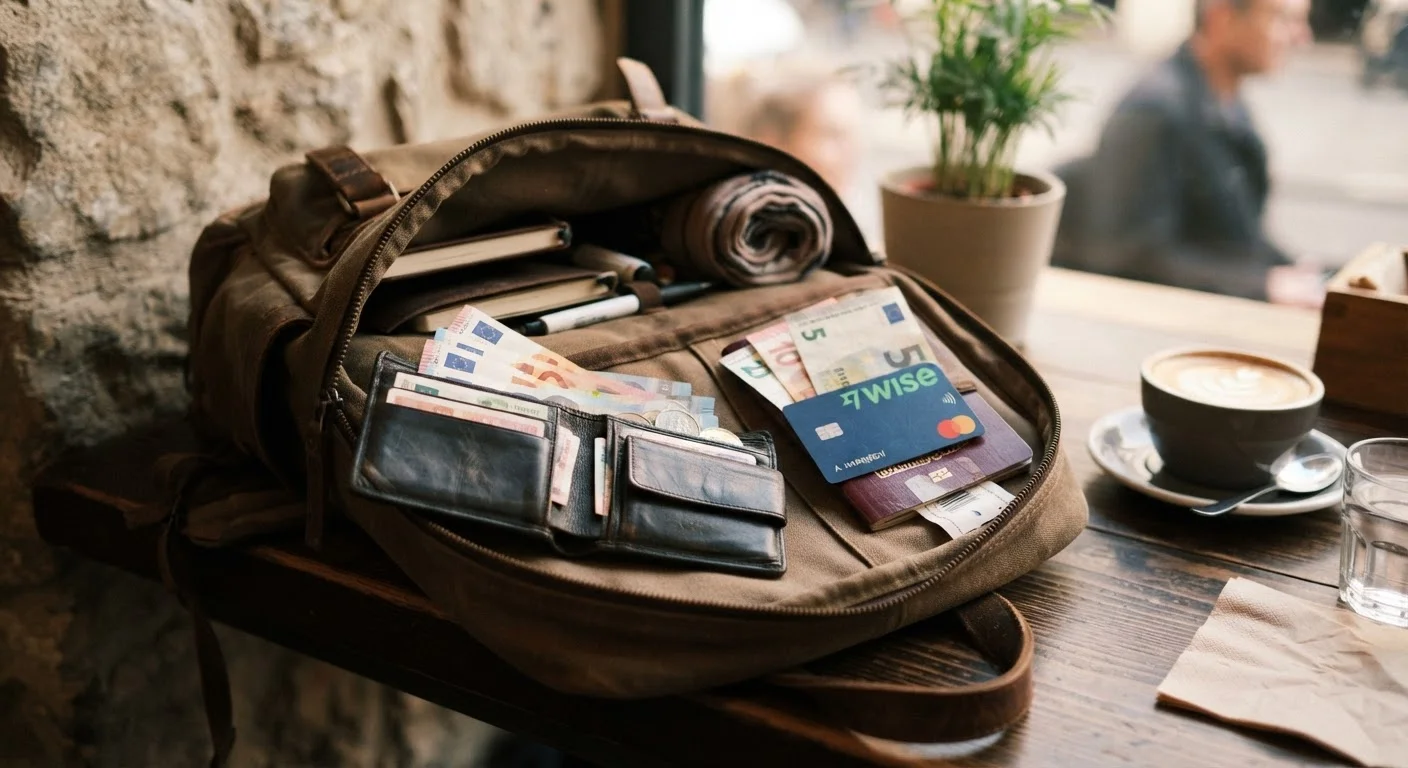
Key Takeaways
- Split cash and cards across multiple locations so one theft doesn't wipe you out.
- Notify your bank before departing to prevent fraud blocks on legitimate travel purchases.
- Foreign transaction fees and dynamic currency conversion can quietly add up to significant costs.
- A backup card stored separately from your primary wallet is one of the highest-impact precautions you can take.
- ATMs inside bank branches are generally safer choices than standalone machines in tourist areas.
Start With the Right Card Setup
Before you even pack a bag, the most impactful money move you can make is reviewing which cards you'll carry. Check whether your debit and credit cards charge foreign transaction fees - typically 1-3% added to every overseas purchase. Over a two-week trip with regular card use, those fees add up in ways that rival a night's accommodation. Many cards marketed toward travelers waive these fees entirely; understanding your existing cards' terms is a good first research step.
Call or message your bank and card issuers before you leave. Briefly note your destination and travel dates so they don't flag your purchases as suspicious and freeze your account mid-trip. This takes about five minutes and prevents a surprisingly common frustration. Also ask about their international ATM network - some banks reimburse ATM fees charged by foreign machines, which can save real money in countries where cash is king.
For deeper context on how travel costs can spiral beyond expectations, see why trip budgets fall apart.
Test Your Cards Before You Fly
A week before departure, confirm that each card you plan to bring is active and not close to its limit. Some travelers discover an expired card or a missed payment freeze only after landing abroad. A quick test transaction at home - and a glance at your available balance - takes seconds and eliminates a stressful surprise.
How to Handle Cash Smartly
Cash remains essential in many destinations - rural areas, local markets, small restaurants, and countries where card infrastructure is limited. The golden rule: never keep all your cash in one place. Divide it between your wallet, a hidden travel pouch worn under clothing, and a reserve tucked deep in your luggage. If a pickpocket gets your wallet, you still have funds to function.
When it comes to exchanging currency, airport exchange kiosks typically offer the least favorable rates. ATMs connected to major banking networks usually give you a rate close to the interbank rate - the baseline used between financial institutions - which is generally more favorable than exchange booth rates. Avoid dynamic currency conversion (DCC): when a foreign merchant or ATM offers to charge you in your home currency instead of the local one, decline. The convenience comes with a markup that benefits the merchant, not you.
1-3%
Typical foreign transaction fee per purchase
Most standard bank cards charge this percentage on every overseas transaction; many travel-focused cards waive it entirely.
3-7%
Average markup from dynamic currency conversion
Consumer finance researchers have consistently found DCC exchange rates disadvantage the cardholder by this range compared to bank conversion rates.
How much cash to carry at once is a judgment call based on your destination and comfort level. A reasonable approach: enough for one to two days of expected spending, replenished as needed from ATMs. This limits your exposure without the inconvenience of constant ATM visits.
Best Practices for Protecting Your Money on the Go
Carry a dedicated backup card stored separately from your primary wallet.
If your main wallet is lost or stolen, a backup card kept in luggage or a hidden pouch means you're never completely without access to funds. This single step prevents the worst-case scenario of being stranded without money in an unfamiliar place.
Use ATMs inside bank branches rather than standalone machines in tourist zones.
Standalone ATMs in high-traffic tourist areas carry a higher risk of skimming devices - hardware criminals attach to the card reader to steal data. Bank-branch ATMs are monitored more closely and are physically harder to tamper with.
Always decline dynamic currency conversion (DCC) when paying abroad.
DCC allows a foreign merchant or ATM to charge you in your home currency, but the exchange rate applied is set by the merchant, not your bank, and is almost always less favorable. Your bank's conversion rate is typically better.
Set up transaction alerts on every card you're bringing.
Real-time SMS or app notifications for every card charge let you catch unauthorized transactions immediately rather than discovering them weeks later on a statement. Early detection limits financial damage and speeds up the dispute process.
Keep a small emergency cash reserve separate from your daily spending money.
Technology fails - card readers go offline, banks issue temporary freezes, and ATMs run out of cash in smaller towns. A separate cash reserve kept in your luggage acts as a last-resort buffer that costs nothing to maintain.
Staying alert in crowded tourist areas is not paranoia - it's pattern recognition. Busy transit hubs, outdoor markets, and heavily visited landmarks are environments where opportunistic theft is more common. Front pockets, zipped inner compartments, and cross-body bags worn in front are all simple deterrents. Being aware of assumptions about safe destinations is equally important - even low-risk cities have higher-risk spots.
Keep a photo of your cards (front only, never the security code) and your bank's international customer service numbers stored securely - for example, in an encrypted notes app or emailed to yourself. If a card is lost or stolen, you'll need that number to act fast. For a broader checklist of documents worth copying before you leave, our guide on which travel documents to copy is worth a read.
Quick Wins to Implement Before Your Next Trip
The habits below take minimal effort to set up but consistently prevent the most common travel money headaches. Think of them as a pre-departure checklist rather than an ongoing burden.
Travel money management ultimately comes down to redundancy and awareness: redundancy so that one bad moment doesn't derail your entire trip, and awareness so you're not quietly paying more than you should at every transaction. For broader budget planning that accounts for the irregular costs that often catch travelers off guard, understanding hidden travel expenses is a helpful companion read.
This article is for general informational purposes only and does not constitute financial or legal advice. Fees, terms, and banking policies vary widely - verify details directly with your financial institution before traveling.