

Key Takeaways
- Landlords may legally ask about your income, credit history, rental references, and employment.
- Questions targeting race, religion, national origin, sex, disability, familial status, or color are prohibited under federal law.
- Many states extend protections beyond federal law - source of income is protected in over a dozen states.
- Indirect or seemingly neutral questions can still be illegal if they are designed to reveal protected characteristics.
- You have the right to file a fair housing complaint if you believe a landlord violated these rules.
- Understanding what is off-limits helps you recognize discrimination and respond with confidence.
Fair Housing Act Screening Limits
The Fair Housing Act is a federal law that prohibits landlords from discriminating against renters based on certain protected characteristics. This means landlords are barred from asking questions - directly or indirectly - that reveal or target those characteristics during the application process. Questions about your income, rental history, and ability to pay rent are generally permitted; questions about your religion, family status, or national origin are not.
The Fair Housing Act covers seven federally protected classes, but many states and cities add additional protected classes such as source of income, sexual orientation, or marital status. Local protections can be significantly broader than federal law.
What Landlords Can Legally Ask During Screening
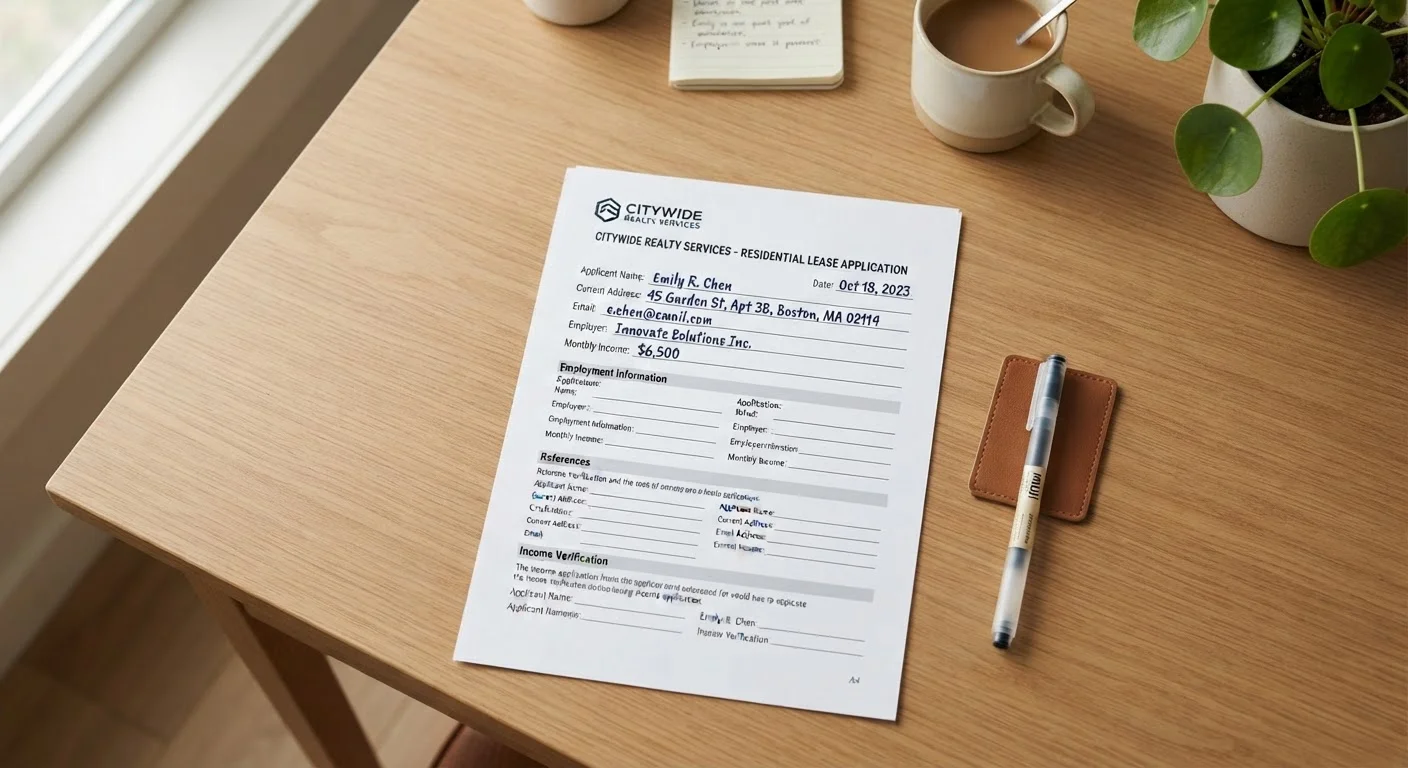
When you apply for a rental, a landlord has a legitimate interest in evaluating whether you are likely to pay rent consistently and care for the property. Within that scope, several types of questions are entirely legal and routine.
- Income and employment: Landlords may ask for pay stubs, tax returns, or employer contact information to verify you can afford the unit.
- Credit history: A credit check is standard. See how landlords read your credit report for a breakdown of what they actually look at.
- Rental history: Contacting previous landlords to ask about payment history, lease violations, or property care is legal and common.
- References: Personal or professional references are permissible.
- Number of occupants: Landlords may ask how many people will live in the unit, as occupancy standards (typically tied to square footage) are legally enforceable - though limits cannot be set so low they effectively exclude families with children.
These questions relate directly to your ability and willingness to fulfill a lease. When applied consistently and without discriminatory intent, they are lawful tools.
7
Federally protected classes under the Fair Housing Act
The Fair Housing Act of 1968 and its 1988 amendments established these classes: race, color, national origin, religion, sex, familial status, and disability.
~13+
States with source-of-income housing protections
According to the National Housing Law Project, more than a dozen states have enacted laws preventing landlords from rejecting tenants solely due to housing voucher use.
~28,000
Fair housing complaints filed annually with HUD
HUD's annual fair housing reports consistently document tens of thousands of discrimination complaints, with disability and race among the most commonly cited bases.
Questions That Cross the Legal Line
The Fair Housing Act of 1968 established seven federally protected classes: race, color, national origin, religion, sex, familial status, and disability. Landlords are prohibited from basing rental decisions on any of these - and that prohibition extends to the questions they ask. Screening questions that target or reveal these characteristics are illegal, even if the intent is framed as curiosity rather than bias.
Specifically off-limits:
- "Where are you originally from?" - targets national origin
- "Do you attend church?" - targets religion
- "Are you pregnant or planning to have children?" - targets familial status and sex
- "What is your diagnosis?" - targets disability (a landlord may ask whether you need a reasonable accommodation, but not the nature of your condition)
- "Are you married?" - while not a federal protected class, many states protect marital status
Indirect questions can be just as problematic. Asking about your "lifestyle" or whether you attend a particular community center may be a veiled attempt to identify religion or sexual orientation - both protected in many jurisdictions.
Write Down Questions Asked During Showings
If a landlord asks something that feels inappropriate, write it down as soon as possible - including the date, location, and exact wording. This contemporaneous record can be crucial if you later decide to file a fair housing complaint. Emails and texts are even better; if a conversation occurs in person, follow up with a brief email summarizing what was discussed to create a paper trail.
The Role of State and Local Law
Federal law sets a floor, not a ceiling. Many states and municipalities have expanded protections well beyond the seven federal classes. Common additional protections include:
- Source of income: More than a dozen states prohibit landlords from rejecting applicants solely because they use housing vouchers (such as Section 8) or receive other government assistance.
- Sexual orientation and gender identity: Protected in many states and cities even where federal protections remain unsettled.
- Marital status, age, and veteran status: Covered in various jurisdictions.
Because the rules vary significantly by location, it is worth looking up your state's fair housing agency website or contacting a local housing counselor to understand exactly which classes are protected where you live. This is especially relevant if you are paying with a housing voucher - landlords in a state with source-of-income protections cannot legally reject your application on that basis alone.
For a broader look at tenant rights misconceptions, see common myths about tenant rights that many renters mistakenly believe.
How to Respond If Something Feels Wrong
If a landlord asks a question that seems designed to probe a protected characteristic, you are not obligated to answer. You can politely redirect: "I'm happy to provide proof of income and rental references - would that work?" This keeps the conversation on legally permissible ground without escalating the situation.
If you believe a landlord violated fair housing law - whether through questions, a denial, or language in a listing - you have options:
- Document everything: save emails, texts, listing copies, and notes from conversations.
- File a complaint with the U.S. Department of Housing and Urban Development (HUD) at hud.gov, or with your state's fair housing agency.
- Contact a local fair housing organization or legal aid office for guidance specific to your situation.
Before you even reach the application stage, screening the listing itself for warning signs is worthwhile. Our guide on red flags in rental listings covers what to watch for before you invest time in an application.
Once you clear screening and receive an offer, remember that not all lease terms are set in stone - negotiating lease terms is more common than many renters realize.
This article provides general educational information about fair housing law and is not legal advice. Consult a qualified attorney or licensed housing counselor for guidance specific to your situation and jurisdiction.