

Key Takeaways
- Landlords review far more than your credit score number - they examine individual account histories and public records.
- Payment history and outstanding collections are typically the most weighted factors in rental screening.
- Eviction records and broken leases appear on tenant screening reports, not standard credit reports.
- You can pull your own credit report before applying to spot and explain any problem areas.
- A written explanation letter can help landlords contextualize negative marks on your file.
What you will need
Why Landlords Look Beyond Your Score
A three-digit credit score is a useful summary, but experienced landlords know it can mask or overstate risk depending on the underlying data. Two applicants can share the same score while having very different financial profiles - one with a clean history and thin file, another with resolved collections and a long track record. Landlords who screen carefully read the full report, not just the headline number.
The credit report a landlord sees typically comes from one of the three major bureaus - Equifax, Experian, or TransUnion - and is often supplemented by a dedicated tenant screening service. Those screening tools can surface eviction filings and broken lease records that would never appear on a standard credit report. Knowing this distinction is one of the most important things a renter can understand before applying. Our guide on what landlords are legally allowed to ask can also help you understand your rights throughout the screening process.
What you will need
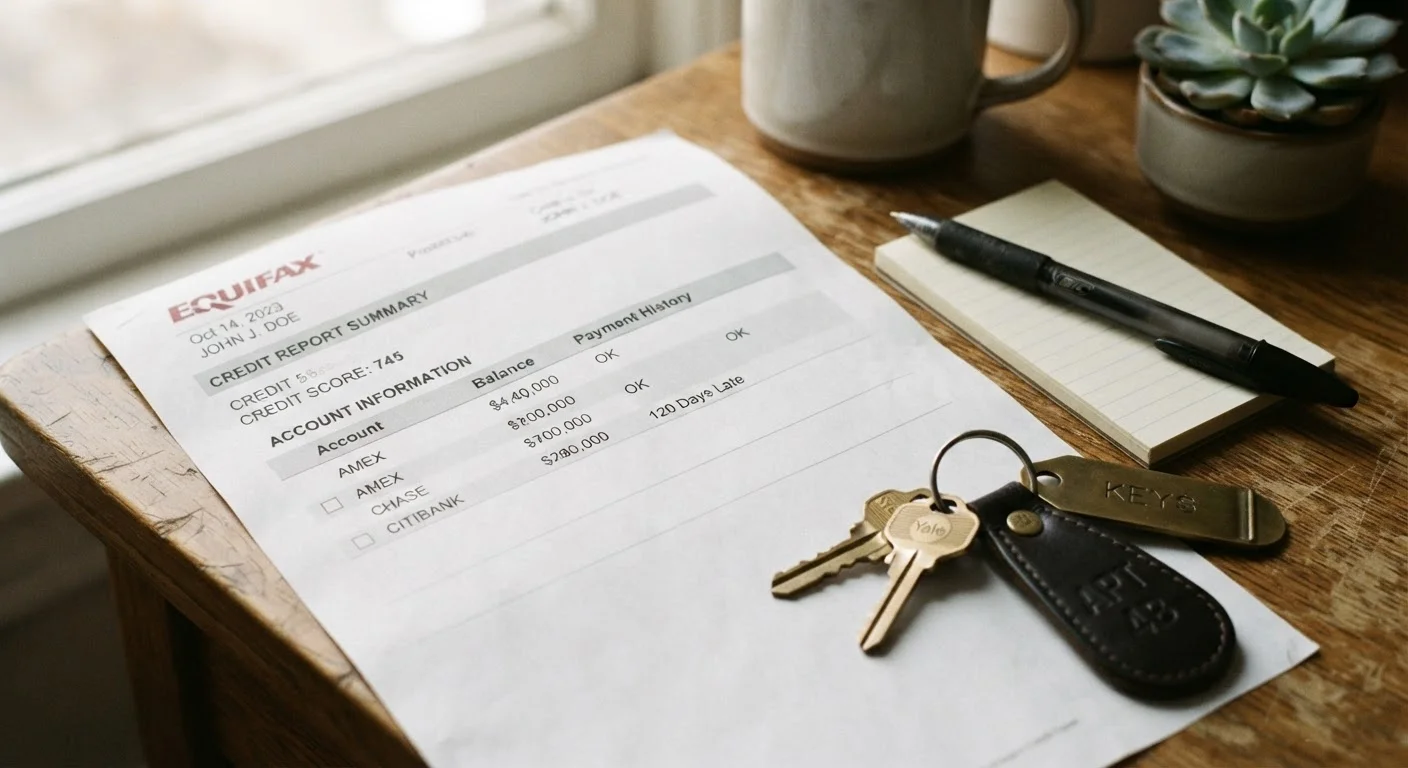
With your credit report in hand, walk through the steps below the same way a landlord would - methodically, section by section.
Locate the credit score and understand what range the landlord likely expects
Most credit reports display your score prominently at the top. Scores are generally calculated on a 300-850 scale. While there is no universal rental minimum, many landlords in competitive markets look for scores above 620-650 as a baseline. Some require 700 or higher. Knowing where you land helps you anticipate how a landlord will react before you apply.
Review your payment history section line by line
Payment history is the single most influential factor in your credit profile. Landlords scan this section for late payments (marked 30, 60, or 90+ days past due), charge-offs, and accounts sent to collections. A single recent 90-day late payment raises more concern than an isolated 30-day mark from several years ago. Look for patterns - consistent on-time payments signal reliability even if your score is modest.
For a deeper explanation of how payment history is weighted, see the five factors behind your credit score.
Check the collections and public records sections
Any account sent to a collection agency appears as a separate derogatory entry. Landlords pay especially close attention to utility collections and prior landlord collections, since these directly signal risk in a rental relationship. The public records section may list civil judgments and bankruptcies. A bankruptcy discharged several years ago is weighed differently than an active one filed recently.
Assess your credit utilization and overall debt load
Credit utilization - how much of your available revolving credit you are currently using - gives landlords a snapshot of your financial pressure. High utilization (generally above 50-60%) can suggest the applicant is stretched thin and may struggle to cover monthly rent. A landlord may also compare your reported monthly debt obligations to your stated income, similar in spirit to a debt-to-income assessment.
Note the hard inquiries section
Hard inquiries - credit checks triggered by applications for loans or new credit - appear in a dedicated section. A cluster of recent hard inquiries can suggest financial instability to a cautious landlord, though this factor generally carries less weight than payment history or collections. The landlord's own credit pull will also add a hard inquiry to your file.
Prepare a brief written explanation for any negative items
If your report shows a gap, a collection, or a late payment, prepare a short, factual explanation: what happened, when, and what changed since then. Landlords are often willing to consider context - a medical emergency, a job loss, or a billing dispute - especially when the rest of your profile is strong. Keep the letter to one paragraph per item; factual and professional in tone.
To understand each section of your report in detail before writing your letter, consult our field-by-field credit report guide.
Common Red Flags and How to Address Them
Pull Your Report Before the Landlord Does
Checking your own credit report is a 'soft inquiry' and does not affect your score. Reviewing it ahead of time lets you spot errors, prepare explanations, and correct inaccuracies before a landlord ever sees your file. See our pre-application credit checklist for a step-by-step process.
The items that most consistently concern landlords fall into a few clear categories:
- Recent late payments or defaults - especially on rent, utilities, or any installment obligation
- Unpaid collections - particularly from utility companies or prior landlords
- Eviction records - sourced from tenant screening databases, not the credit file itself
- Very high credit utilization - suggesting current financial strain
- Recent bankruptcy - especially a Chapter 7 filed within the past two years
Tenant Screening Reports Differ From Credit Reports
Many landlords use specialized tenant screening services that combine credit data with eviction filings, court judgments, and rental history - information that does not appear on a standard consumer credit report. Review both your credit report and any available tenant screening report before a major rental application.
None of these items is automatically disqualifying, and fair housing laws in many jurisdictions require landlords to evaluate applicants individually rather than applying blanket exclusions based on credit history alone. If you are concerned about how your credit history may affect a specific application, consult a local tenant rights organization.
This Is General Information, Not Legal or Financial Advice
Rental screening practices vary by state, city, and individual landlord. Some jurisdictions have laws limiting how landlords may use credit information - for example, restrictions on considering certain types of debt. Consult a local tenant rights organization or licensed professional for guidance specific to your situation.
Understanding the full picture of your credit health - not just your score - is the foundation of a stronger rental application. For context on how the same credit data shapes mortgage outcomes, see how your credit score shapes mortgage options. And for ongoing credit management, the Credit & Debt resource hub provides comprehensive guides on improving and maintaining your financial profile.
This article is for general informational purposes only and does not constitute financial, legal, or tenant-rights advice. Screening laws and landlord requirements vary by location. Consult a qualified professional or local tenant rights organization for advice specific to your circumstances.