

Key Takeaways
- Overly rigid spending categories are among the top reasons budgets collapse within weeks.
- Forgetting irregular expenses creates cash shortfalls that feel like budget failures but are actually planning gaps.
- All-or-nothing thinking turns one slip into full abandonment - flexibility is a feature, not a flaw.
- A budget that's slightly imperfect and consistently followed beats a perfect budget that gets abandoned.
- Small structural fixes - like a buffer category and sinking funds - dramatically improve long-term adherence.
The Week Two Wall: Why Momentum Stalls So Fast
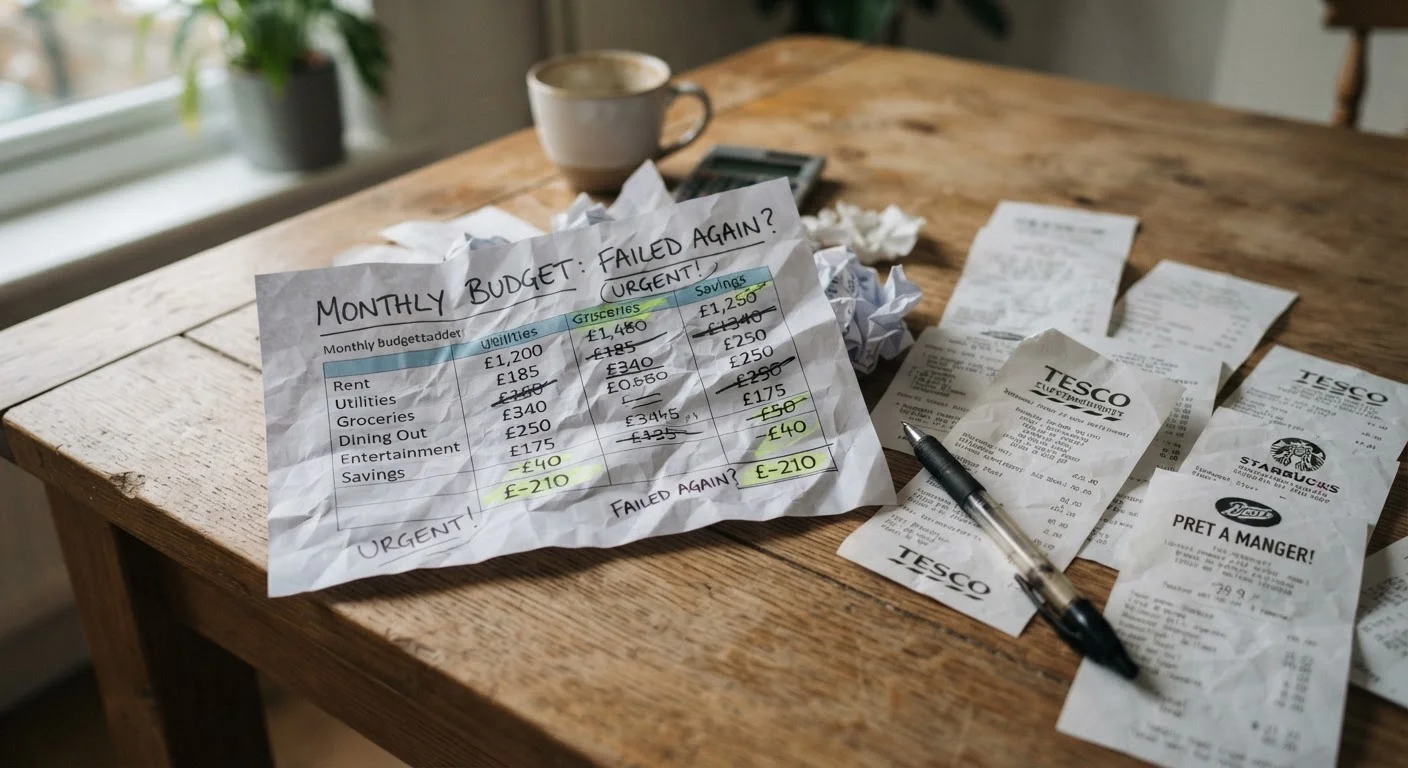
The first week of a new budget often feels energizing. You're tracking every dollar, packing lunch, and watching your savings balance tick upward. Then week two arrives, and the engine quietly stalls. An unexpected car expense lands. A friend's birthday dinner costs twice what you'd mentally allocated. You overspend one category and, for many people, that's when the whole plan gets quietly shelved.
This pattern is remarkably common - and it's rarely about willpower. Budget failure is almost always a design problem, not a discipline problem. The good news: once you understand exactly where budgets crack, you can build one that's genuinely harder to break. If you're starting from zero, our step-by-step guide to building your first monthly budget lays the foundation before you tackle these fixes.
The Most Common Budget-Breaking Mistakes
These are the structural errors that show up repeatedly - and the straightforward ways to correct them before they derail your plan.
Building categories that are too narrow and too rigid to absorb real life.
Why it happens: New budgeters often model their categories on templates that look comprehensive on paper but don't reflect how spending actually clusters in daily life - for example, separating "coffee" from "dining out" when both draw from the same social spending impulse.
Treating a monthly budget as if every month looks the same.
Why it happens: When people sit down to build a budget, they naturally project from the current month, forgetting that irregular expenses - car registration, quarterly insurance premiums, back-to-school costs - hit in specific months and can be three to five times a normal expense.
Abandoning the budget entirely after a single overspending incident.
Why it happens: All-or-nothing thinking is deeply human. When one category goes over, it can feel like the entire plan has failed - and if the plan has already "failed," there's no perceived reason to continue tracking.
Setting savings targets so aggressive that essential spending doesn't fit.
Why it happens: Motivated by a financial goal - paying off debt, building an emergency fund - people often front-load savings contributions and leave insufficient room for realistic day-to-day spending, creating a budget that's mathematically sound but practically impossible.
Failing to account for income variability when setting fixed spending limits.
Why it happens: Budgets are often built around an average or best-case income figure, particularly for people with freelance, hourly, or commission-based earnings. When a lower-income month arrives, every category is suddenly over budget through no behavioral fault.
If you recognize several of these patterns in your own budget, it may be time for a structural rethink rather than simply trying harder. Our guide on signals that your budget needs a reset can help you diagnose the deeper issues.
Building in Resilience From the Start
The budgets that survive past week two share a few traits: they treat irregular expenses as predictable (because they are), they include a small buffer for genuine surprises, and they allow for course correction without requiring perfection. A "sinking fund" - where you set aside a small, fixed amount each month toward known irregular costs like car repairs, annual subscriptions, or holiday gifts - is one of the most effective structural tools available. Hidden expenses that derail even careful budgeters covers this in detail, including which cost categories most often catch people off guard.
Don't Confuse Budget Revision With Budget Failure
Adjusting your budget mid-month or between months is not a sign the system is broken - it's the system working as intended. A budget is a living document, not a contract. Treating every revision as a defeat discourages the ongoing engagement that makes budgeting effective over time. Build in an explicit monthly review so adjustments feel routine rather than remedial.
It's also worth considering whether your overall budgeting framework matches how you actually think about money. Rigid line-item systems suit some people; others do better with broader spending buckets. Our comparison of zero-based vs. envelope budgeting can help you identify which structure is more likely to stick for your habits and lifestyle.
This article is for general informational and educational purposes only and does not constitute personalized financial advice. Consult a qualified financial professional for guidance specific to your situation.