

Key Takeaways
- Forced air systems require frequent filter changes and annual professional tune-ups to stay efficient.
- Radiant systems have fewer moving parts, but require specialized technicians when problems do arise.
- Duct leaks in forced air systems can silently reduce efficiency and increase heating costs.
- Radiant systems rarely need seasonal attention but are significantly harder and more costly to repair.
- Both system types benefit from pairing with good insulation to maximize heating efficiency.
Our Verdict
Forced air systems demand consistent, hands-on seasonal upkeep from the homeowner, but most tasks are straightforward and affordable. Radiant systems ask very little of you day-to-day, yet repairs - when needed - tend to be complex and expensive. Neither system is maintenance-free; the better fit depends on how much ongoing attention you're prepared to give versus the risk tolerance you have for infrequent but potentially significant repair events.
| Best for | Recommended |
|---|---|
| Homeowners comfortable with regular DIY upkeep tasks | Forced Air |
| Those who prefer a low-touch system and can absorb occasional larger repair costs | Radiant Heat |
| Homes in climates with long, cold winters where consistent warmth matters | Radiant Heat |
| Homeowners who also want summer air conditioning through the same system | Forced Air |
How Each System Works
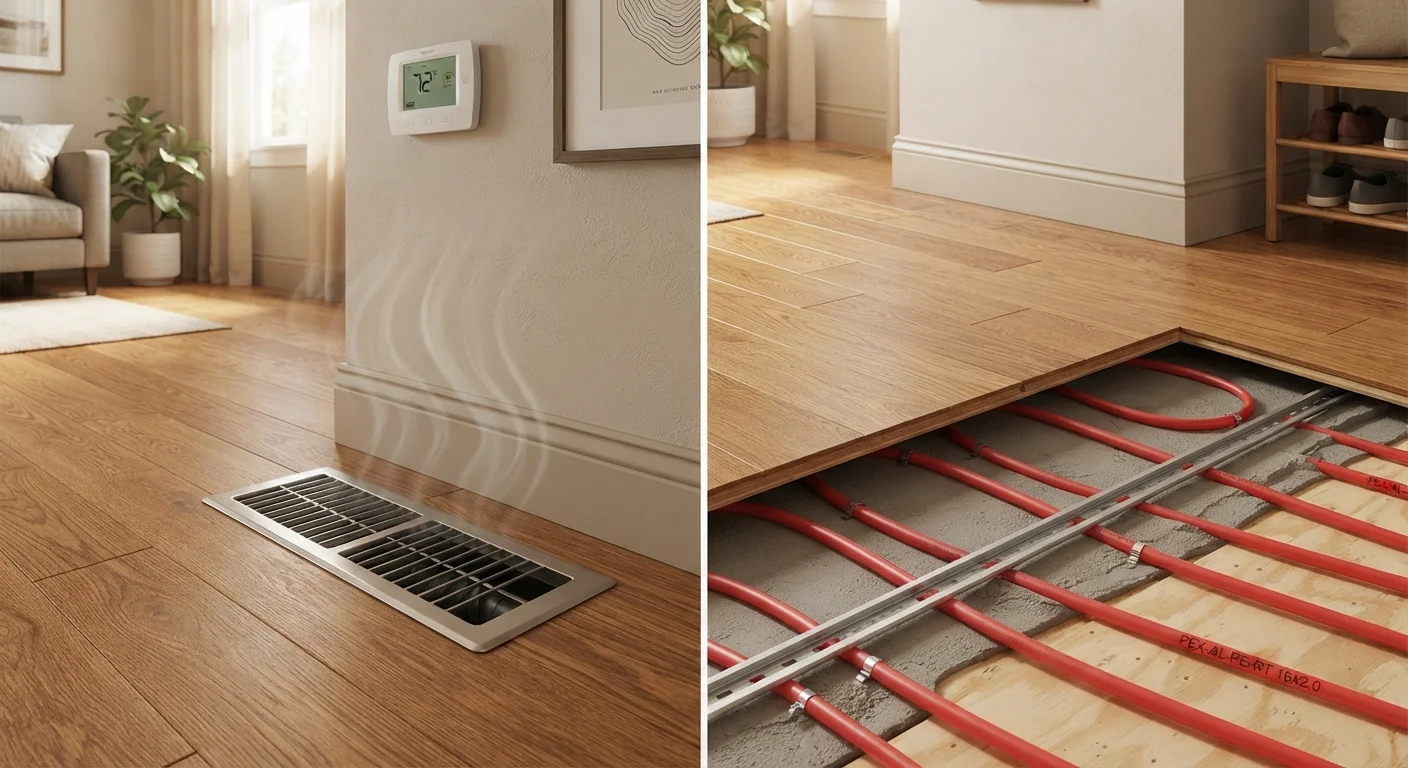
Understanding the maintenance demands of any heating system starts with knowing how it operates. Forced air systems - including gas furnaces and heat pumps - warm air at a central unit and distribute it throughout the home via a network of ducts and vents. A blower motor, air filter, heat exchanger, and thermostat all work together in a continuous cycle.
Radiant heat systems deliver warmth differently: they heat surfaces directly, either through electric resistance elements or by circulating hot water through tubing (known as hydronic radiant heat) installed beneath floors or behind wall panels. There is no air movement involved. Heat radiates outward from the surface into the room, warming objects and occupants rather than the air itself.
This fundamental difference - moving air versus heating surfaces - shapes everything about how each system ages and what it needs from you. See our guide to routine home upkeep for broader context on maintaining your home's core systems.
Forced Air Maintenance: Frequent but Manageable
Forced air systems are the most common residential heating choice in the U.S., and their maintenance schedule is well-established. The most critical - and most frequently neglected - task is filter replacement. A clogged filter restricts airflow, forces the blower motor to work harder, and can cause the heat exchanger to overheat. Most households should replace 1-inch filters every one to three months during heavy use; thicker media filters may last up to six months.
Beyond filters, the full maintenance checklist includes:
- Annual professional inspection: A licensed HVAC technician should inspect the heat exchanger for cracks (a safety issue involving carbon monoxide), test combustion efficiency, and calibrate the thermostat each year before heating season.
- Duct inspection: Leaky or disconnected ducts can waste a significant portion of conditioned air before it reaches living spaces. Sealing and insulating ducts is one of the highest-impact efficiency improvements available.
- Blower motor and belt check: Some systems use belts that wear over time; others use direct-drive motors. Both should be checked annually for wear.
- Vents and registers: Keep supply and return vents unobstructed by furniture or rugs to maintain proper airflow.
| Forced Air | Radiant Heat | |
|---|---|---|
| Filter maintenance | Every 1-3 months | Not applicable |
| Annual professional service | Required; furnace/heat pump tune-up | Required; boiler inspection (hydronic) |
| DIY-friendly tasks | Filter changes, vent clearing | Bleeding air from hydronic lines |
| Duct/pipe leak risk | Duct leaks reduce efficiency silently | Pipe leaks are rare but costly to fix |
| Repair complexity | Moderate; many common parts | High; embedded systems hard to access |
| Typical repair cost range | Often lower for common fixes | Often higher due to specialized labor |
| Works with air conditioning | Yes, uses same ductwork | No; separate cooling needed |
For a month-by-month schedule that integrates these tasks into your broader home upkeep, see our seasonal home maintenance calendar.
Set a Filter Change Reminder
One of the simplest ways to protect a forced air system is to set a recurring calendar reminder to check the filter monthly. Hold the filter up to a light source - if you can't see light through it clearly, it's time to replace it. Keeping a few spare filters on hand means there's no excuse to delay. This single habit prevents most common furnace efficiency problems.
Radiant Heat Maintenance: Minimal Routine, Higher Repair Stakes
Radiant systems are often praised for their low day-to-day maintenance needs, and this reputation is largely deserved. Electric radiant systems have almost no serviceable components - there is no furnace, no filter, no ductwork, and no blower motor. Hydronic radiant systems are slightly more involved but still far simpler than forced air on a routine basis.
For hydronic radiant systems, annual maintenance typically includes:
- Boiler inspection: The boiler (which heats the water) should be serviced by a qualified technician annually. This includes checking the pressure, inspecting the expansion tank, and testing safety relief valves.
- System pressure check: Hydronic systems operate within a specific pressure range. A consistent drop may indicate a slow leak somewhere in the tubing - something that requires professional diagnosis.
- Bleeding air from lines: Air trapped in hydronic lines creates cold spots in floors or panels. Bleeding the system (releasing trapped air) may need to be done periodically.
- Antifreeze concentration: In systems using a glycol-water mixture, the antifreeze ratio should be tested every few years.
The critical caveat: when something does go wrong with a radiant system - especially a leak in tubing embedded under flooring - repairs are complex, potentially disruptive to your home, and expensive. Good insulation throughout your home helps any radiant system perform well with less effort. Our attic insulation guide explains how insulation choices affect heating performance directly.
Comparing the Two Systems Side by Side
The table above summarizes the key maintenance differences between forced air and radiant heating. While forced air demands more frequent homeowner action, each individual task is generally low-cost and often DIY-friendly. Radiant systems reward hands-off homeowners but carry a higher risk profile when repairs become necessary - because of the specialized labor and potential floor disruption involved.
When budgeting for either system, factor in not just routine maintenance costs but also the potential expense of deferred or emergency repairs. A useful parallel exists in vehicle ownership: deferring small maintenance tasks predictably leads to larger repair bills. The same logic applies in your home.
Don't Ignore Pressure Drops in Hydronic Systems
A gradual but consistent drop in system pressure in a hydronic radiant system is not a normal occurrence to dismiss. It often signals a slow leak somewhere in the tubing network. Left unaddressed, leaks can cause water damage that goes undetected under flooring until it becomes severe. Contact a qualified plumber or HVAC professional at the first sign of unexplained pressure loss.