

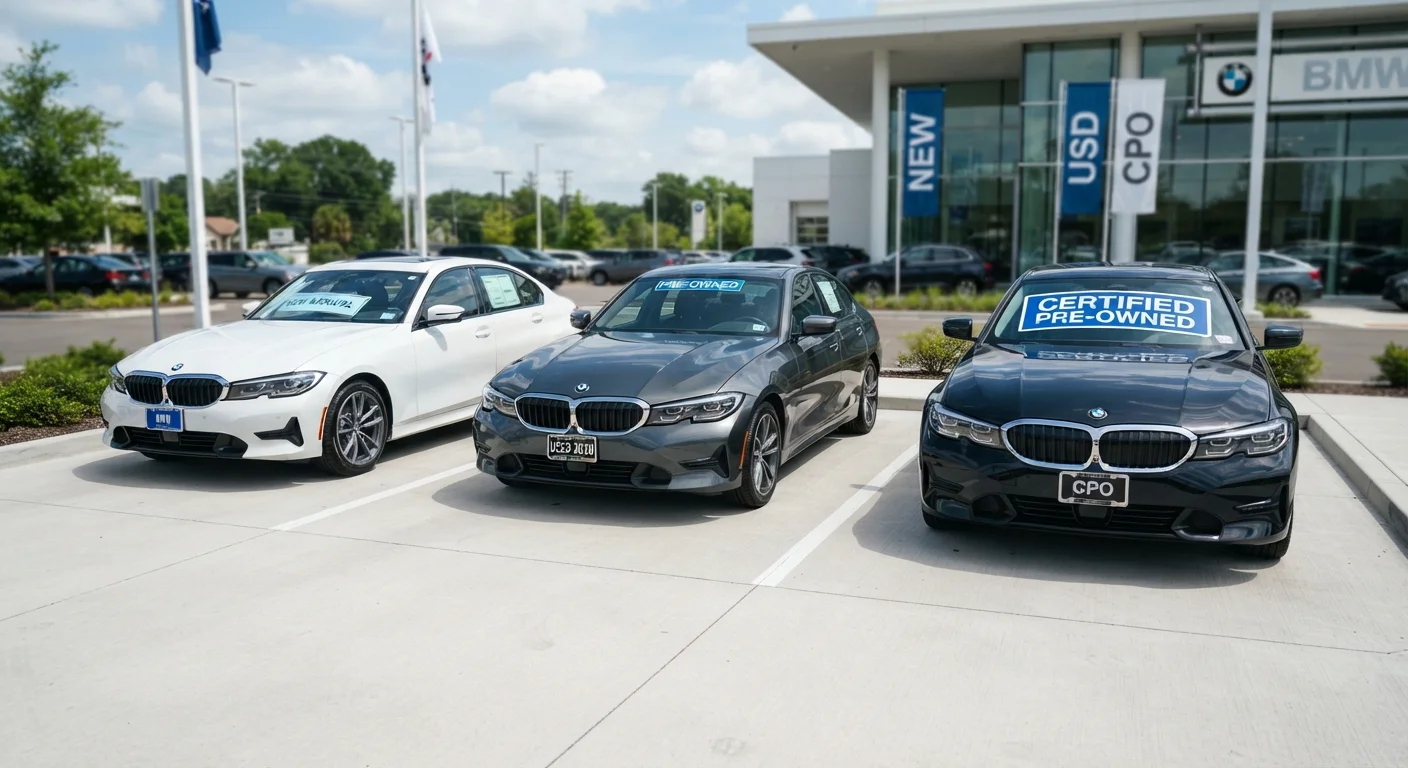
Key Takeaways
- New cars carry full manufacturer warranties but depreciate sharply in the first year.
- Used cars offer the lowest purchase price but carry variable risk depending on history and condition.
- Certified Pre-Owned (CPO) is a defined program - not just a marketing label - with specific inspection and warranty standards.
- Financing rates typically differ across all three categories, affecting total cost of ownership.
- The right choice depends on budget, risk tolerance, and how long you plan to keep the vehicle.
Our Verdict
No single category is universally superior - each represents a different trade-off between cost, coverage, and certainty. New vehicles offer maximum protection and latest technology at a premium. Used vehicles maximize immediate savings but require more due diligence. CPO bridges the gap with structured protections at a moderate price premium over standard used vehicles.
| Best for | Recommended |
|---|---|
| Buyers who want complete peace of mind and the latest features | New Car |
| Budget-conscious buyers comfortable doing thorough pre-purchase research | Used Car |
| Buyers who want used-car pricing with warranty coverage and lower risk | Certified Pre-Owned |
What "New," "Used," and "CPO" Actually Mean
Walk into any dealership and you'll encounter all three categories - but the labels mean more than most buyers realize. Getting them straight before you shop is one of the most practical steps you can take. See our full car-buying journey guide for a broader look at every stage involved.
New vehicles are sold directly from the manufacturer's production line to the dealer, have never been titled to a private owner, and carry zero prior mileage (excluding minor transport or lot mileage). They come with a complete manufacturer's warranty - typically covering the bumper-to-bumper components for three years or 36,000 miles, and the powertrain for five years or 60,000 miles, though these figures vary by manufacturer.
Used vehicles are any vehicles that have been previously titled and owned. That covers a wide spectrum: a two-year-old car with 15,000 miles and a spotless service history is technically in the same category as a decade-old vehicle with 130,000 miles and an unknown past. The label alone tells you very little - condition, history, and inspection matter enormously.
Certified Pre-Owned (CPO) is a formally defined program, not a casual claim. To qualify, a vehicle must meet the manufacturer's or dealer group's specific age, mileage, and condition criteria, pass a multi-point inspection, and receive a warranty extension administered by the manufacturer or a third party. The specifics vary by program, so it pays to read exactly what each CPO certification covers before assuming uniformity.
| New Car | Used Car | Certified Pre-Owned | |
|---|---|---|---|
| Typical Purchase Price | Highest | Lowest | Moderate |
| Depreciation Risk | Steepest in year one | Already absorbed by prior owner | Partially absorbed |
| Manufacturer Warranty | Full, starts at delivery | None or partial remaining | Extended, program-dependent |
| Financing Rates | Typically lowest | Typically highest | Between new and used |
| Inspection Required by Buyer | Not typically necessary | Essential before purchase | Done by seller per program standards |
| Risk Level | Lowest | Highest (variable) | Low to moderate |
| Manufacturer Incentives | Often available | Not available | Sometimes available on CPO programs |
Cost, Depreciation, and Financing: The Numbers That Drive the Decision
Price is the most obvious variable, but the full cost picture is more nuanced than the sticker suggests.
New cars typically command a higher purchase price, and they absorb the steepest depreciation - a vehicle can lose a significant portion of its value within the first year alone. However, new vehicles often qualify for manufacturer incentives, and lenders generally offer their lowest interest rates on new-car loans, which can partially offset the higher price over the life of a loan.
Standard used vehicles carry the lowest sticker prices, but financing rates are typically higher than for new cars, and they're ineligible for manufacturer incentives. The savings can still be substantial, especially when buying a two- to four-year-old model that has already absorbed most of its initial depreciation curve.
CPO vehicles sit between the two on price - you'll pay a premium over a comparable non-certified used vehicle for the inspection assurance and warranty coverage. Interest rates on CPO vehicles are often more favorable than standard used-car rates, though generally not as low as new-car rates. Whether that premium represents good value depends on the specific warranty terms and your own risk tolerance.
Ask for the CPO Inspection Checklist
Before purchasing a CPO vehicle, request the completed inspection report that documents which components were checked and what, if anything, was repaired or replaced. A legitimate CPO program will have this documentation readily available. Vague assurances without paperwork are a red flag worth taking seriously.
Warranty, Risk, and What You're Actually Protected Against
Warranty coverage is where the three categories diverge most sharply - and where understanding the fine print matters most.
With a new vehicle, the manufacturer warranty is comprehensive and begins the day you take delivery. Any covered component failure during the warranty period is the manufacturer's financial responsibility, with authorized repair through franchise dealers. Extended service contracts can be purchased to lengthen this coverage, but the factory warranty is the starting baseline.
A standard used vehicle typically comes with no remaining manufacturer warranty unless it was purchased recently enough that the original coverage still applies. Some dealers offer limited lot warranties, but these are generally narrow in scope. This is why a professional pre-purchase inspection - performed by an independent mechanic - is not optional; it's essential. Our guide on how to evaluate a used car before committing walks through exactly that process.
CPO warranties vary by program. Manufacturer-backed CPO programs tend to be the most robust, offering powertrain coverage that can extend several years beyond the original factory warranty, plus roadside assistance and sometimes loaner vehicle provisions. Third-party CPO programs, offered by independent dealers or dealer groups, vary considerably in quality - always request the full written terms.
Where you buy also affects your protections. Buying from a dealership versus a private seller involves different legal and warranty implications worth understanding before you commit.
If you're navigating this process for the first time, the first-timer's car buying guide covers the decisions and paperwork most buyers encounter unexpectedly. And regardless of which category you choose, staying on top of routine car maintenance is what keeps any vehicle reliable over time.