

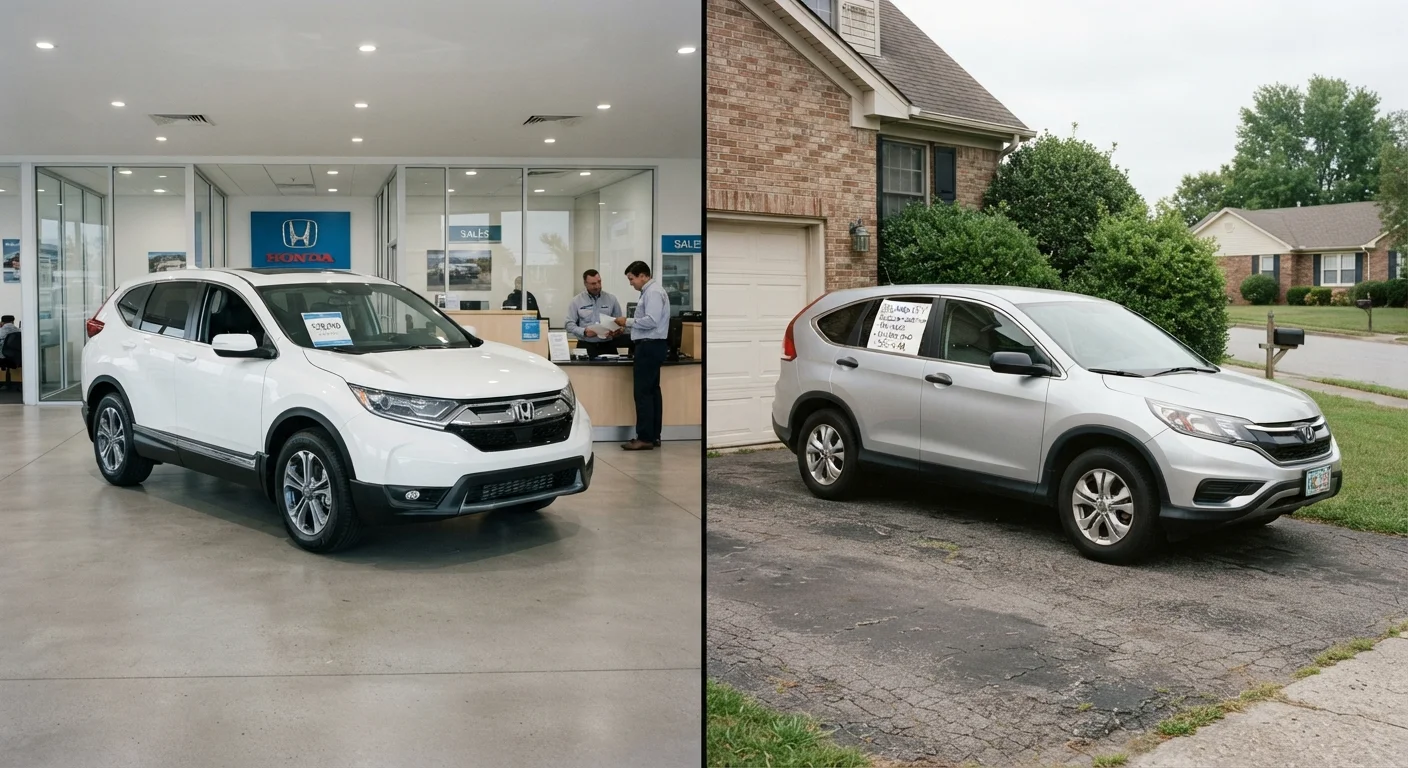
Key Takeaways
- Dealerships offer more consumer protections but typically charge higher prices than private sellers.
- Private-party sales usually require a cash payment or pre-arranged financing since sellers don't offer loans.
- In most states, dealerships must comply with FTC rules and disclose known defects; private sellers generally have fewer legal obligations.
- A pre-purchase inspection by an independent mechanic is strongly advisable for any used vehicle, regardless of source.
- Title transfers, taxes, and registration paperwork are usually handled by the dealership; private sales put that burden on the buyer.
Option A
Buying at a Dealership
The structured, regulated channel with built-in consumer protections.
Best for: Buyers who want financing options, trade-in convenience, and a documented purchase process.
Option B
Buying From a Private Seller
The direct, often lower-cost route with fewer intermediaries.
Best for: Buyers who are confident evaluating a vehicle independently and want to negotiate directly with an owner.
If you need financing and haven't secured a loan yet
Buying at a Dealership
Dealerships can arrange financing on-site, though comparing dealer rates against your own bank or credit union beforehand is always worthwhile.
If you want the lowest possible purchase price
Buying From a Private Seller
Private sellers typically price below dealer retail and are often more willing to negotiate, especially if the vehicle has been listed for a while.
If you're a first-time buyer or unfamiliar with evaluating used vehicles
Buying at a Dealership
Dealers handle most paperwork and are subject to regulatory oversight, giving less-experienced buyers more recourse if problems arise.
If you have a specific, well-researched vehicle in mind
Buying From a Private Seller
Private listings often surface vehicles that aren't available at local dealers, and you can speak directly with the owner about the car's history.
If you want warranty coverage or certified pre-owned status
Buying at a Dealership
Only franchised dealerships can sell manufacturer-certified pre-owned vehicles, which come with inspections and extended warranty coverage.
Price, Negotiation, and Hidden Costs
The sticker price at a dealership reflects overhead: staff wages, facility costs, and profit margin. That doesn't mean the price is fixed - negotiation is expected - but the floor tends to be higher than what a private seller needs to recoup. Private sellers are typically motivated to move a vehicle they no longer need, which can translate into real savings, sometimes thousands of dollars below dealer retail on comparable vehicles.
However, the dealership total cost isn't just the vehicle price. Finance-office add-ons such as extended warranties, paint protection, and GAP insurance can inflate the final figure significantly. See our overview of common dealer add-ons to understand what each product actually covers before you agree to anything.
Private sales carry their own cost risks. If a problem surfaces after you've driven away, there is generally no recourse - the sale is as-is unless the seller made written representations. Factor in the cost of a pre-purchase inspection and any deferred maintenance you discover.
| Criterion | Dealership | Private Seller |
|---|---|---|
| Typical price | Higher (reflects overhead) | Lower (fewer middlemen) |
| Financing available | Yes, on-site options | No - buyer arranges own loan |
| As-is disclosure required | Yes - FTC Buyers Guide | Varies by state; often minimal |
| Warranty options | Limited, CPO, or aftermarket | None unless factory warranty transfers |
| Title & registration handled | By dealer | By buyer at DMV |
| Trade-in option | Yes | No |
| Negotiation flexibility | Moderate | Often higher |
| Fraud/scam risk | Lower (regulated) | Higher (unregulated) |
Financing and Payment Logistics
One of the biggest practical differences is how you pay. Dealerships can arrange financing directly, often through multiple lending partners, which means you can buy and drive away the same day even if you haven't secured a loan in advance. That convenience has a tradeoff: dealer-arranged financing may carry a markup over the lender's base rate, a practice called the dealer reserve. Understanding how dealer financing compares to bank or credit union loans before you sit down at the finance desk can save you money over the life of a loan.
Private sellers almost never offer financing. That means you either pay cash or arrange a loan through your own bank or credit union before completing the purchase. Some lenders place restrictions on private-party auto loans, so confirm terms early. Wire transfers and cashier's checks are common payment methods; avoid large cash transactions and be alert to payment scams, which are more prevalent in private-party channels.
Verify the Vehicle History Report
Regardless of whether you're buying from a dealer or a private seller, request a vehicle history report using the car's VIN (Vehicle Identification Number). These reports can reveal prior accidents, odometer discrepancies, title brands such as salvage or flood, and the number of previous owners. A dealer is required to disclose a salvage title, but a vehicle history report gives you an independent data point to verify what you're told.
Consumer Protections and Legal Obligations
Dealerships operate under federal and state regulations. The FTC's Used Car Rule requires dealers to display a Buyers Guide on every used vehicle, disclosing whether the car is sold as-is or with a warranty and listing any known defects. State lemon laws and consumer protection statutes also apply in many jurisdictions, giving buyers a clearer path to recourse if something goes seriously wrong shortly after purchase.
Private sellers are held to a much lower standard in most states. The baseline is caveat emptor - let the buyer beware. A seller who actively conceals a known defect may have civil liability, but proving that is difficult and expensive. This is why an independent pre-purchase inspection matters even more in a private sale. Have a mechanic of your choosing inspect the vehicle before signing anything.
For a broader view of what to expect at every stage of a vehicle purchase, the full car-buying journey guide walks through the entire process from research to registration.
Paperwork, Title, and Registration
Dealers handle most of the administrative burden: title transfer, sales tax collection, and registration are typically processed by the dealership on your behalf, often for a documentation fee. You leave with temporary plates and a timeline for permanent registration to arrive by mail.
In a private sale, that responsibility falls entirely on the buyer. You'll need to transfer the title at your state's DMV, pay sales tax directly, and handle registration yourself. Requirements vary by state, so verify the process with your local DMV before finalizing any private purchase. Ensure the seller's name on the title matches their ID, and confirm the vehicle has no outstanding liens - a lienholder listed on the title means the vehicle may still be collateral for the seller's loan.
If you're navigating this process for the first time, our first-time buyer guide covers the paperwork and decisions that often catch new buyers off guard.