

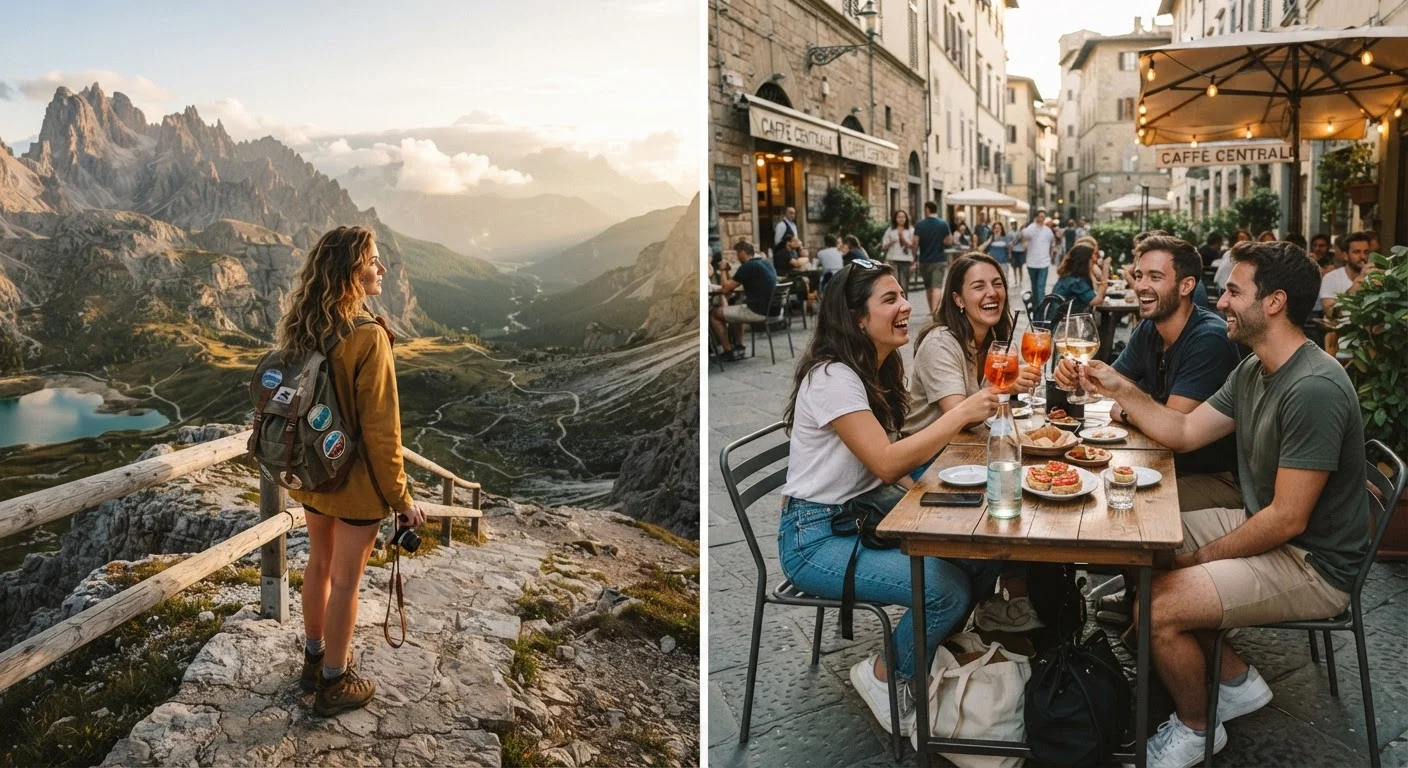
Key Takeaways
- Solo travel offers maximum flexibility but typically costs more per person than shared group arrangements.
- Group travel eases logistical burdens but requires compromise on schedule, pace, and spending.
- Neither style is universally better - your destination, budget, and personality all factor in.
- Many experienced travelers alternate between solo and group trips depending on the goal of each journey.
Complete freedom over schedule and pace
You decide when to wake up, where to eat, and how long to linger at any sight - no negotiation required. This often leads to more spontaneous, personally meaningful experiences.
Deeper cultural immersion and local interaction
Solo travelers tend to connect more with locals and other travelers because they're not self-contained in a group bubble. Research on independent travel consistently notes this as a primary benefit.
Personal growth and confidence-building
Solving problems independently - a missed bus, a language barrier, a navigation puzzle - builds real self-reliance that carries into everyday life.
No compromise on interests or spending
You pursue what genuinely interests you and spend at a level that matches your own budget, not a group average.
Higher per-person costs due to single supplements
Hotels, tours, and some transport options charge more when a space designed for two is occupied by one. This can meaningfully increase accommodation costs.
No built-in support system for problems
Illness, theft, or a logistical crisis is harder to manage without a travel companion. Solo travelers need stronger contingency planning and often benefit from travel insurance.
Loneliness on long or emotionally intense trips
Extended solo travel can be isolating, particularly when encountering experiences you instinctively want to share. This varies by personality but is a genuine consideration.
Constant vigilance required in unfamiliar places
Without someone to share watch duties, solo travelers must stay more alert about their belongings and surroundings, which can be mentally tiring over time.
Our Verdict
Solo travel rewards self-reliance and delivers a depth of personal experience that's hard to replicate, but it comes with real costs - financial, logistical, and emotional. Group travel distributes those burdens and adds shared joy, but it demands flexibility and good communication. Neither approach wins outright; both have an appropriate context.
Solo travel suits independent, flexible travelers who prioritize personal discovery, while group travel is ideal for those who value shared experiences, cost-sharing, and built-in support - particularly on first-time or complex itineraries.
The Real Question Behind the Choice
The solo vs. group debate isn't really about which style is objectively better - it's about what you actually want from a specific trip. Someone craving deep cultural immersion and spontaneous detours will have a very different ideal trip than someone who wants to share a bucket-list moment with close friends. Before comparing the mechanics, it helps to identify your travel style and what outcomes matter most to you.
The differences between solo and group travel show up in five practical areas: cost, flexibility, safety, social experience, and logistics. Understanding each one honestly - not just the romantic version - is what lets you make a decision you won't regret at the airport.
Advantages and Disadvantages of Solo Travel
Traveling alone is genuinely liberating in ways that are difficult to explain until you've done it. Every decision is yours: wake up early for a sunrise hike or sleep in and wander a market at noon. Your pace, your priorities, your itinerary.
Complete freedom over schedule and pace
You decide when to wake up, where to eat, and how long to linger at any sight - no negotiation required. This often leads to more spontaneous, personally meaningful experiences.
Deeper cultural immersion and local interaction
Solo travelers tend to connect more with locals and other travelers because they're not self-contained in a group bubble. Research on independent travel consistently notes this as a primary benefit.
Personal growth and confidence-building
Solving problems independently - a missed bus, a language barrier, a navigation puzzle - builds real self-reliance that carries into everyday life.
No compromise on interests or spending
You pursue what genuinely interests you and spend at a level that matches your own budget, not a group average.
The downsides are equally real. Solo travelers typically pay a single supplement - a surcharge hotels and tour operators add when only one person occupies a space meant for two. This can add 20-50% to accommodation costs in some markets. There's also no built-in safety net: no one to watch your bag at a café or help navigate a missed train connection. These challenges aren't insurmountable, but they require preparation. Our guide to skills for first-time solo travelers covers the mindset shifts and practical habits that smooth out many of these friction points.
Higher per-person costs due to single supplements
Hotels, tours, and some transport options charge more when a space designed for two is occupied by one. This can meaningfully increase accommodation costs.
No built-in support system for problems
Illness, theft, or a logistical crisis is harder to manage without a travel companion. Solo travelers need stronger contingency planning and often benefit from travel insurance.
Loneliness on long or emotionally intense trips
Extended solo travel can be isolating, particularly when encountering experiences you instinctively want to share. This varies by personality but is a genuine consideration.
Constant vigilance required in unfamiliar places
Without someone to share watch duties, solo travelers must stay more alert about their belongings and surroundings, which can be mentally tiring over time.
How Group Dynamics Change the Experience
Traveling with others - whether friends, family, or a small organized tour group - fundamentally changes how a destination feels. Shared moments have a particular quality: laughing over a wrong turn, pooling opinions about where to eat, watching someone experience something for the first time.
Organized Group Tours: A Middle Path
For travelers who want companionship without the coordination work, small-group organized tours offer a useful middle ground. You travel with others but someone else handles logistics, bookings, and routing. The trade-off is reduced flexibility and a fixed itinerary - but for first-time visitors to complex destinations, that structure is often a genuine relief rather than a restriction.
Group travel also changes your relationship with planning. Costs are distributed - shared hotel rooms, rental cars split four ways, and bulk tour bookings can reduce per-person expenses significantly. But every efficiency gain comes with a coordination cost. Agreeing on an itinerary across different interests, energy levels, and budgets is real work. If you're navigating a group with varied preferences, the strategies in planning trips that work for mixed groups are worth reading before you finalize anything.
~20-50%
Typical single supplement increase on accommodation
Industry travel guides commonly cite this range for solo traveler surcharges at hotels and tour operators, though exact amounts vary by property and destination.
4-in-10
Americans who have taken a solo trip
Travel industry surveys conducted in recent years consistently find that a significant portion of American adults have traveled solo at least once, with interest continuing to grow.
Flexibility: Where the Two Styles Diverge Most
The starkest practical difference between solo and group travel is flexibility. A solo traveler can pivot in real time - extending a stay in a city they love, skipping a planned museum after a tiring day, or booking a last-minute ferry because the weather looks perfect. Group travelers negotiate every deviation, and what sounds easy in theory often creates friction in practice.
This connects directly to how structured your trip should be. A group generally benefits from a firmer itinerary because it reduces daily decision-making friction. Solo travelers, by contrast, often thrive with a lighter framework. For a full look at that trade-off, see itinerary vs. open-ended travel. The short version: more travelers usually means more structure is genuinely useful, not just comforting.
Making the Right Call for Your Next Trip
A few honest questions help clarify which approach fits a given trip:
- What's the destination like? Some places - remote destinations, areas with language barriers, or high-complexity logistics - are easier with a companion or small group. Others are perfectly straightforward alone.
- What's your budget reality? Solo travelers should budget for single supplements and the reality of paying full price for everything. Group travelers should budget for slower decision-making and occasional compromises.
- What do you want to feel at the end? Proud of your own resourcefulness? That points solo. Nostalgic for shared experience? That points group.
Many experienced travelers don't pick one style permanently - they alternate, matching the approach to the trip. A reflective solo journey one year, a boisterous group adventure the next. Exploring destination ideas across different contexts can help you picture which style fits a particular place before you commit.