

Key Takeaways
- A brokerage statement summarizes your holdings, transactions, and account value for a specific period.
- The account summary section gives you a quick snapshot of gains, losses, and total portfolio value.
- Cost basis data is critical for understanding your tax liability when you sell investments.
- Reviewing your statement monthly helps you spot errors, unauthorized trades, and fee patterns.
- Unrealized gains and losses only affect your taxes when you actually sell the position.
What you will need
Why Your Brokerage Statement Matters
A brokerage statement is the official record of everything that happened inside your investment account during a given period - typically one month or one quarter. It's generated by your brokerage firm and delivered either electronically or by mail. Most investors glance at the account value and move on. That approach leaves a lot of important information unread.
Statements serve several distinct purposes beyond showing you a balance. They document your cost basis - what you paid for your investments - which determines your taxable gain or loss when you eventually sell. They verify that every transaction in your account was one you authorized. And they give you a clear picture of what fees you're actually paying.
If you're just getting started, understanding this document is as foundational as understanding a pay stub. Just as you'd review a credit report field by field to understand your borrowing history, reading a brokerage statement section by section tells the full story of your investment account.
What you will need
Before diving in, consider whether your brokerage account type affects what you'll see. Taxable accounts show realized and unrealized gains that may trigger tax obligations. Tax-advantaged accounts such as IRAs have different rules - for a deeper look at how account types differ, see our guide on tax-advantaged accounts every new investor should understand.
This article is for general educational purposes only and does not constitute personalized financial, investment, or tax advice. Consult a licensed financial adviser or tax professional for guidance specific to your situation.
How to Work Through Your Statement Step by Step
The sections below walk you through each part of a standard brokerage statement in the order you're most likely to encounter them. Pull up your statement now and follow along - reading it actively, rather than passively, is the fastest way to build familiarity.
Your Brokerage Statement (PDF or Paper)
The primary document you will be reading and interpreting section by section.
Notepad or Spreadsheet
Track key figures - account value, cost basis totals, fees paid - across multiple periods to spot trends.
IRS Publication 550
Free IRS reference guide explaining how investment income, dividends, and capital gains are taxed.
Locate and Open Your Most Recent Statement
Log into your brokerage's online portal and navigate to the Statements & Documents section, typically found under your account settings or a dedicated documents tab. Download the most recent monthly or quarterly statement as a PDF. If you receive paper statements, retrieve the most current one.
Most statements are organized the same way regardless of the brokerage: a summary page up front, then detailed sections that follow. Skim the full document before reading anything closely so you know what pages to expect.
Read the Account Summary Page
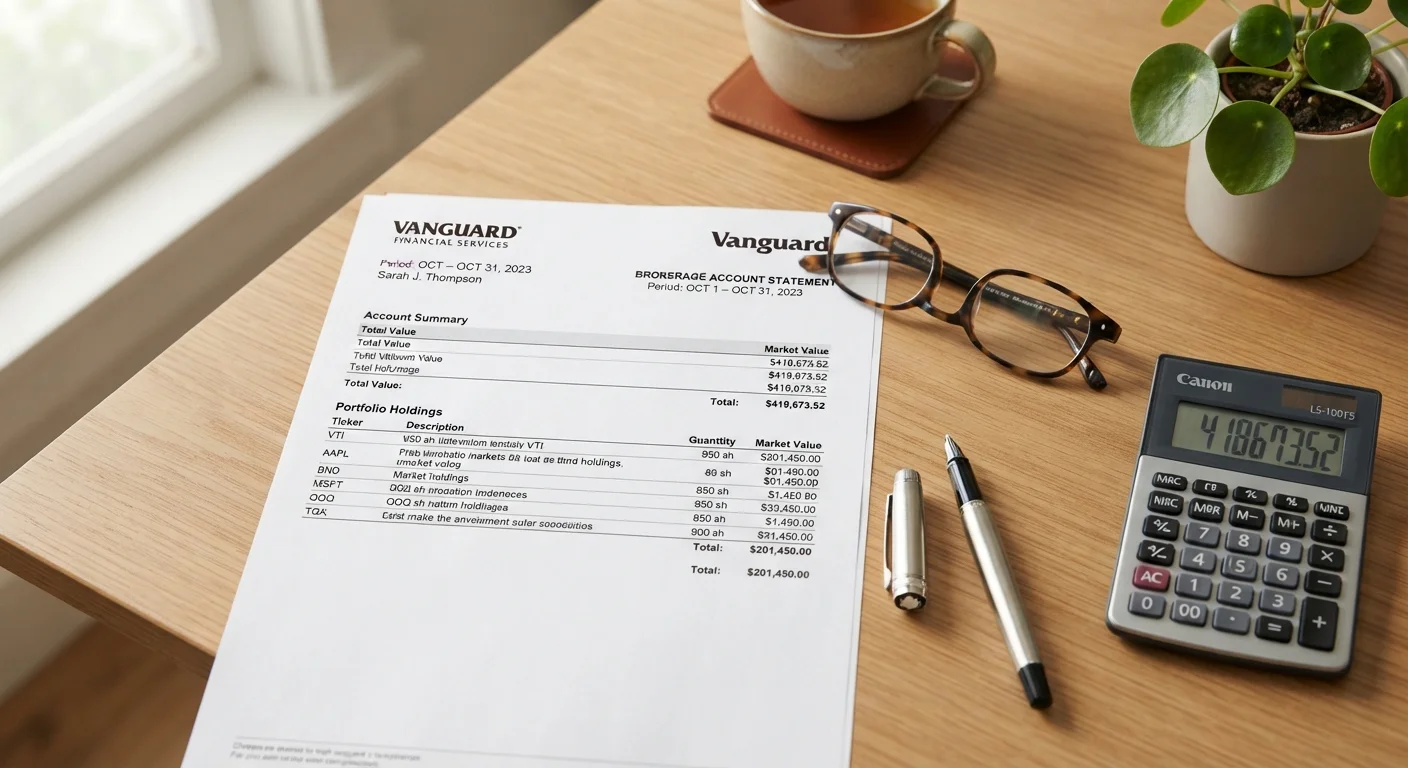
The account summary (sometimes called the portfolio overview) is the first substantive section and the most important one to understand. It shows:
- Beginning account value: Your portfolio's dollar value at the start of the statement period.
- Ending account value: The value at the close of the period - this is what your portfolio is worth right now.
- Change in value: The difference, which reflects both market movement and any deposits or withdrawals you made.
- Net contributions and withdrawals: Money you moved in or out during the period.
Don't panic if the ending value is lower than the beginning - market fluctuation is normal. The summary is a snapshot, not a verdict on your investing strategy.
Review Your Holdings Section
The holdings (or portfolio detail) section lists every position you own. For each security, you'll typically see:
- Security name and ticker symbol
- Number of shares or units held
- Current market price
- Current market value (shares × price)
- Cost basis: What you originally paid, in total, for the position
- Unrealized gain or loss: The difference between market value and cost basis
The word unrealized is important: these gains or losses exist only on paper. You don't pay tax on an unrealized gain - and you don't lock in a loss - until you sell. Understanding this distinction helps you make calmer, more rational decisions about whether to hold or sell.
Examine the Transaction History
The transaction history section lists every activity in your account during the statement period: purchases, sales, dividend payments, interest credits, and fee deductions. Go through each line and verify:
- Every buy or sell matches something you authorized.
- Dividends appear for securities you know pay them.
- No unexpected fees are deducted.
This is also where you'll see reinvested dividends if you've opted into a dividend reinvestment plan (DRIP). Each reinvestment is a new purchase at a new price, which adds a new lot to your cost basis - relevant when you eventually sell.
Check the Income and Fees Summary
Most statements include a summary of income earned during the period - dividends received, interest credited, and any capital gains distributions from mutual funds or ETFs. This section feeds directly into your annual tax documents (Form 1099-DIV and 1099-INT), so it's worth understanding even if the numbers seem small.
Look also for a fees paid or charges line. Depending on your account type and activity, you may see account maintenance fees, transaction commissions, or margin interest charges. Fees quietly erode returns over time, so knowing what you're paying is part of informed investing. If you see fees you don't recognize, review your account agreement or contact your brokerage.
Note Any Messages or Required Disclosures
The final pages of most brokerage statements include regulatory disclosures, notes about account changes, or messages from the firm. These can feel like boilerplate, but occasionally they contain substantive information - a change in fee structure, a correction to prior statements, or a notice about a security action (merger, stock split, or spin-off) affecting one of your holdings.
Skim this section rather than skipping it entirely. If a corporate action affected a holding, your cost basis and share count may have changed automatically, and the disclosure will explain how.
Statements Are Financial Records - Keep Them
Brokerage statements serve as official documentation of your investment activity and cost basis history. If there is ever a tax dispute or account discrepancy, these records are your primary evidence. Download and archive digital copies or retain paper statements for at least seven years, consistent with general IRS recordkeeping guidance.
Errors on Statements Do Happen
Brokerage firms process millions of transactions, and mistakes - incorrect share counts, missing dividends, or mislabeled transactions - do occur. If something looks wrong, contact your brokerage's customer service promptly. Most firms have a limited window during which you can formally dispute statement errors.
Set a Monthly Statement Review Routine
Treat your monthly statement review like a utility bill check - brief but consistent. Fifteen minutes once a month is enough for most investors to verify accuracy, confirm contributions, and stay aware of how the portfolio is behaving over time. Consistency matters more than depth at this stage.
Once you can read a brokerage statement fluently, you're better positioned to make decisions grounded in actual data rather than gut instinct. If you haven't yet opened an investment account and are weighing whether you're ready, our brokerage account readiness checklist can help you evaluate your financial foundation first.