

Key Takeaways
- Serving size is the foundation of every number on the label - always check it first.
- Percent Daily Value (%DV) shows how much a nutrient contributes to a general 2,000-calorie reference diet.
- Aim to limit saturated fat, sodium, and added sugars; prioritize fiber, vitamins, and minerals.
- The ingredient list reveals what's actually in your food, listed by weight from most to least.
- Front-of-package claims are regulated differently than the Nutrition Facts panel - treat them separately.
- Labels inform choices but don't replace personalized guidance from a qualified healthcare professional.
What you will need
Why the Label Exists - and What It's Designed to Do
The Nutrition Facts label became mandatory on most packaged foods in the United States under FDA authority, and its current format - updated in 2020 - was specifically redesigned to make key information more visible and harder to misread. If you're new to thinking about what you eat, the label is one of the most reliable data points available at the point of purchase. Unlike front-of-package marketing language, the Nutrition Facts panel follows a regulated, standardized structure.
Understanding the label doesn't require a nutrition degree. It does require knowing which numbers to look at, what they actually measure, and how to put them in context for your own eating patterns. That's exactly what this guide walks through.
What you will need
How to Read Each Section of the Label
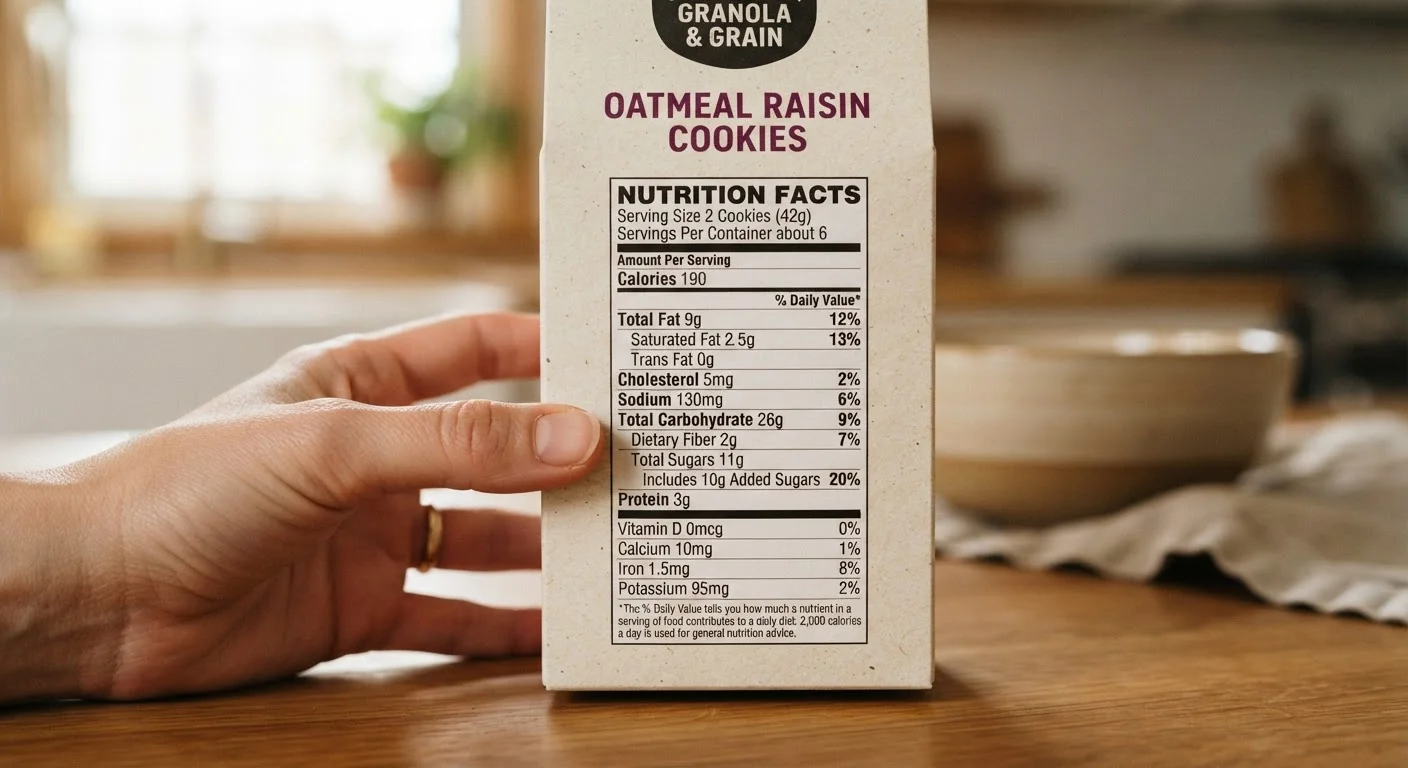
Work through a Nutrition Facts label from top to bottom - each section builds on the one above it. The steps below follow the standard FDA panel layout.
Start with Serving Size and Servings Per Container
Every number on the label - calories, fat, sodium, everything - applies to one serving, not the whole package. The FDA updated label rules to require serving sizes that reflect amounts people typically eat, not idealized portions. Check the servings per container figure: if a bag of chips lists 7 servings and you eat the whole bag, multiply every value by 7.
Look at Calories per Serving
Calories measure the energy a food provides. The updated label displays this number in a larger, bolder font. Remember: this figure is per serving, so if your portion differs from the listed serving size, adjust accordingly. Calorie needs vary widely by individual - the label doesn't set a target for you.
Identify Nutrients to Limit
Three nutrients appear prominently because many Americans consume them in excess relative to public health guidance: saturated fat, sodium, and added sugars. Saturated fat and sodium are linked in research literature to cardiovascular risk when consumed in high amounts over time. Added sugars - distinguished from naturally occurring sugars - contribute calories with little nutritional benefit. The label lists both total sugars and added sugars separately so you can distinguish them.
Identify Nutrients to Get Enough Of
Dietary fiber, vitamin D, calcium, iron, and potassium are nutrients that research suggests many Americans fall short on. These are required disclosures on the updated label precisely because they're commonly under-consumed. Higher %DV values for these nutrients are generally a positive sign.
Use the Percent Daily Value (%DV) Column as a Guide
The %DV column on the right side of the panel shows what percentage of a daily recommended amount one serving provides, based on a 2,000-calorie reference diet. A quick rule of thumb established by the FDA: 5% DV or less is considered low; 20% DV or more is considered high. Use this as a rough orientation tool rather than a precise personal target.
Note Any Footnote at the Bottom
The footnote explains that %DV figures are based on a 2,000-calorie diet and that individual needs vary. It may also list recommended daily values for selected nutrients at both 2,000 and 2,500 calories. This context is important: the label is a reference tool, not a personalized prescription. For information on what a balanced diet actually means in practical terms, context like this is a useful starting point.
The Ingredient List: A Separate (and Essential) Section
Just below the Nutrition Facts box, most packages include an ingredient list. This is distinct from the panel itself but equally informative. Ingredients are listed in descending order by weight, meaning whatever appears first makes up the largest proportion of the product.
A short ingredient list with recognizable items generally signals a less processed product. A long list - especially one with added sugars listed under multiple names (such as cane syrup, dextrose, high-fructose corn syrup, or maltose) - can reveal that added sugars are more prominent than the label's single Added Sugars line might suggest at first glance. Common allergens (milk, eggs, peanuts, tree nuts, wheat, soy, fish, shellfish) are required to be disclosed, either within the ingredient list or in a separate Contains statement.
Multiple Sugar Names, One Ingredient List
Food manufacturers may use many names for added sugars in ingredient lists - dextrose, maltose, evaporated cane juice, and corn syrup solids are common examples. When several of these appear in a single product, their combined contribution to total added sugars can be larger than any single ingredient's placement suggests. Cross-referencing the ingredient list with the Added Sugars line on the label gives you the most complete picture.
Front-of-package language like "natural," "low fat," or "fortified" follows separate regulatory rules. Our guide on nutrition labels and marketing claims explains what each term actually means and how much weight to give it.
Putting Labels in the Context of Your Overall Diet
A single label tells you about a single product. It doesn't tell you about the rest of what you ate that day, your activity level, or your individual health needs. The %DV figures reference a general 2,000-calorie daily intake - a rough population average, not a personal prescription. Some people need more; some need less.
Where labels are most useful is in comparison shopping and pattern recognition. Checking whether a food is unusually high in sodium, or whether fiber content is meaningful relative to the serving, takes seconds once you're comfortable with the format. Over time, that habit compounds. For a broader look at how individual foods fit into your day, the practical checklist for evaluating your eating patterns offers a structured starting point without rigid targets.
Also worth noting: labels cover macronutrients and some micronutrients, but not everything your body needs. For a fuller picture of vitamins and minerals - including those not always listed on a label - see our explainer on essential micronutrients.
Labels Inform - They Don't Prescribe
Nutrition Facts labels are a population-level reference tool, not a clinical guide for managing a specific health condition. If you have diabetes, cardiovascular disease, kidney disease, food allergies, or any other condition that affects how you should eat, work with a registered dietitian or your healthcare provider to interpret label information in the context of your personal needs. General label-reading skills are a useful foundation, but they are not a substitute for individualized guidance.
This article is for general informational and educational purposes only and is not a substitute for advice from a qualified healthcare professional or registered dietitian. Individual nutritional needs vary based on age, health status, and other factors.