

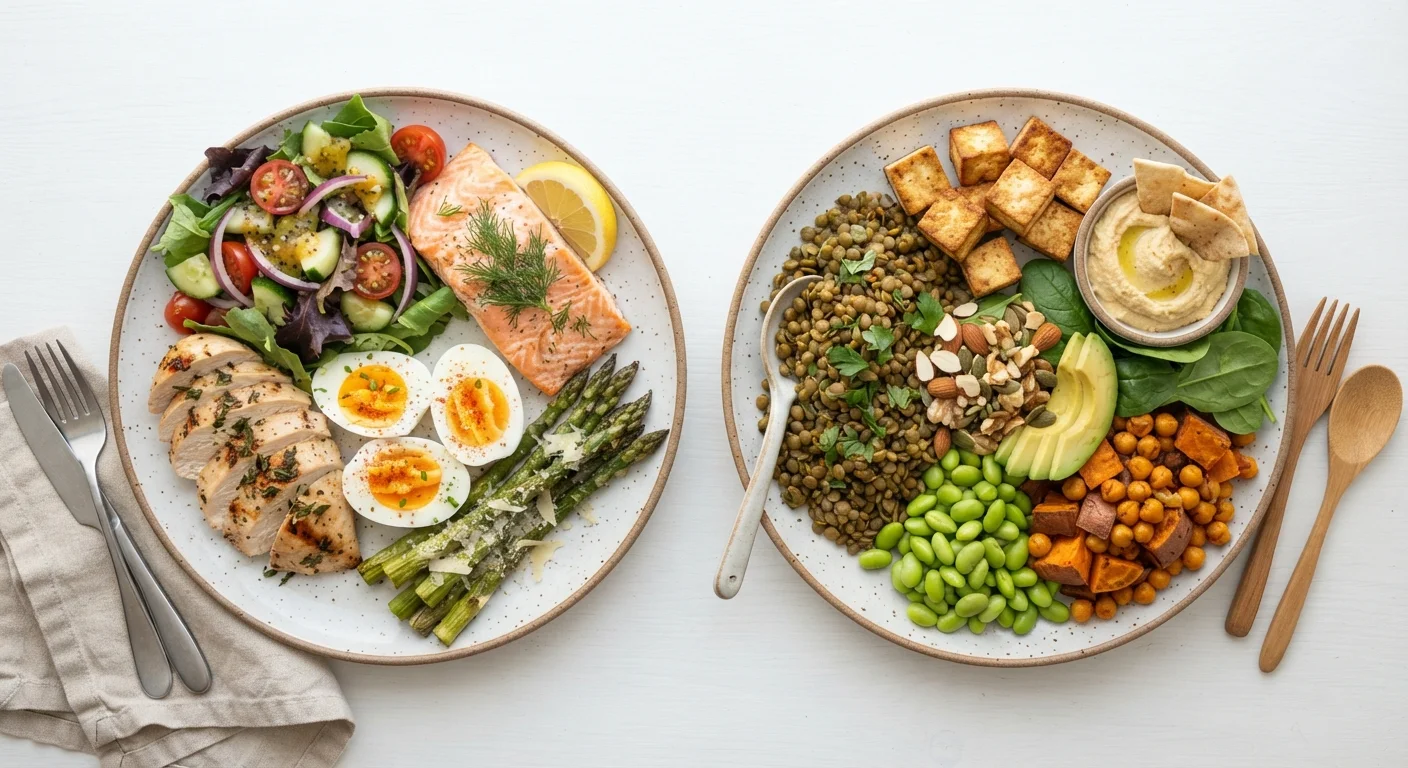
Key Takeaways
- Animal proteins are generally 'complete,' supplying all nine essential amino acids in proportions the body uses efficiently.
- Most plant proteins are lower in one or more essential amino acids, but combining varied plant foods across the day addresses this.
- Bioavailability - how much protein your body actually absorbs and uses - differs between sources and matters as much as total grams.
- Plant protein foods often deliver fiber, antioxidants, and phytonutrients that animal proteins do not.
- No single protein source is universally superior; dietary context, variety, and individual health factors all shape what works best.
Our Verdict
Neither plant-based nor animal protein is a clear winner across every nutritional dimension. Animal proteins offer high bioavailability and complete amino acid profiles; plant proteins bring fiber, phytonutrients, and other compounds linked to long-term health. The strongest evidence supports dietary patterns that include a variety of protein sources rather than exclusive reliance on one category. Individual health goals, ethical considerations, and medical history all legitimately influence the right balance for any given person.
| Best for | Recommended |
|---|---|
| Those prioritizing amino acid completeness and absorption efficiency | Animal protein sources |
| Those seeking fiber, phytonutrients, and lower saturated fat alongside protein | Plant-based protein sources |
| Those wanting flexibility and broad nutritional coverage | A varied mix of both protein categories |
Why Protein Source Actually Matters
Protein is far more than a single nutrient. It is a collective term for thousands of molecules built from amino acids - the compounds your body uses to repair tissue, produce enzymes, regulate hormones, and support immune function. To understand how protein fits into your overall nutrition, it helps to look past the grams-per-serving number and examine what each protein source actually delivers.
Of the 20 amino acids involved in human metabolism, nine are classified as essential - your body cannot synthesize them, so they must come from food. The distribution and quantity of these nine amino acids vary significantly between protein sources, and that variation has real nutritional consequences.
Animal Protein: Strengths and Considerations
Animal-derived proteins - meat, poultry, fish, eggs, and dairy - are generally considered complete proteins, meaning they contain all nine essential amino acids in amounts that closely match human physiological needs. This profile makes them highly efficient for muscle maintenance and repair, a finding consistently supported in sports nutrition and clinical research.
Bioavailability is another key advantage. The digestible indispensable amino acid score (DIAAS), the measure now recommended by the Food and Agriculture Organization, consistently places animal proteins such as eggs and dairy at or above 1.0 - indicating excellent absorption relative to human requirements.
| Animal Protein | Plant Protein | |
|---|---|---|
| Amino acid completeness | Complete (all 9 essential amino acids) | Often incomplete; soy is a key exception |
| Bioavailability (DIAAS) | Generally high (≥1.0 for eggs, dairy) | Generally moderate; varies by source |
| Fiber content | None | Significant in legumes, grains, nuts |
| Saturated fat | Present; varies by source | Typically low (except coconut) |
| Phytonutrients & antioxidants | Minimal | Abundant across most sources |
| Antinutrient concerns | Not applicable | Phytates, tannins; reduced by cooking |
One trade-off worth noting: some animal protein sources - particularly processed and red meats - also carry saturated fat and, in processed forms, added sodium. Research from institutions including the Harvard T.H. Chan School of Public Health has linked high consumption of processed meats specifically with increased cardiovascular risk, though the relationship is more nuanced for unprocessed sources like fish, eggs, and poultry.
Plant Protein: Strengths and Considerations
Legumes, whole grains, nuts, seeds, and soy-based foods supply substantial protein alongside nutrients that animal foods largely lack: dietary fiber, polyphenols, and a broad range of phytonutrients. This nutritional density makes plant protein foods valuable contributors to long-term health, as reflected in dietary pattern research linking plant-forward eating with reduced chronic disease risk.
The traditional concern about plant proteins - that they are incomplete - is accurate for most individual sources but rarely the problem it once seemed. Eating a variety of plant proteins across the day (rice and beans, for example, or whole grains paired with legumes) provides all essential amino acids without requiring precise meal-by-meal planning. Soy is a notable exception: it is one of the few plant proteins considered complete on its own, with a DIAAS score comparable to many animal sources.
Improving Plant Protein Absorption
Soaking dried legumes overnight and discarding the soaking water before cooking can reduce phytate content noticeably. Fermented soy products like tempeh have similarly improved amino acid availability compared to raw soybeans. Pairing iron-rich plant foods with a vitamin C source at the same meal is another practical way to offset absorption inhibitors.
Plant proteins do tend to have lower overall bioavailability than animal proteins, partly due to antinutrients such as phytates and tannins that can inhibit mineral and amino acid absorption. Cooking, soaking, fermenting, and sprouting legumes and grains can meaningfully reduce these compounds. See our guide to food synergy for more on how preparation and pairing affect nutrient uptake.
Putting It Together: Context Over Categories
The most robust evidence in nutrition science does not frame this as a binary choice. Landmark research - including studies drawing on data from large cohorts - consistently finds that overall dietary patterns predict health outcomes more reliably than any single food or food group. Variety across food groups is a recurring theme in this literature for good reason: different foods supply different compounds, and gaps in one area are often filled by another.
Practical factors also legitimately shape protein choices: food access, budget, cultural traditions, ethical values, and individual health conditions all matter. People managing kidney disease, for instance, have specific protein considerations that require guidance from a registered dietitian or physician - general population findings do not apply uniformly.
If you want to reflect more systematically on how your current eating patterns hold up across nutritional dimensions, our everyday eating patterns checklist offers a judgment-free starting point.
This article is for general informational and educational purposes only and is not a substitute for professional medical or dietary advice. Consult a qualified healthcare provider or registered dietitian for guidance specific to your health needs.