

Key Takeaways
- Every vehicle has blind spots that no mirror fully eliminates - knowing where they are is the first step.
- Correct mirror positioning significantly reduces, but does not eliminate, blind spot coverage gaps.
- A deliberate head check (shoulder check) is required before any lane change or merge.
- Blind spot monitoring technology assists drivers but should not replace active checking habits.
- Proper mirror setup takes less than two minutes and should be done every time a new driver adjusts the seat.
What you will need
Why Blind Spots Exist and Where They Hide
A blind spot is any area around your vehicle that falls outside the combined field of view of all three mirrors. The geometry of a standard vehicle creates two primary lateral blind zones - roughly alongside the rear passenger doors on each side - where a car, motorcycle, or cyclist can travel completely out of mirror view. These zones exist because mirrors, even well-adjusted ones, have a finite angle of coverage.
The size of blind spots varies by vehicle. Compact sedans tend to have smaller zones; larger SUVs, pickup trucks, and vans introduce bigger gaps, thicker roof pillars, and in many cases a substantial rear blind zone when reversing. Vehicle design factors like wide C-pillars (the roof supports flanking the rear window) and small rear windows compound the problem.
Understanding where your specific vehicle's blind spots fall is the foundation of safe lane changes. A good habit is to conduct a brief pre-trip walk-around to reacquaint yourself with your vehicle's proportions, particularly after driving a different car.
Mirrors Alone Are Never Enough
Even perfectly adjusted mirrors leave zones beside and behind your vehicle that are invisible from the driver's seat. Relying solely on mirrors - without performing a head check - is one of the most common contributing factors in lane-change collisions. Always physically turn your head to check the blind spot zone before moving laterally.
How to Set Up Your Mirrors and Fill the Gaps
Most drivers were taught to center their car's rear quarter panel in each side mirror - a habit that feels reassuring but actually wastes valuable mirror real estate on your own vehicle rather than the adjacent lane. A wider outward angle, sometimes called the BGE method (named after automotive safety researchers who studied optimal mirror positioning), significantly narrows the blind spot zone by extending lateral coverage.
The steps below walk through the complete setup sequence. Remember: mirrors should always be adjusted from your normal driving posture, not while leaning or craning. If your vehicle is equipped with power mirrors, make adjustments with the engine running so controls respond immediately.
Driver's Side and Passenger's Side Mirrors
Primary tools for rearward and lateral visibility; must be correctly angled to minimize blind spot area.
Interior Rearview Mirror
Provides a centered rear view of traffic directly behind the vehicle.
Blind Spot Monitoring System (if equipped)
Electronic aid that alerts the driver to vehicles detected in adjacent blind spot zones.
Set Your Seat Before Touching the Mirrors
Mirror angles are only useful relative to your actual eye position. Adjust your seat height, distance from the wheel, and seatback angle to your normal driving posture first. If you set mirrors while sitting differently than you drive, they'll be aimed at the wrong field of view when it matters most.
Adjust the Interior Rearview Mirror
Position the interior rearview mirror so the entire rear window is visible without moving your head. The top edge of the mirror frame should align roughly with the top of the rear window. Tilt it so you see the road centered in the reflection - not the headliner or the rear seat. Auto-dimming rearview mirrors require no manual adjustment for glare.
Set the Driver's Side Mirror
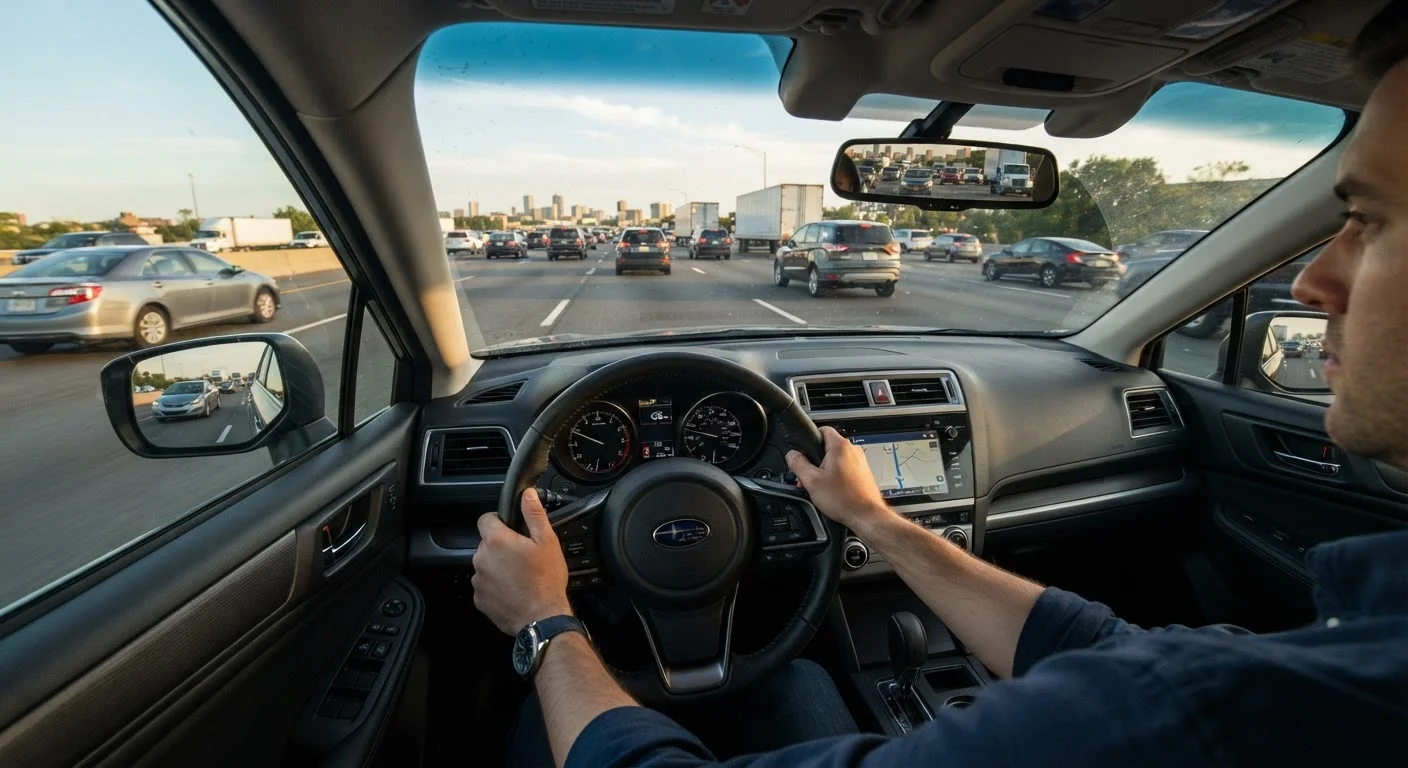
Lean your head against the driver's window glass, then angle the mirror outward until just a sliver of your car's rear quarter panel is visible at the inner edge. From your normal driving position, your car's body should disappear from view - replaced by the lane beside you. This wider outward angle dramatically reduces the traditional blind spot on the driver's side.
Set the Passenger's Side Mirror
Lean toward the center console until your head is roughly above the center of the vehicle, then angle the passenger's side mirror outward so only a thin strip of your car's rear panel appears at the inner edge. From normal driving position, the mirror should show the adjacent lane clearly. The passenger side has a larger inherent blind spot due to distance, so this wider angle is especially important.
Identify Your Remaining Blind Spot Zones
Even with mirrors correctly set, two primary blind spot zones remain: the area roughly alongside each rear door to the C-pillar (the roof support behind the rear door). A vehicle in these zones won't appear in any mirror. Understand that larger vehicles - SUVs, trucks, and vans - have correspondingly larger blind zones, including a significant blind area directly behind when reversing.
Perform a Head Check Before Every Lane Change
Before any lane change or merge, check your mirrors first, then signal, then turn your head to physically look over the appropriate shoulder into the blind spot zone. A glance of one to two seconds is sufficient - do not stare away from the road ahead. If the zone is clear, proceed smoothly. This sequence - mirrors, signal, head check, move - should become automatic. It is the single most reliable way to catch a vehicle your mirrors missed.
Check Mirror Setup Every Time You Drive
If more than one person drives your vehicle, mirrors will shift between sessions. Take five seconds before each trip to confirm all three mirrors are correctly positioned for your seated height and distance. It's a habit worth building - and a quick one. Pairing this with a pre-trip walk-around gives you a complete readiness check before you move.
Blind Spot Monitors Are a Supplement, Not a Replacement
Electronic blind spot monitoring systems use radar or cameras to alert you to vehicles in adjacent lanes. However, these systems have detection limits - they may not flag cyclists, motorcycles, or vehicles moving at very different speeds from your own. Always combine technology with a physical shoulder check before changing lanes.