

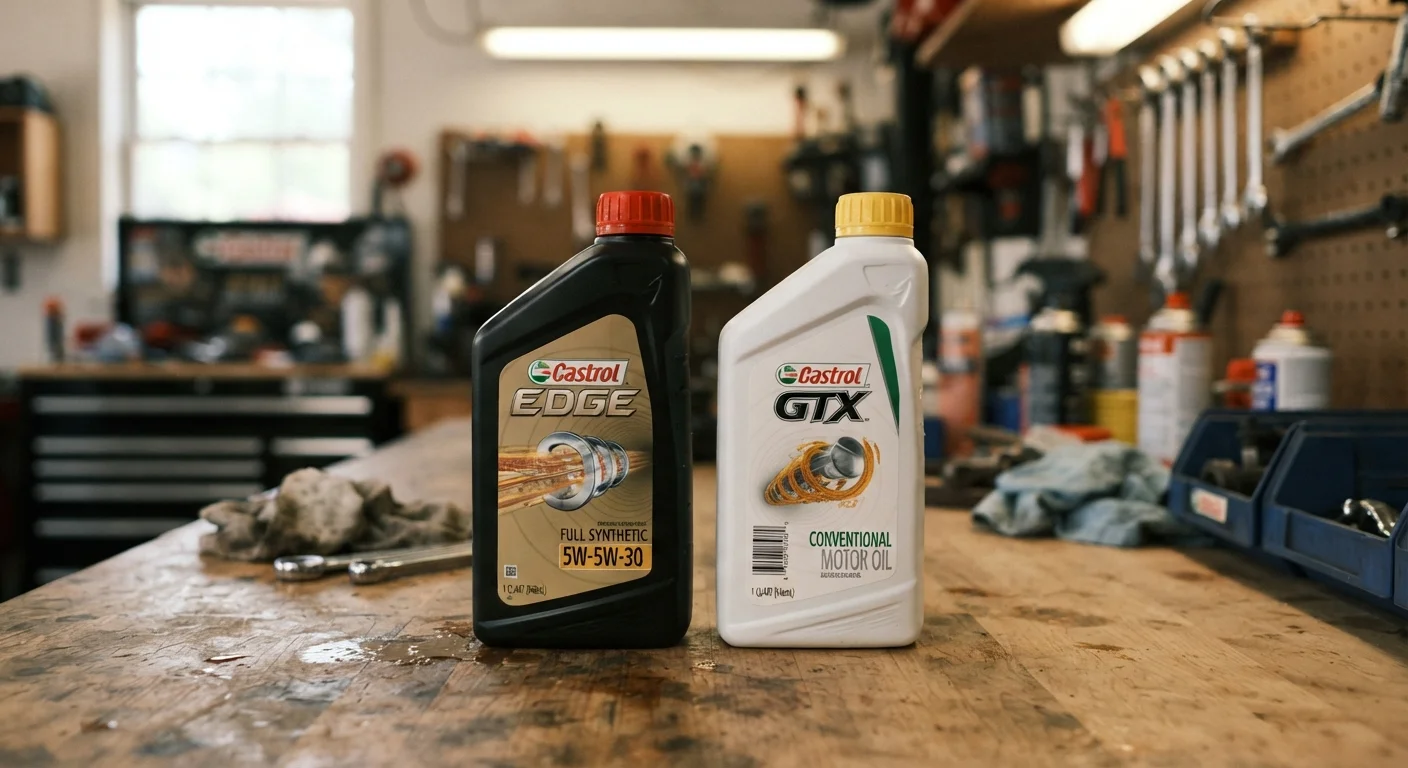
Key Takeaways
- Synthetic oil is chemically engineered for more uniform molecules, offering greater stability under heat and stress.
- Conventional oil comes from refined crude oil and suits older, lower-demand engines well.
- Synthetic oil typically allows longer change intervals - often 7,500 to 15,000 miles, depending on the vehicle.
- Your owner's manual, not marketing claims, should determine which oil type your engine requires.
- Switching from conventional to synthetic is generally safe for most modern engines.
- Higher upfront cost of synthetic can be partially offset by fewer oil changes over time.
Option A
Synthetic Motor Oil
The engineered, high-performance formulation.
Best for: Drivers with modern vehicles, turbocharged engines, or those operating in extreme temperatures who want longer intervals between oil changes.
Option B
Conventional Motor Oil
The time-tested, naturally derived standard.
Best for: Owners of older vehicles with simpler engines who drive under normal conditions and follow regular maintenance schedules.
If you drive a modern vehicle with a turbocharged or high-performance engine
Synthetic Motor Oil
Turbocharged engines run hotter and require oil that resists thermal breakdown. Synthetic formulations are engineered to maintain viscosity and protect under those demands.
If you own an older vehicle with a simpler engine and change oil regularly
Conventional Motor Oil
Conventional oil performs reliably in engines not designed around extended drain intervals, provided you stick to the manufacturer's recommended schedule.
If you live in an area with extreme cold winters or very hot summers
Synthetic Motor Oil
Synthetic oil flows more readily at low temperatures and holds up better under sustained heat, offering more consistent protection across seasonal extremes.
If your manufacturer explicitly specifies synthetic oil in the owner's manual
Synthetic Motor Oil
This is a non-negotiable situation - using conventional oil in an engine spec'd for synthetic can void warranty coverage and compromise engine protection.
What Makes These Two Oils Different
At their core, conventional and synthetic motor oils share the same job: lubricating your engine's moving parts to reduce friction and carry heat away. Where they diverge is in how they're made and what that means for performance.
Conventional motor oil starts as crude oil drawn from the ground. Refineries process it to remove impurities and adjust its properties, but the base molecules remain naturally occurring - and variable in size and shape. That variability is why conventional oil performs adequately under normal conditions but can break down faster under sustained heat or stress.
Synthetic motor oil, by contrast, is chemically engineered. Manufacturers either build its base molecules from scratch or heavily modify petroleum-derived compounds to create a more uniform molecular structure. The result is an oil that resists oxidation (the process by which oil degrades when exposed to heat and oxygen), maintains more stable viscosity - or thickness - across temperature extremes, and leaves less sludge behind over time.
There are also synthetic blends, which combine both base types to offer a middle ground in performance and price. These are worth considering if full synthetic is not required by your manufacturer but you still want some of its benefits.
| Criterion | Synthetic Motor Oil | Conventional Motor Oil |
|---|---|---|
| Base material | Chemically engineered molecules | Refined crude oil |
| Typical change interval | 7,500-15,000 miles | 3,000-5,000 miles |
| Performance in extreme temperatures | Excellent - stable viscosity | Moderate - can thin or thicken |
| Sludge resistance | High | Lower over time |
| Cost per quart | Higher | Lower |
| Suitable for older engines | Generally yes, with caveats | Yes, well established |
| Required by manufacturer | Many modern vehicles | Older or simpler engines |
Oil Change Intervals and the Cost Equation
One of the most practical differences between these oil types is how long they last between changes. Conventional oil has traditionally been recommended for changes every 3,000 to 5,000 miles, though that older guideline is increasingly outdated for modern engines. Synthetic oil is typically rated for 7,500 to 15,000 miles per change, depending on the vehicle and driving conditions. For the full picture on interval myths, see the real story behind oil change intervals.
Synthetic oil costs noticeably more per quart - often two to four times the price of conventional. However, since fewer changes are needed, the annual cost difference for many drivers is smaller than it initially appears. Over the life of a vehicle, total maintenance costs often depend less on oil type and more on whether maintenance is performed consistently at all.
7,500-15,000 mi
Typical synthetic oil change interval
Many vehicle manufacturers now specify extended drain intervals for synthetic oil; always verify with your owner's manual.
2-4x
Cost premium of synthetic per quart
Synthetic oil generally costs two to four times more per quart than conventional, though fewer annual changes can reduce the gap.
The key variable is your driving pattern. Short trips, stop-and-go traffic, towing, and extreme temperatures all accelerate oil degradation - meaning whatever type you use, those conditions warrant more frequent monitoring.
How to Know Which Oil Your Engine Actually Needs
The single most authoritative source on this question is your vehicle's owner's manual. Manufacturers specify oil type and viscosity grade - such as 5W-30 or 0W-20 - based on engineering tolerances, not preference. If your manual calls for a full synthetic, that's a requirement, not a suggestion. Using a lower-spec oil risks inadequate protection and can affect warranty claims.
For drivers with older vehicles or those not specified for synthetic, conventional oil remains a perfectly sound choice - provided oil changes happen on schedule. Deferred maintenance, regardless of oil type, is the more significant risk to engine longevity. Staying current on routine maintenance consistently outweighs which oil type sits in the crankcase.
If you're unsure whether to handle an oil change yourself or bring it to a shop, that decision involves more than just oil type. Weighing DIY versus professional service is a worthwhile step before you decide.
Can You Switch From Conventional to Synthetic?
For most modern engines, switching from conventional to full synthetic is safe and straightforward. The notion that older engines can't handle synthetic is largely outdated, though very high-mileage engines with pre-existing seal wear may occasionally show minor leaks after switching. If your vehicle has significant miles on it and has always used conventional oil, it's worth discussing the transition with a qualified mechanic before making the change.
This article provides general automotive information for educational purposes. Always consult your vehicle's owner's manual and a qualified mechanic for guidance specific to your make, model, and driving conditions.