

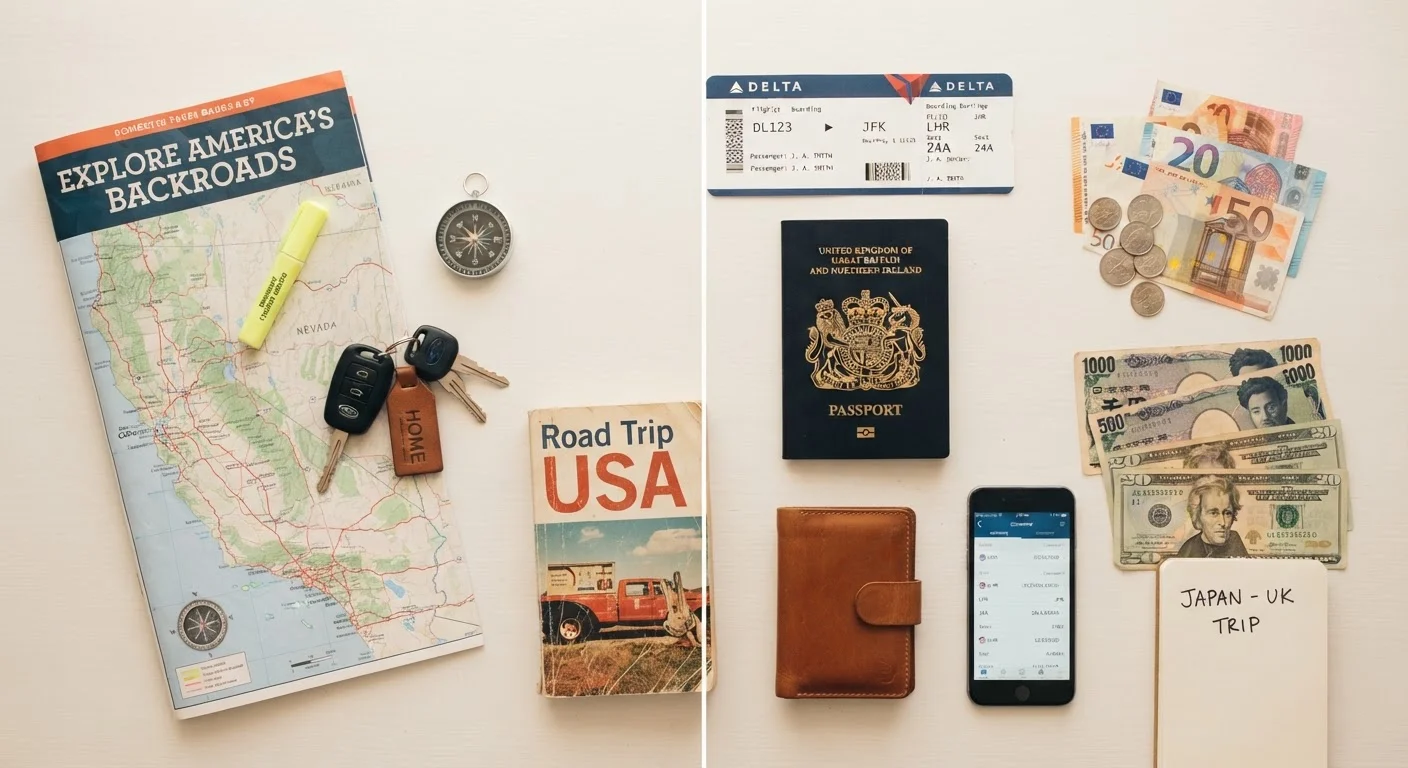
Key Takeaways
- International trips require documents, visas, and health prep that domestic travel simply does not.
- Lead time matters more abroad - many steps need weeks or months of advance action.
- Money, connectivity, and insurance work very differently once you cross a border.
- Domestic planning is simpler, but both trip types reward early, organized preparation.
Our Verdict
Domestic and international trip planning share the same core logic - destination research, transport, accommodation, budget - but international travel stacks on several layers that can catch unprepared travelers off guard. The gap isn't just paperwork; it's timing, money management, health logistics, and knowing which authorities to check. Get those layers right and an international trip is entirely manageable.
| Best for | Recommended |
|---|---|
| Travelers who want flexibility and minimal logistics | Domestic trip planning approach |
| Those ready to invest planning time for a richer experience abroad | International trip planning approach |
| First-time international travelers who want structured guidance | International trip planning approach |
The Planning Foundation Both Trip Types Share
Whether you're driving to a national park or flying to another continent, every trip starts with the same building blocks: pick a destination, set a budget, book transport and accommodation, and figure out what you'll do when you arrive. These fundamentals don't change based on geography - a disorganized planner will struggle in Nashville just as much as in Naples.
That said, the weight of each step shifts dramatically once a passport enters the picture. Domestic planning tolerates a fairly loose timeline; most bookings can happen weeks out. International planning rewards - and often requires - months of lead time for documents alone. Understanding where the paths diverge helps you allocate your energy correctly from day one.
Explore our travel basics hub for foundational skills that apply to any kind of trip.
Documents and Entry Requirements: The Biggest Divergence
For domestic travel within the United States, a driver's license covers most identification needs at airports (though REAL ID requirements apply for domestic flights - check that your state-issued ID is compliant). No additional paperwork is required to cross state lines.
International travel is a different story entirely. A valid U.S. passport is the baseline requirement, and passports should typically have at least six months of validity remaining beyond your travel dates - many countries enforce this rule at the border. Beyond the passport, many destinations require a visa, which can take anywhere from a few days to several months to obtain depending on the country and visa type.
| Planning Element | Domestic Travel | International Travel | |
|---|---|---|---|
| Primary ID required | REAL ID-compliant driver's license or passport | Valid passport (often 6+ months validity) | |
| Visa requirements | None | Varies by destination; often required | |
| Health prep needed | Minimal for most destinations | Vaccinations, health consult may be needed | |
| Payment complexity | Standard cards accepted widely | Foreign transaction fees; local cash helpful | |
| Phone/connectivity | Covered by domestic plan | Roaming or separate plan required | |
| Recommended lead time | Days to weeks | Months (especially for documents) | |
| Travel insurance value | Useful but optional for most | Strongly advisable for medical coverage |
Entry rules, customs declarations, and local registration requirements also vary widely. Always verify current entry requirements through official government sources - the U.S. Department of State's travel website and the destination country's embassy are the authoritative references. Never rely solely on travel blogs or booking sites for this information, as rules can change without notice.
If you're new to this process, our first international trip planning framework walks through every stage without the overwhelm.
Health, Money, and Connectivity Abroad
Domestic travelers rarely think about health prep beyond packing any prescriptions they already take. International travelers, depending on the destination, may need to consider vaccinations, antimalarial medications, or travel health consultations - ideally scheduled four to six weeks before departure. The CDC's destination-specific health pages are a reliable starting point, but a travel medicine clinic can tailor recommendations to your itinerary and personal health history.
Schedule Health Prep Early
Some vaccines require multiple doses spaced weeks apart, meaning you can't leave this to the last minute. Book a travel medicine consultation as soon as your destination is confirmed - ideally two to three months before departure. The CDC's travel health page by destination is a good first reference before your appointment.
Money management also diverges sharply. At home, your debit and credit cards work everywhere. Abroad, foreign transaction fees, dynamic currency conversion traps, and limited ATM access can quietly erode your budget. Research whether your cards charge international fees, notify your bank before departure, and arrive with a small amount of local currency for immediate needs.
Connectivity is another layer. Your domestic phone plan almost certainly does not include free international roaming. Options range from international day passes through your carrier, local SIM cards purchased at the destination, or portable Wi-Fi devices - each with cost and convenience trade-offs. Sort this out before you land, not after.
Travel insurance also matters far more internationally. Medical evacuation from another country can be extraordinarily expensive, and trip cancellation coverage becomes more valuable when non-refundable international flights are involved. See our pre-booking international checklist for a structured review of these decisions.
Lead Times: How Far Ahead You Actually Need to Plan
Domestic trips are generally forgiving on timing. A long weekend road trip can come together in a week. Even domestic flights and hotels are bookable days out, though popular destinations during peak season reward earlier action.
International trips operate on a longer clock. Passport applications (or renewals) can take ten to thirteen weeks through standard processing. Visa applications for certain countries require in-person appointments, supporting documents, and waits of several weeks. Vaccinations sometimes need multiple doses spaced weeks apart. Stack those timelines together and a six-month planning window for international travel isn't excessive - it's often necessary.
The practical takeaway: if you've decided on an international destination, start the document and health logistics immediately, even before you've booked flights. Those steps are the long-lead items; flights and hotels can usually be sorted later.
Our pre-departure international checklist organizes exactly what to do and when, so nothing slips through the cracks before you leave home.