

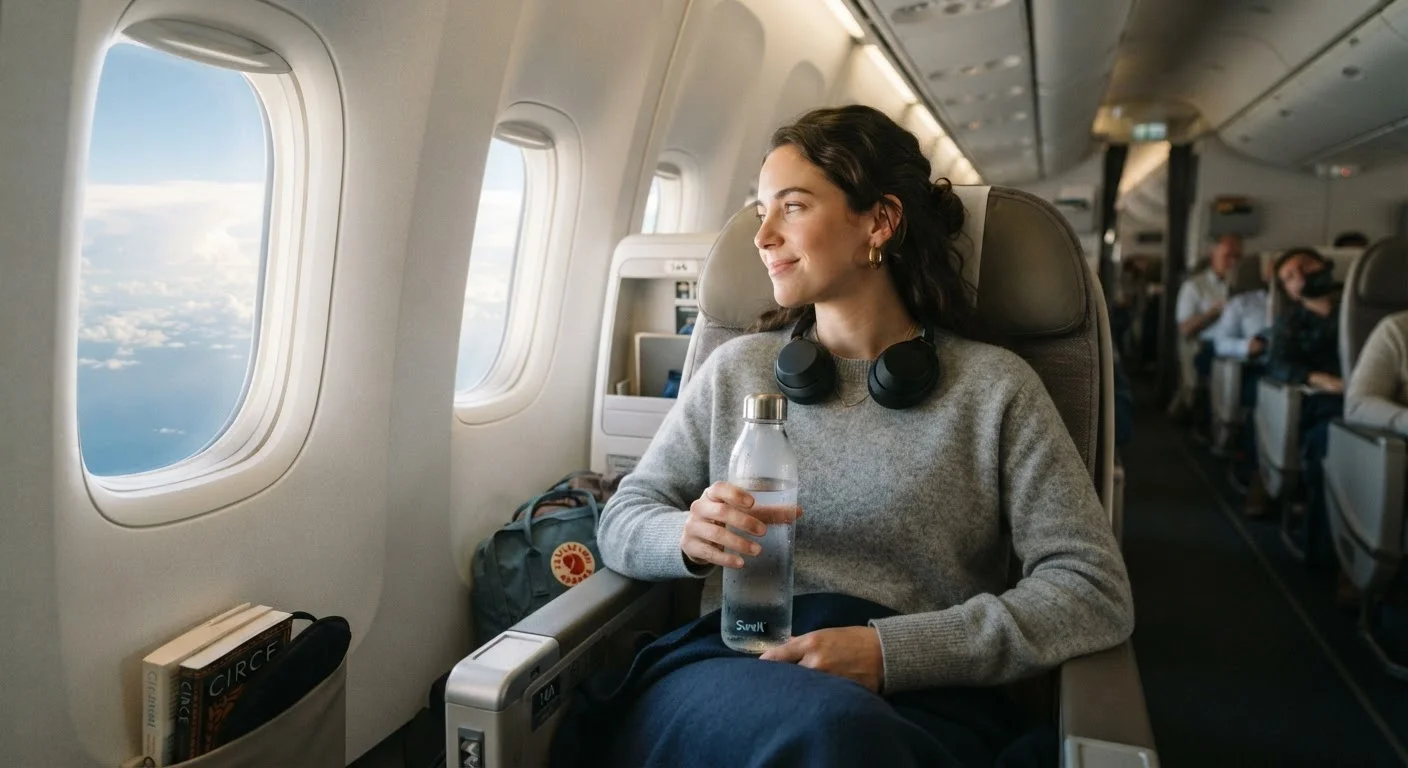
Key Takeaways
- Staying hydrated on long flights is one of the most impactful things you can do for comfort.
- Brief, regular movement - even aisle walks - helps circulation and reduces stiffness.
- Cabin air pressure and low humidity are the main physical stressors on long hauls.
- Strategic sleep timing can meaningfully reduce jet lag after crossing multiple time zones.
- Packing the right in-flight essentials supports rest, hydration, and skin comfort.
Why Long Flights Are Hard on the Body
A 10-hour flight isn't just sitting still - it's sitting still in a pressurized metal tube at roughly 35,000 feet, where humidity levels can drop as low as 10 to 20 percent (far drier than most desert environments) and cabin pressure is typically calibrated to simulate an altitude of 6,000 to 8,000 feet. Those two factors - low humidity and reduced air pressure - are the main reasons passengers step off long flights feeling headachy, dry-skinned, and foggy.
Low humidity pulls moisture from your respiratory tract and skin. Reduced pressure means slightly less oxygen is available to your body, which can make fatigue and mild lightheadedness more likely, especially if you're already tired. Add in disrupted sleep, reduced movement, and multiple time zones, and it's easy to see why long-haul travel earns its reputation for being taxing.
The good news: most of these effects are manageable with some deliberate preparation. None of the strategies below require expensive gear or heroic willpower - just a bit of awareness before and during the flight.
Hydration: Simple but Easy to Neglect
Drinking enough water is the single most repeated piece of in-flight advice - because it works. Cabin air actively pulls moisture from your body, and most passengers underestimate how much fluid they're losing just by breathing and sitting still for hours on end.
Drink water consistently throughout the flight - don't wait until you feel thirsty.
Thirst is a lagging indicator of dehydration. In low-humidity cabin air, your body loses moisture faster than you notice, so proactive sipping prevents the headaches and fatigue that dehydration causes.
Wear or pack compression socks for flights longer than four to five hours.
Graduated compression socks apply gentle pressure to the calves, helping push blood back toward the heart and reducing the swelling and circulation slowdown that prolonged sitting causes.
Stand up and walk the aisle at least once every ninety minutes.
Regular movement activates the calf muscles, which act as a pump for venous blood flow. Even a short walk to the back of the plane and back is enough to meaningfully break up prolonged sitting.
Limit alcohol and caffeine, especially in the first half of a long flight.
Both substances have mild dehydrating effects and can disrupt sleep quality - counterproductive when you're already battling dry cabin air and a disrupted schedule.
Align your sleep window to your destination's nighttime, not your origin's.
Shifting your sleep timing mid-flight helps your circadian rhythm - your internal body clock - begin adapting before you land, reducing the intensity and duration of jet lag.
Alcohol and caffeine are fine in moderation, but both have mild diuretic effects, meaning they encourage your body to lose more fluid. If you choose to have a coffee or a glass of wine, pairing it with an equal amount of water is a practical habit worth keeping.
Lip balm, a small nasal saline spray, and a basic moisturizer are also worth tossing in your carry-on - they address the dryness that water alone can't reach. For packing ideas that account for in-flight comfort, see The Carry-On Packing List That Works for Nearly Any Trip.
Movement and Circulation
Sitting in the same position for hours slows circulation, especially in the legs. On very long flights, reduced blood flow in the lower legs is a real concern - a condition sometimes called deep vein thrombosis (DVT), where a blood clot forms in a deep vein. DVT risk increases with prolonged immobility, though most healthy travelers face relatively low baseline risk.
Getting up to walk the aisle every hour or two is a straightforward countermeasure. Even simple ankle rolls, calf raises while seated, and occasional standing stretches can keep blood moving. If you're seated in a window seat and don't want to disturb neighbors constantly, compression socks (which apply gentle pressure to the lower legs) are widely recommended by travel medicine professionals for long flights.
What the evidence says about movement and muscle care is worth understanding before a multi-leg trip - your body's response to prolonged stillness has parallels to exercise recovery.
Sleep Strategy: Quality Over Quantity
Sleeping on planes is harder than it sounds, but timing and environment both matter. If your destination is in a significantly different time zone, try to sleep on the plane when it's nighttime at your destination rather than at your origin. This isn't always possible, but even partial alignment helps your body clock begin to shift before you land.
A few practical tools make a genuine difference: a good neck pillow reduces the neck stiffness that comes from dozing upright, an eye mask blocks cabin lights and screen glow, and earplugs or noise-canceling headphones dampen engine noise. Some travelers find melatonin helpful for signaling sleepiness - but since supplements can interact with medications and individual responses vary, it's worth discussing with a healthcare provider before using them regularly.
Avoid long naps immediately after landing if you're trying to adjust to a new time zone. Pushing through to local bedtime - even if you're exhausted - tends to accelerate adaptation. The emotional dimension of travel fatigue is real too; habits that support emotional well-being can also help when disrupted routines take a toll.
DVT Risk Varies by Individual
Deep vein thrombosis risk on flights is real but varies significantly based on personal health history, age, and other factors. Most healthy adults on a single long flight face relatively low risk. If you have a history of clotting disorders, recent surgery, or other relevant conditions, talk with your doctor before flying a long haul. They can give guidance tailored to your situation.
This article is for general informational purposes only and is not medical advice. Consult a qualified healthcare professional before making decisions about your health, especially if you have existing conditions or concerns about travel-related risks like DVT.