

Key Takeaways
- Mexico's most rewarding regions for curious travelers extend far inland from the resort corridor.
- Each region suits a different travel style - from culinary adventurers to hikers and history lovers.
- Logistics vary significantly by region; research transport and safety conditions before booking.
- Budget travelers and luxury seekers alike can find their niche in Mexico's diverse destinations.
- Always verify entry requirements, local advisories, and health guidance through official sources before traveling.
Why Mexico Rewards Travelers Who Look Past the Beach
Cancún and Los Cabos earn their reputations - the turquoise water is real, and the resorts deliver what they promise. But Mexico is one of the world's most geographically and culturally layered countries, and travelers who venture inland often return saying the same thing: why didn't I come here sooner?
Whether your priority is tasting your way through a UNESCO-recognized food culture, watching the sunrise from a canyon rim, or walking among ruins without a crowd, there's a Mexican region built for that trip. The challenge is matching the right destination to your actual travel style, budget, and tolerance for logistics. That's what this guide does.
If you're not sure what kind of traveler you are, it's worth thinking through that first - our traveler style guide can help you clarify what you actually want from a trip before you commit to a destination.
Safety and Travel Advisories Vary by Region
Mexico is a large country with significant regional variation in safety conditions. The U.S. Department of State publishes state-by-state travel advisories for Mexico that are updated regularly and are worth consulting before choosing a destination. Conditions in major tourist destinations like Oaxaca city, Mérida, and San Miguel de Allende have historically differed substantially from more affected areas. Verify current advisories at travel.state.gov before finalizing plans.
Six Regions Worth Building a Trip Around
Oaxaca - For Food, Culture, and Indigenous Heritage
Oaxaca (pronounced wah-HAH-kah) is arguably Mexico's richest cultural destination. The state capital is a walkable colonial city whose food scene - mole negro, tlayudas, mezcal distilled in small village palenques - has earned UNESCO Intangible Cultural Heritage recognition. The surrounding valleys are home to Zapotec communities with living weaving, pottery, and textile traditions that have been practiced for generations.
Monte Albán, a pre-Columbian hilltop archaeological site overlooking the valley, is a half-day excursion from the city center. The Day of the Dead celebrations in late October and early November are among the most authentic and deeply felt in the country - not a performance for tourists, but a genuine community observance that visitors are largely welcomed to witness respectfully.
Best for: Food lovers, culture seekers, photographers, independent travelers comfortable navigating a mid-size city. Oaxaca is generally accessible and well-touristed without being overrun.
Oaxaca's food culture has UNESCO recognition - and one meal here usually explains why.
The Copper Canyon (Barranca del Cobre) - For Adventure and Scale
The Copper Canyon in Chihuahua state is a canyon system larger and deeper than the Grand Canyon in total volume - a fact that genuinely surprises most American visitors. The El Chepe train (Chihuahua al Pacífico Railway) is one of the world's great rail journeys, descending from high sierra pine forests to subtropical barranca floor through 87 tunnels and 37 bridges.
The Rarámuri (Tarahumara) people have called this region home for centuries, and their communities are visible from the train route. Visitors should approach cultural encounters with respect and follow community guidelines about photography and access.
Best for: Adventure travelers, rail enthusiasts, hikers, and anyone who wants scale and drama without a beach. Logistics require more planning than Oaxaca - the train schedule and canyon-rim towns like Creel and Divisadero benefit from advance research.
El Chepe's descent through 87 tunnels is one of the Western Hemisphere's great train journeys.
The Yucatán Interior - For History and Cenotes Without the Crowds
Most visitors to the Yucatán Peninsula start and end in Cancún or Tulum. Drive or bus an hour or two inland and the experience shifts dramatically. Mérida, the peninsula's colonial capital, is a city of yellow facades, evening serenades in central plazas, and an exceptional food scene rooted in Yucatecan tradition. It regularly appears on lists of Latin America's most livable cities.
Beyond Mérida, sites like Uxmal and the Puuc Route offer Maya architecture of extraordinary sophistication - with far smaller crowds than Chichén Itzá. The interior is also dotted with cenotes (natural sinkholes filled with fresh water, pronounced seh-NO-tays), many of which can be visited without the lines or entrance fees of their coastal equivalents.
Best for: History enthusiasts, travelers who've already seen Chichén Itzá, and anyone wanting Yucatán flavor without resort pricing. Mérida is very accessible for first-time visitors to Mexico.
Uxmal and the Puuc Route offer world-class Maya archaeology with a fraction of Chichén Itzá's crowds.
San Miguel de Allende and the Bajío - For Art, Architecture, and a Slower Pace
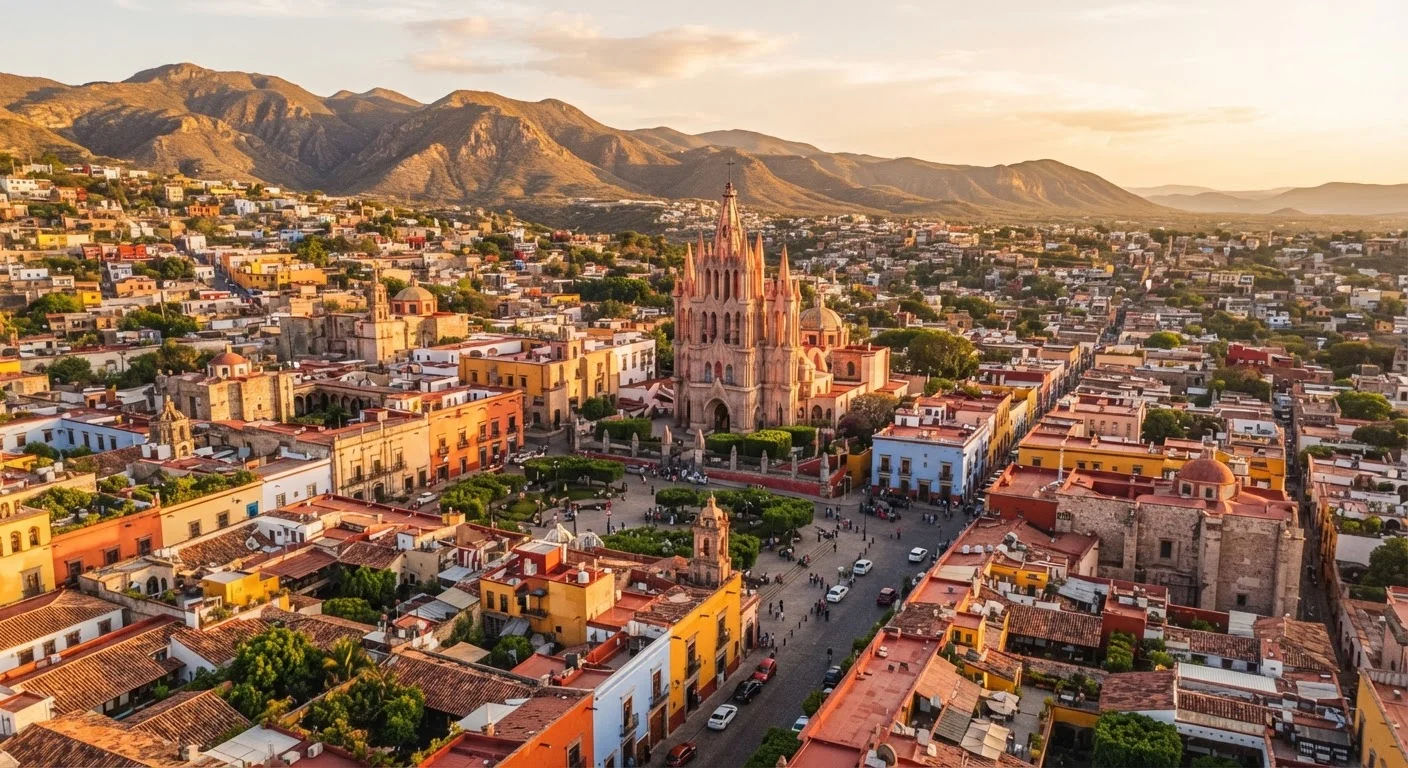
The colonial Bajío highlands - centered on Guanajuato state - offer some of Mexico's most visually stunning urban environments. San Miguel de Allende is a UNESCO World Heritage city whose pink neo-Gothic parish church (the Parroquia) has become an iconic image, but the town's art galleries, culinary scene, and long-term expat community give it a depth beyond the Instagram shot.
Nearby Guanajuato city is equally stunning and less internationally famous - its colorful hillside neighborhoods connected by underground roadways and narrow alleys create one of Mexico's most labyrinthine and memorable city layouts. Both cities sit at altitude (around 6,000-6,500 feet), so give yourself a day to adjust if you're flying in from sea level.
Best for: Art lovers, architecture enthusiasts, retirees, and travelers who want a cosmopolitan but distinctly Mexican experience. The region suits travelers who prefer walking a beautiful city to ticking off adventure activities.
Guanajuato's underground roads and canyon-hugging alleyways make it one of Mexico's most distinctive cities.
Chiapas - For Biodiversity, Waterfalls, and Indigenous Culture
Mexico's southernmost highland state borders Guatemala and feels, to many visitors, like a different country entirely. The colonial city of San Cristóbal de las Casas sits at over 7,000 feet, with a cool climate and a vibrant Indigenous Tzotzil and Tzeltal Maya presence visible in daily market life. The surrounding highlands contain dozens of communities where traditional dress, language, and customs remain part of everyday life.
The natural highlights are extraordinary: Agua Azul's turquoise-blue cascading waterfalls, the Sumidero Canyon's towering walls, and the ruins of Palenque - considered one of the finest examples of Maya architecture - set against a backdrop of dense jungle. Chiapas rewards travelers who plan carefully; some areas require more logistical flexibility, and it's worth checking current travel conditions through official sources before visiting.
Best for: Ecotourists, archaeology enthusiasts, and travelers with experience navigating less tourist-developed infrastructure. Not the region for first-time Mexico travelers looking for easy logistics, but deeply rewarding for those prepared.
Palenque's jungle-framed ruins rank among the finest Maya sites in all of Mexico.
Baja California Sur - For Nature Without the Crowds of Los Cabos
The Baja Peninsula stretches over 1,000 miles south from the US border, and the stretch between Loreto and La Paz offers a quieter, more wildlife-focused alternative to the Los Cabos resort corridor at the tip. The Sea of Cortés - described by Jacques Cousteau as the world's aquarium - offers some of the planet's best whale watching between January and March, as gray and blue whales gather in local bays.
Loreto is a small, walkable town with a beautifully restored 1697 mission and access to the Loreto Bay National Marine Park. La Paz, the state capital, is a genuine city with a charming waterfront malecón, excellent seafood, and day-trip access to Espíritu Santo Island - a UNESCO biosphere reserve where sea lion colonies are a short snorkel away.
Best for: Nature and wildlife travelers, divers, kayakers, and those who want Baja's dramatic landscapes without a resort price point. Driving the Baja highway independently is popular but requires solid advance planning - particularly for fuel stops.
The Sea of Cortés between Loreto and La Paz offers world-class wildlife with a fraction of Los Cabos' crowds.
Match Your Region to Your Logistics Comfort Level
Some of these regions - Oaxaca, Mérida, San Miguel de Allende - are straightforward to navigate with basic travel experience. Others, like Chiapas and the Copper Canyon, reward travelers who are comfortable with less predictable transport and fewer English-language services. Be honest with yourself about your logistics tolerance before booking. A trip that stretches you just beyond your comfort zone can be transformative; one that strains your patience at every turn usually isn't.
Planning Your Mexico Trip Confidently
Whichever region calls to you, a few principles apply universally. Transport infrastructure varies widely - some areas are well served by domestic flights and modern bus lines, while others require more patience and flexibility. Research your specific route before you go, not after you land.
If you're traveling with companions who have different comfort levels or interests, Mexico's regional variety can actually work in your favor - different regions suit different personalities. Our guide to planning trips for mixed groups offers practical strategies for building an itinerary everyone can genuinely enjoy.
Finally, the details that catch travelers off guard - local tipping norms, transport gaps, entry documents, altitude adjustment - are well worth reviewing before departure. See what travelers wish they'd researched before arriving for a thorough pre-trip checklist.
Entry requirements, travel advisories, and safety conditions can change. Always verify current information through the U.S. Department of State and official Mexican tourism sources before finalizing travel plans.