

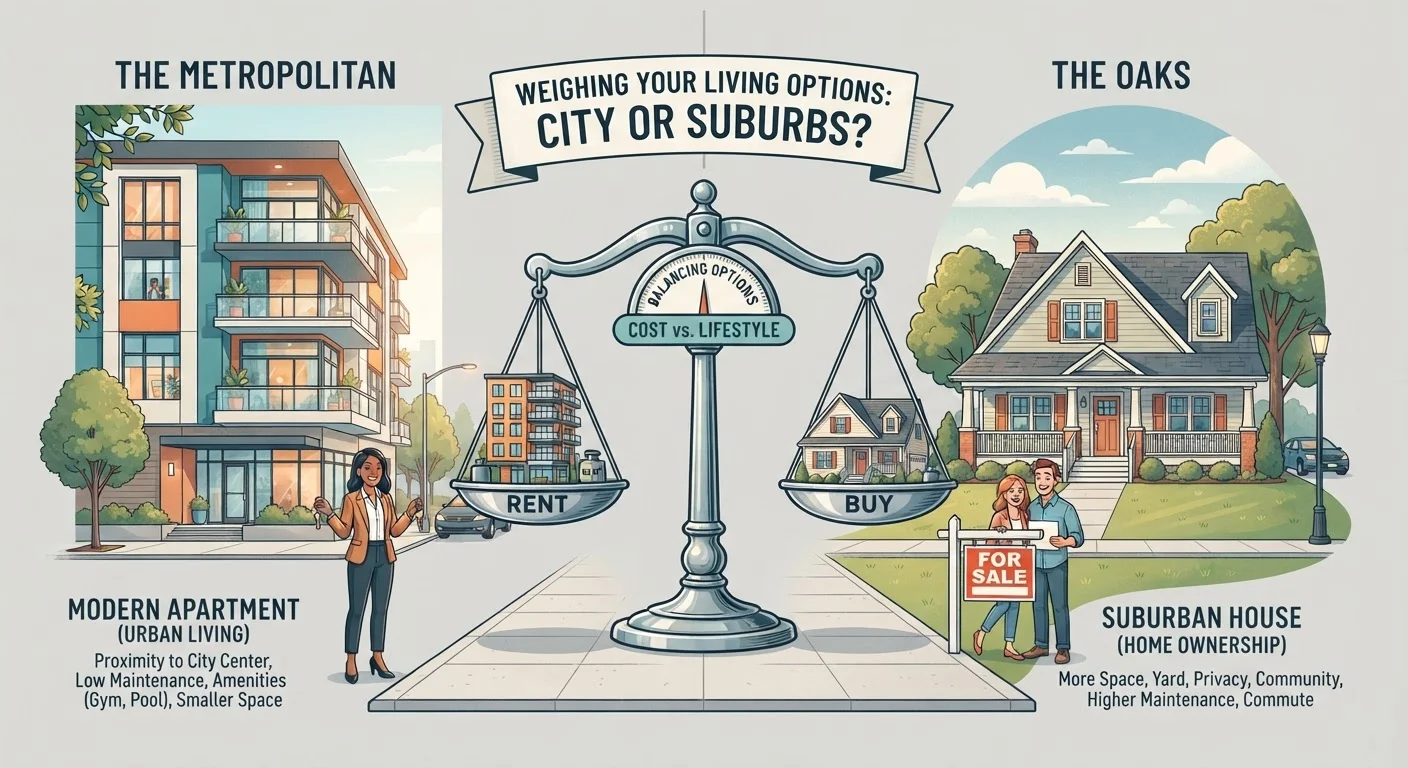
Key Takeaways
- Neither renting nor buying is universally superior - the right choice depends on your specific financial and life circumstances.
- Buying builds equity over time but requires significant upfront costs and long-term commitment.
- Renting offers flexibility and lower immediate costs, but provides no ownership stake.
- Your local housing market conditions can significantly shift which option makes more financial sense.
- A general rule of thumb: plan to stay at least five years before buying to offset transaction costs.
Monthly payments build equity over time
Unlike rent, mortgage payments reduce your loan balance, gradually increasing your ownership stake in the property - a form of forced savings with potential long-term value.
Protection from rent increases
A fixed-rate mortgage locks in your principal and interest payment for the life of the loan, providing cost predictability that renters in rising markets cannot count on.
Freedom to customize your space
Owners can renovate, repaint, or remodel without landlord approval, allowing the home to evolve with their tastes and needs over time.
Potential appreciation in property value
Homes in many markets have appreciated over long holding periods, though this is not guaranteed and varies significantly by location, timing, and economic conditions.
Stability for families and long-term planning
Owning a home provides a sense of permanence and community connection that is difficult to replicate when renting, particularly for households with children in local schools.
Large upfront costs and transaction fees
Closing costs typically run 2-5% of the purchase price, and down payments require substantial savings - costs that renters simply do not face when signing a lease.
Owner bears all maintenance and repair costs
When an appliance fails or the roof needs replacing, homeowners pay the bill. Financial advisers often suggest budgeting 1-2% of the home's value annually for maintenance.
Reduced geographic flexibility
Selling a home is time-consuming and costly; owners who need to relocate quickly may face financial losses or a complicated long-distance sale process.
Exposure to property value declines
Real estate markets can fall as well as rise. Buyers who purchase near a market peak or in a declining area may find their home worth less than they paid, at least in the short term.
Ongoing costs beyond the mortgage payment
Property taxes, homeowner's insurance, and potential HOA fees add meaningfully to the true monthly cost of ownership, often surprising first-time buyers unfamiliar with the full picture.
Our Verdict
Renting and buying each serve different needs at different life stages. Buying tends to make more financial sense for those with stable income, adequate savings, and a long-term horizon in one location. Renting is often the smarter choice for those prioritizing flexibility, still building savings, or living in a high-cost market where purchase prices far outpace rents. Neither path is inherently better - the right answer emerges from honest self-assessment, not cultural pressure.
This framework is most useful for first-time homebuyers and renters weighing whether to make the leap into ownership, particularly those who want a structured way to evaluate the decision beyond simple mortgage-vs-rent comparisons.
Why This Decision Is Harder Than It Looks
The rent-or-buy question sounds simple on the surface: is your monthly mortgage payment lower than your rent? In practice, that comparison barely scratches the surface. Renting vs. Buying: What First-Timers Often Get Wrong explains why the real cost comparison is far more layered than most people initially expect.
Homeownership carries costs that renters never encounter - property taxes, homeowner's insurance, maintenance, HOA fees, and closing costs that can run 2-5% of the purchase price. Renting has its own financial realities, including annual rent increases and zero return on monthly payments. Understanding both sides fully is the foundation of a good decision.
The Price-to-Rent Ratio Explained
The price-to-rent ratio is a quick way to gauge whether a local market favors buying or renting. Divide the median home price by the annual median rent for a comparable property. A ratio below 15 generally suggests buying is financially advantageous; above 20 tilts toward renting. Ratios between 15 and 20 fall in a gray zone where personal factors weigh more heavily. This is a rough guide, not a firm rule - local conditions, interest rates, and individual finances all matter.
The Case for Buying: Building Equity and Stability
Homeownership is the primary vehicle through which most American households build long-term wealth. Each mortgage payment chips away at the loan principal, gradually converting monthly housing costs into an ownership stake. Over time - and in appreciating markets - that equity becomes a meaningful financial asset.
Monthly payments build equity over time
Unlike rent, mortgage payments reduce your loan balance, gradually increasing your ownership stake in the property - a form of forced savings with potential long-term value.
Protection from rent increases
A fixed-rate mortgage locks in your principal and interest payment for the life of the loan, providing cost predictability that renters in rising markets cannot count on.
Freedom to customize your space
Owners can renovate, repaint, or remodel without landlord approval, allowing the home to evolve with their tastes and needs over time.
Potential appreciation in property value
Homes in many markets have appreciated over long holding periods, though this is not guaranteed and varies significantly by location, timing, and economic conditions.
Stability for families and long-term planning
Owning a home provides a sense of permanence and community connection that is difficult to replicate when renting, particularly for households with children in local schools.
Beyond finances, ownership provides stability that renting cannot fully replicate. Owners control their own space: they can renovate, paint, adopt pets, and plant a garden without landlord approval. Fixed-rate mortgages also lock in a predictable payment, shielding owners from the rent increases that renters routinely face. For those ready to commit to a location for at least five years, buying can be both a lifestyle upgrade and a sound financial move. See Your First Home Purchase: A Start-to-Finish Roadmap for a full walkthrough of what the buying process involves.
The Case for Renting: Flexibility and Lower Financial Risk
Renting is often dismissed as "throwing money away," but that framing overlooks real advantages. Renters face no repair bills when the furnace breaks or the roof leaks. They carry no risk if property values decline. And they can relocate with relatively little friction - typically 30 to 60 days' notice - when careers or life circumstances change.
Large upfront costs and transaction fees
Closing costs typically run 2-5% of the purchase price, and down payments require substantial savings - costs that renters simply do not face when signing a lease.
Owner bears all maintenance and repair costs
When an appliance fails or the roof needs replacing, homeowners pay the bill. Financial advisers often suggest budgeting 1-2% of the home's value annually for maintenance.
Reduced geographic flexibility
Selling a home is time-consuming and costly; owners who need to relocate quickly may face financial losses or a complicated long-distance sale process.
Exposure to property value declines
Real estate markets can fall as well as rise. Buyers who purchase near a market peak or in a declining area may find their home worth less than they paid, at least in the short term.
Ongoing costs beyond the mortgage payment
Property taxes, homeowner's insurance, and potential HOA fees add meaningfully to the true monthly cost of ownership, often surprising first-time buyers unfamiliar with the full picture.
In high-cost metro areas, renting is sometimes the only financially rational option. When price-to-rent ratios are elevated (meaning home prices are very high relative to annual rents), the math can favor renting and investing the difference. Renting vs. Owning During Different Market Conditions walks through how to evaluate this based on where the market currently stands. For those still building credit or saving for a down payment, renting is also the appropriate bridge - not a failure.
Key Financial Factors to Evaluate Before Deciding
Before framing this as an emotional decision, run through the concrete financial checkpoints:
- Down payment readiness: Conventional loans typically require 5-20% down. A 3.5% FHA loan is available to qualifying buyers but includes mortgage insurance costs.
- Debt-to-income ratio (DTI): Most lenders look for a DTI below 43%. High existing debt limits your borrowing power.
- Emergency fund: Homeowners need reserves for unexpected repairs. Buying with no cushion is a financial risk.
- Time horizon: Closing costs make short-term ownership expensive. Staying fewer than five years often means buying costs more than renting would have.
- Local price-to-rent ratio: Divide the home price by annual rent for a comparable property. A ratio above 20 generally favors renting; below 15 generally favors buying.
~43%
Maximum DTI most lenders accept
Most conventional mortgage lenders use a 43% debt-to-income ratio as a standard qualification ceiling, though some loan programs allow exceptions.
5 years
Minimum horizon to offset buying costs
Housing economists commonly cite five years as the approximate break-even point at which buying begins to outperform renting financially, due to upfront transaction costs.
1-2%
Annual home maintenance budget rule of thumb
Financial planners generally recommend setting aside 1-2% of a home's purchase price each year to cover routine upkeep and unexpected repairs.
If you're not yet sure where you stand on affordability, Renting 101 covers the rental side of the equation, while Renting an Apartment from Start to Move-In details the practical steps of securing a rental.
Lifestyle and Life-Stage Considerations
Financial readiness is necessary but not sufficient. Lifestyle alignment matters just as much. Ask yourself honestly: How stable is your job situation? Do you have a strong preference for staying in this city long-term? Are you seeking the autonomy of ownership, or do you value the low-maintenance simplicity of renting?
Life stage shapes the calculus significantly. A recent graduate with student loans, moderate savings, and uncertain career geography faces a very different equation than a couple with dual stable incomes and a clear intention to stay in a community for a decade. Neither profile is wrong - but the appropriate housing choice differs dramatically. The decision should follow your life plan, not precede it.
This article is for general informational and educational purposes only and does not constitute financial, legal, or investment advice. Consult a licensed financial adviser or real estate professional for guidance specific to your situation.