

| Document length | 5 pages (Consumer Financial Protection Bureau (CFPB)) |
| Minimum review window | 3 business days before closing (TRID rule, CFPB) |
| Replaced | HUD-1 Settlement Statement (Effective October 3, 2015) |
| Fee increase tolerance (Section B & C) | No more than 10% aggregate (CFPB TRID guidelines) |
| Section A fee tolerance | Zero - must match Loan Estimate exactly (CFPB TRID guidelines) |
What Is the Closing Disclosure?
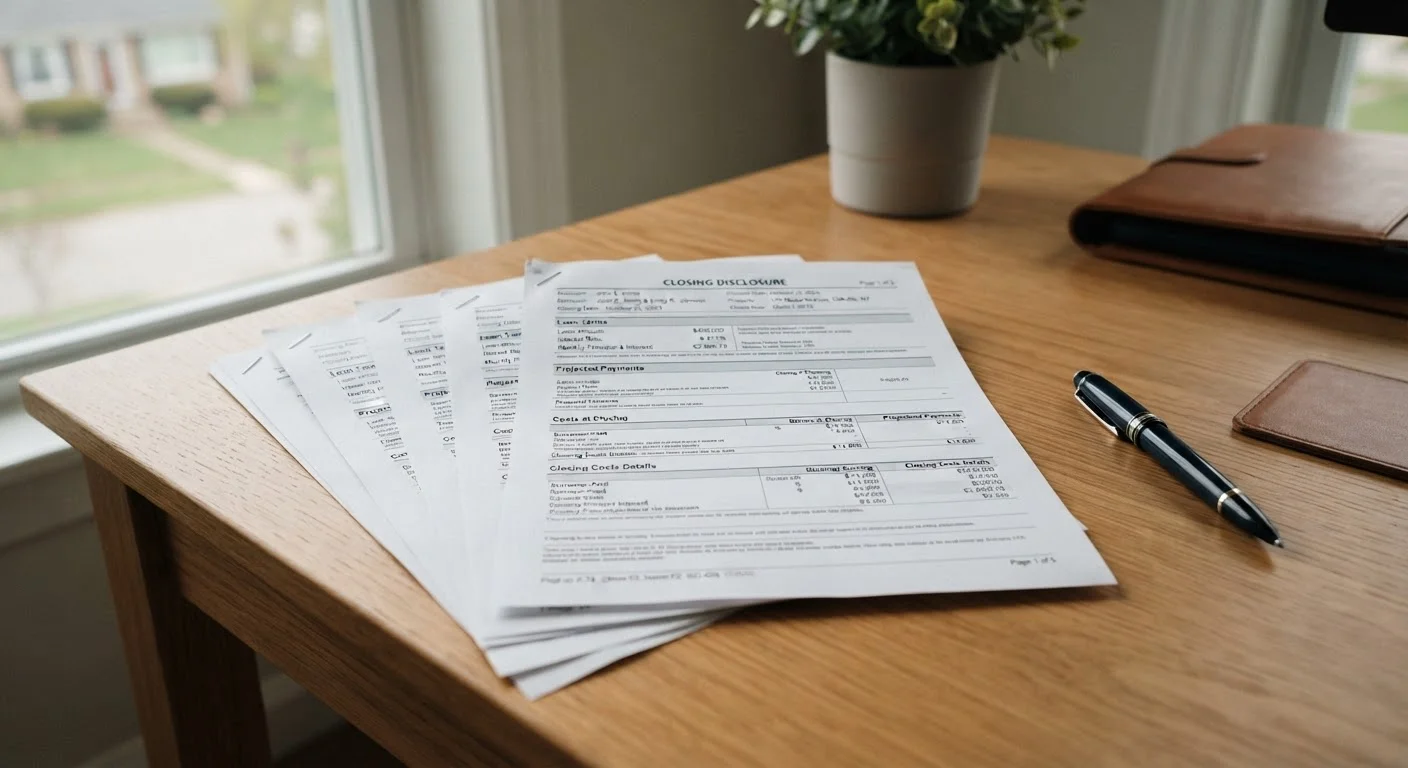
The Closing Disclosure (CD) is a five-page federal form your lender is required to provide at least three business days before your closing date. It replaced the old HUD-1 Settlement Statement in 2015 and is now the definitive record of every cost tied to your mortgage. Think of it as the final scorecard for your loan - and your legal right to review it before you sign anything.
By law, most figures on your CD must match or stay within tight tolerance limits compared to your Loan Estimate, the preliminary document you received when you applied. If large numbers shifted without explanation, you have grounds to ask questions - and sometimes to delay closing. See the full context of where the CD fits into the process in our guide to the American home buying process.
| Document length | 5 pages (Consumer Financial Protection Bureau (CFPB)) |
| Minimum review window | 3 business days before closing (TRID rule, CFPB) |
| Replaced | HUD-1 Settlement Statement (Effective October 3, 2015) |
| Fee increase tolerance (Section B & C) | No more than 10% aggregate (CFPB TRID guidelines) |
| Section A fee tolerance | Zero - must match Loan Estimate exactly (CFPB TRID guidelines) |
Page-by-Page Breakdown
Page 1: Loan Terms and Projected Payments
The top of Page 1 identifies your loan - the amount, interest rate, and whether the rate or principal can increase over time. Below that, a Projected Payments table shows exactly what you'll pay each month, broken into principal and interest, mortgage insurance (if applicable), and estimated escrow for taxes and insurance. This monthly total is your real cost of homeownership, not just the interest rate headline.
Page 2: Closing Cost Details
This is the densest page and where most surprises hide. It is divided into three columns: Borrower-Paid, Seller-Paid, and Paid by Others.
- Section A - Origination Charges: Fees your lender charges to make the loan - points, underwriting fees, and application fees. These cannot increase from your Loan Estimate.
- Section B - Services You Cannot Shop For: Costs set by the lender, such as the appraisal and credit report fee. They can increase by no more than 10% in aggregate.
- Section C - Services You Can Shop For: Title insurance, settlement agent, and survey fees. You chose these providers, so you control this cost - but verify the amounts match your quotes.
- Sections E-H - Prepaids and Escrow: Homeowners insurance premiums, prepaid interest (covering the days between closing and your first payment), and the initial escrow account deposit. These are not lender fees - they're real costs you'd owe regardless.
For a closer look at which fees buyers routinely underestimate, see closing cost surprises that catch buyers off guard.
Closing Disclosure (CD)
A federally mandated five-page document that itemizes all final costs, loan terms, and cash requirements for a mortgage transaction. Lenders must deliver it at least three business days before closing.
Loan Estimate
A three-page form issued within three business days of a mortgage application that provides preliminary cost estimates. The Closing Disclosure must align with it within legally defined tolerances.
Cash to Close
The total amount a buyer must bring to the closing table, including the down payment and closing costs minus any credits such as earnest money or seller concessions.
Prepaid Interest
Mortgage interest charged at closing to cover the days between the closing date and the date the first full monthly payment cycle begins.
Escrow Account
A lender-held account funded at closing and through monthly payments to cover property taxes and homeowners insurance when those bills come due.
Total Interest Percentage (TIP)
The total amount of interest paid over the life of the loan expressed as a percentage of the loan amount. Found on Page 5 of the Closing Disclosure.
Origination Charges
Fees the lender charges for creating and processing the loan, including underwriting fees and discount points. These figures cannot increase from the Loan Estimate.
Page 3: Cash to Close and Summaries
Page 3 answers the single most important question: exactly how much money do you need to bring to closing? Your Cash to Close table shows how this number changed - or didn't - from your Loan Estimate. Below it, the Transaction Summary separates the borrower's and seller's columns, crediting your earnest money deposit, any seller concessions, and your loan amount against your purchase price and closing costs.
Pages 4 and 5: Loan Terms, Disclosures, and Contact Information
Page 4 details loan features you must acknowledge: whether the loan has a prepayment penalty, a balloon payment, or escrow provisions. Page 5 lists the lender's and settlement agent's contact information, and provides the Total Interest Percentage (TIP) - the total interest you'd pay over the full loan term as a share of the loan amount. A 30-year fixed loan at today's typical rates often carries a TIP above 50%, which is jarring but mathematically normal.
How to Review Your CD Before Closing Day
Use your three-day review window deliberately. Start by comparing the CD side-by-side with your Loan Estimate. Flag any fee that increased beyond tolerance. Then confirm:
- Your name, property address, and loan amount are correct.
- The interest rate matches what you locked in writing.
- Seller credits you negotiated appear in the Transaction Summary.
- Your earnest money deposit is credited properly.
If numbers don't add up, contact your loan officer immediately - not the day of closing. Some changes require a corrected CD and restart the three-day clock, which can shift your closing date. Understanding your overall financial picture, including how your credit profile shaped the rate you received, is also worth reviewing; our credit report field guide can help you make sense of that side of the picture.
For definitions of terms that appear throughout the CD - such as escrow, title insurance, and earnest money - the plain-English glossary is a practical companion resource.
This article is for general informational and educational purposes only and does not constitute legal, financial, or mortgage advice. Consult a licensed real estate attorney, HUD-approved housing counselor, or qualified financial professional for guidance specific to your situation.