

Key Takeaways
- Front door condition and color have an outsized impact on first impressions compared to their low cost.
- Landscaping cleanliness matters more than elaborateness - overgrown or dying plants actively reduce perceived value.
- Exterior paint quality is one of the highest-return upgrades for perceived home condition.
- Lighting, driveway condition, and mailbox details collectively signal whether a home is cared for.
- Perceived value is shaped by coherence - mismatched upgrades can undermine an otherwise strong exterior.
Why First Impressions Carry Real Weight
A home's exterior forms the first - and sometimes only - impression a visitor or prospective buyer carries with them. Before anyone steps through the front door, they've already made a series of quick judgments about the property's upkeep, age, and likely interior condition. These assessments aren't arbitrary: research in environmental psychology consistently shows that visual order and maintenance signal care and reliability.
The good news is that curb appeal doesn't require a full renovation budget. Several targeted changes tend to move the needle more than others, and knowing which ones they are helps homeowners spend time and money where it actually counts. It's also worth understanding what doesn't pay off - see our guide on home improvement myths that cost homeowners time and money for a useful counterpoint.
Repaint or Refinish the Front Door
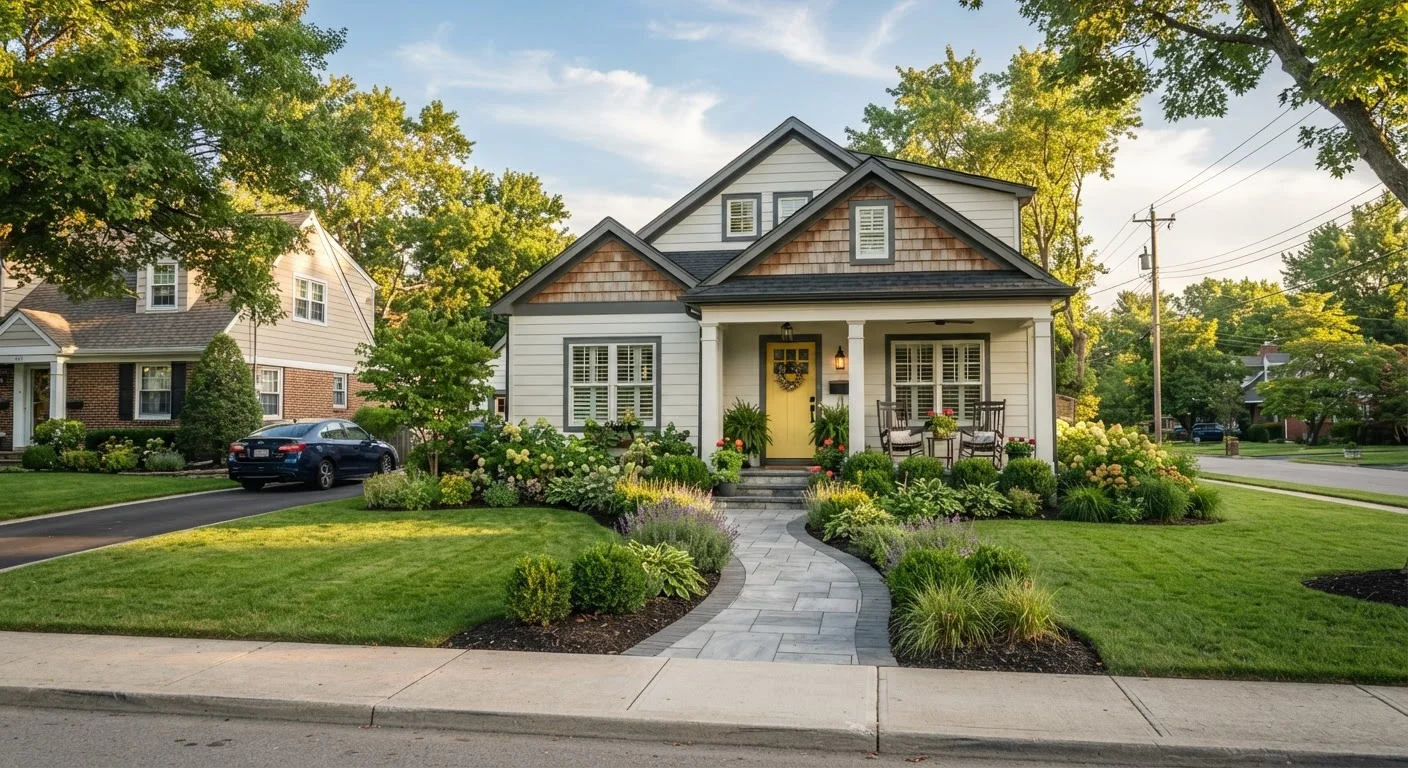
The front door is the focal point of nearly every exterior view. A door that's faded, peeling, or dated in style communicates neglect even when the rest of the home is in good shape. Repainting a front door is among the lowest-cost, highest-visibility changes a homeowner can make.
Color choice matters. Deep, saturated hues - navy, forest green, charcoal, bold red - tend to read as intentional and confident. Neutral colors work when they contrast clearly with the surrounding facade. Whatever color you choose, a clean, glossy finish signals freshness. If the door itself is damaged or hollow-core on an otherwise substantial home, replacing it entirely may be worth the investment.
A freshly painted front door signals care across the entire exterior with minimal effort.
Address the Lawn and Planting Beds
Landscaping condition is one of the first things people notice because it spans the entire front of the property. Dead grass, bare patches, overgrown shrubs, and weedy planting beds all register quickly - and negatively. Conversely, a tidy lawn and clean beds read as competent upkeep, even if the plantings themselves are modest.
You don't need elaborate flower arrangements or expensive plantings. Edged lawn borders, mulched beds, and healthy foundation shrubs trimmed to a manageable height go a long way. Remove dead annuals, pull visible weeds, and prune anything that's grown over windows or the roofline. The goal is order, not complexity.
Tidiness matters more than elaborateness - an edged, weed-free lawn beats an overgrown garden.
Refresh Exterior Paint or Siding
Peeling, faded, or stained exterior paint is one of the most reliable signals of deferred maintenance. Buyers often interpret it as evidence that other, less visible systems may have been similarly neglected. A fresh coat - even in the same color - resets that perception entirely.
For homes with paint in reasonable shape, a thorough pressure wash can restore a surprising amount of brightness without repainting. Focus attention on trim, shutters, and soffits, which tend to fade faster than main body colors. Homes with wood siding should have any peeling areas scraped, primed, and repainted before weather damage sets in further. Check local building codes if your home has lead-based paint - remediation may require a licensed contractor.
Fresh exterior paint resets the maintenance story a home tells before anyone goes inside.
Upgrade or Clean Exterior Lighting
Exterior lighting often gets overlooked during the day, but many home viewings - whether in person or through listing photos - happen in lower light conditions. Outdated or non-functional fixtures make a home feel tired, while clean, appropriately scaled lighting adds a sense of intention and safety.
At minimum, ensure all existing fixtures are clean, have working bulbs, and are free of rust or oxidation. If fixtures are more than a decade old and show wear, replacing them is a straightforward DIY project for most homeowners. Pathway lighting and uplighting on mature trees can add dimension to an otherwise flat exterior. Keep scale in mind: fixtures should be proportionate to the door and surrounding architecture.
Functional, proportionate lighting signals attentive maintenance and adds dimension after dark.
Repair the Driveway and Walkway
Cracked, uneven, or stained driveways and front walkways create a safety concern and a visual one simultaneously. Buyers notice because these surfaces lead directly to the front door - they're unavoidable. Significant cracking in concrete can suggest underlying settling issues, even if that isn't actually the case.
Minor asphalt cracks can be filled with a crack filler; concrete can be patched with appropriate resurfacing products for surface-level damage. Stains from oil or rust respond well to targeted degreasers and pressure washing. For walkways, replacing broken pavers or repointing mortar joints is typically a manageable DIY task. Structural issues - significant settling, heaving, or drainage problems - warrant a licensed contractor's assessment.
A clean, intact driveway removes one of the most immediate signals of deferred maintenance.
Replace or Restore Hardware and the Mailbox
Small details accumulate into an overall impression. A rusted mailbox, tarnished house numbers, or mismatched door hardware may seem minor in isolation, but they contribute to whether a home feels finished and cared for. Replacing these items is inexpensive and takes an afternoon.
Match finishes across visible hardware - door handle, house numbers, light fixtures, and mailbox - to create a coherent look. Brushed nickel, matte black, and oil-rubbed bronze are all durable and broadly compatible with different architectural styles. If your mailbox is mounted at the street on a post, ensure the post is straight and the box itself is free of dents and rust. These details are among the easiest wins available for minimal cost.
Matching hardware finishes across the exterior creates cohesion that elevates the whole facade.
Making Your Upgrades Work Together
The most common curb appeal mistake isn't neglect - it's inconsistency. A freshly painted front door loses impact when paired with a cracked driveway and overgrown hedges. Buyers and visitors instinctively notice contrast, and a single polished element can actually highlight surrounding deficiencies rather than mask them.
Approach exterior upgrades as a coordinated set rather than isolated projects. Prioritize the elements that span the widest visual field first - paint, lawn condition, and major hardscaping - then layer in smaller details like lighting and hardware. If budget is a real constraint, our look at spending cutbacks worth making can help you think through where to hold back versus where to invest.
Walk the Block Before You Start
Before spending anything, stand at the street and look at your home as a visitor would. Take a photo - the camera often catches things the eye normalizes after years of familiarity. Then walk the neighboring block to calibrate: your goal isn't to outshine neighbors, but to match or slightly exceed the visual standard your street sets. Falling notably below that baseline tends to weigh more heavily on perception than being slightly above it.
Understanding how buyers evaluate homes more broadly - including the metrics that shape market perception - is also worth your time. Our overview of what the housing market actually measures explains how buyer psychology connects to broader market behavior.
This article is for general informational purposes only. Home value outcomes vary based on local market conditions, property specifics, and buyer preferences. Consult a licensed real estate professional for guidance on your individual property.