

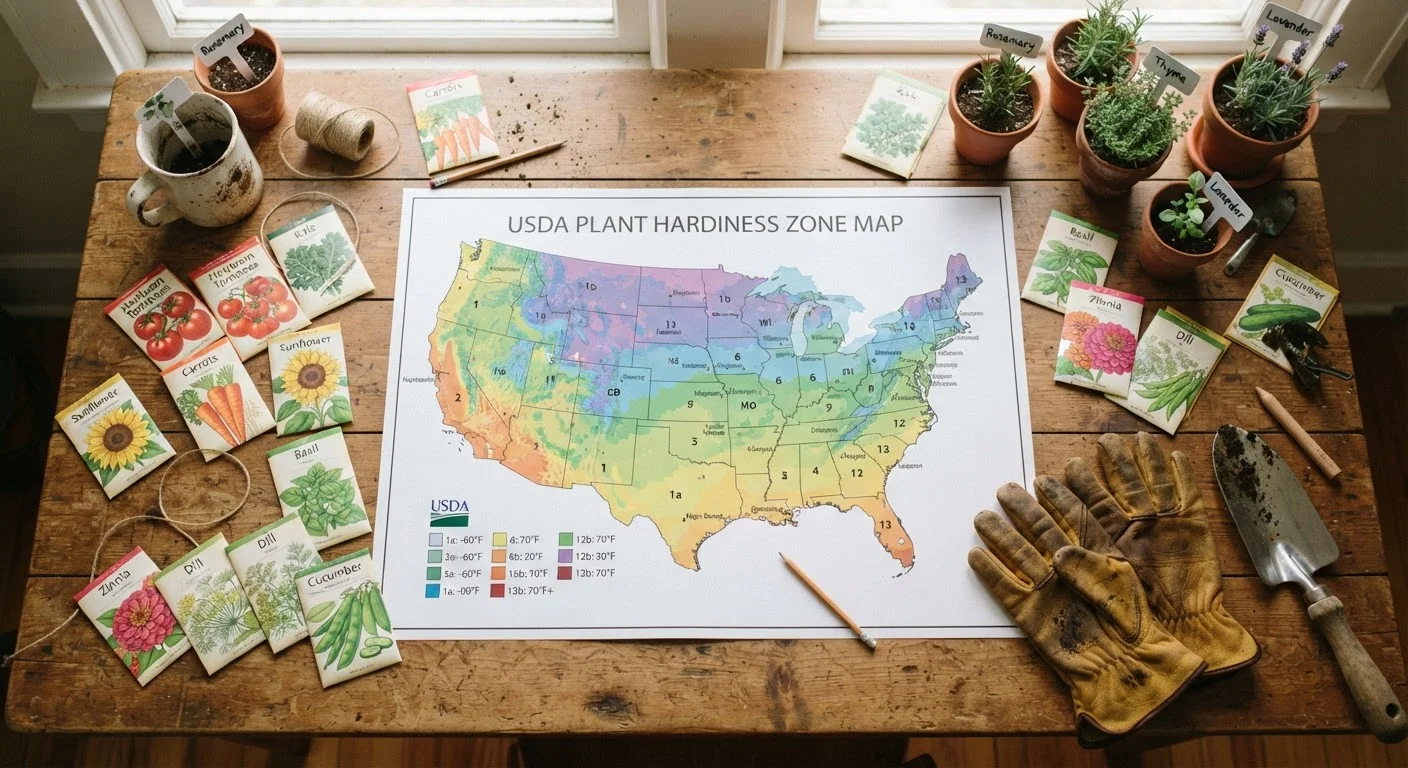
Key Takeaways
- USDA zones are based on average annual extreme minimum winter temperatures, not summer heat.
- There are 13 numbered zones, each split into an 'a' and 'b' half-zone for finer detail.
- Your zone tells you which perennial plants and trees can survive your winters - annuals are a different consideration.
- Microclimates in your yard can shift your effective growing conditions by a half-zone or more.
- Always cross-reference zone information with seed packet and plant label details when purchasing.
USDA Plant Hardiness Zone
A USDA Plant Hardiness Zone is a geographic area defined by its average annual extreme minimum winter temperature. The U.S. Department of Agriculture divides the country into 13 zones, numbered 1 (coldest) through 13 (warmest). When a plant label says it is "hardy to Zone 6," it means the plant can survive winter conditions typical of that zone and warmer ones.
Each zone spans a 10°F range; half-zones (e.g., 6a and 6b) divide that range into two 5°F bands for finer precision.
What the Zone Numbers Actually Mean
The USDA Plant Hardiness Zone Map assigns every location in the United States a zone number from 1 to 13. Zone 1 covers the coldest areas - think interior Alaska, where winter temperatures can plunge to -60°F. Zone 13 covers the warmest regions, such as parts of Hawaii and Puerto Rico, where temperatures rarely drop below 60°F.
Each zone represents a 10°F band of average annual extreme minimum temperature. Zone 6, for example, covers areas where the coldest temperature in an average winter falls between -10°F and 0°F. Each zone is also divided into two half-zones - "a" (slightly colder) and "b" (slightly warmer) - splitting that 10°F band into two 5°F increments. Most of the contiguous U.S. falls between Zones 3 and 10.
The key word throughout is average. Zones are calculated from decades of temperature records, so an unusually brutal winter can occasionally push conditions below what your zone suggests - and an unusually mild one can feel a zone warmer. Use your zone as a well-informed baseline, not an ironclad guarantee.
13
Total USDA plant hardiness zones in the U.S.
The USDA Plant Hardiness Zone Map spans Zones 1 through 13, covering all U.S. states and territories.
5°F
Temperature range of each half-zone (a or b)
Each full zone covers a 10°F range; the a/b subdivision splits it into two 5°F increments for finer plant selection guidance.
30 years
Temperature data period used for current map
The most recent USDA map update used weather station records spanning 1991-2020 to calculate average annual extreme minimum temperatures.
Hardiness Zones vs. What Plants Actually Need
Hardiness zones answer one specific question: Can this plant survive winter in my area? They do not address summer heat, humidity, rainfall, soil type, or the length of your growing season - all of which also affect whether a plant thrives.
This is why a plant rated "hardy to Zone 5" might struggle in a Zone 5 garden with heavy clay soil and no drainage, while the same plant flourishes in a Zone 5 garden with well-amended, well-draining soil. The zone got you in the right ballpark; the other variables determine the final outcome.
When you're reading a seed packet or plant tag, the zone rating tells you about winter cold tolerance for perennials, shrubs, and trees - plants that are expected to return year after year. Annual plants (marigolds, basil, zucchini) complete their life cycle in a single season, so hardiness zones don't apply to them. For annuals, what matters is your frost dates. Our guide on reading a seed packet explains how to interpret all the details on plant labels, including zone references, days to maturity, and spacing recommendations.
Use Frost Dates Alongside Zone Info
For vegetable and annual gardens, look up your average last spring frost date and first fall frost date in addition to your hardiness zone. These dates - available from the Old Farmer's Almanac website by ZIP code - tell you when it's safe to transplant warm-season crops outdoors and when to expect the end of your growing season. Hardiness zones and frost dates work together to give you the full picture.
Microclimates: Why Your Backyard May Behave Differently
Even within a single zip code, growing conditions can vary meaningfully from one part of your yard to another. These localized variations are called microclimates. A south-facing bed against a brick wall absorbs and radiates heat, effectively behaving like a half-zone warmer. A low-lying area where cold air settles on still nights can be noticeably colder than the rest of the yard.
Common factors that create microclimates include:
- Structures and walls: Reflect heat and block wind, warming nearby plants.
- Slopes: Cold air drains downhill; low spots are often frost pockets.
- Tree canopy: Slows heat loss on cold nights, protecting plants underneath.
- Pavement and hardscape: Absorbs daytime heat and releases it overnight.
Paying attention to microclimates lets experienced gardeners push the limits - growing a Zone 7 plant in a sheltered Zone 6 garden, for instance. But this is best approached as an experiment rather than a plan, especially with expensive trees or shrubs.
A gardener in Chicago (Zone 6a) falls in love with a crape myrtle shrub labeled "hardy to Zone 7." She plants it in a sunny border and it dies to the ground each winter.
A homeowner in Portland, Oregon (Zone 8b) plants a Japanese maple labeled "hardy to Zone 5" in a partially shaded courtyard.
A gardener in Minneapolis (Zone 4b) notices that the beds along the south side of her house always seem to green up earlier in spring and rarely show frost burn.
A first-time gardener in Atlanta (Zone 8a) picks up a lavender plant at a garden center without checking the label, then worries it won't survive the summer heat.
How to Use Your Zone When Choosing Plants
Finding your zone takes about thirty seconds. The USDA hosts an interactive map at planthardiness.ars.usda.gov where you enter your ZIP code and get your zone instantly. Once you know it, look for that number on plant labels and in seed catalogs - it's usually listed alongside light and water requirements.
A few practical habits make zone information more useful:
- Match or go warmer: Choose plants rated for your zone or colder. A Zone 4 plant will perform well in Zone 6; a Zone 8 plant in Zone 6 probably won't survive winter.
- Note the half-zone: If you're in Zone 6a (the colder half), be cautious about plants rated only to Zone 6b.
- Consider the whole plant's needs: Pair zone information with soil, sun, and moisture requirements before purchasing.
- Ask at a local nursery: Staff familiar with your specific region can flag plants that technically qualify by zone but tend to struggle locally due to humidity, late frosts, or other regional factors.
Understanding hardiness zones is one of the most practical foundations of gardening because it steers you away from expensive failures before they happen. A little research at the planning stage saves time, money, and frustration throughout the growing season.
“The hardiness zone is the starting point, not the finish line. Once you know your zone, the real work of matching a plant to your soil, light, and moisture conditions begins.”
— Extension Horticulture Specialists, Land-grant university cooperative extension services, paraphrased from regional planting guides